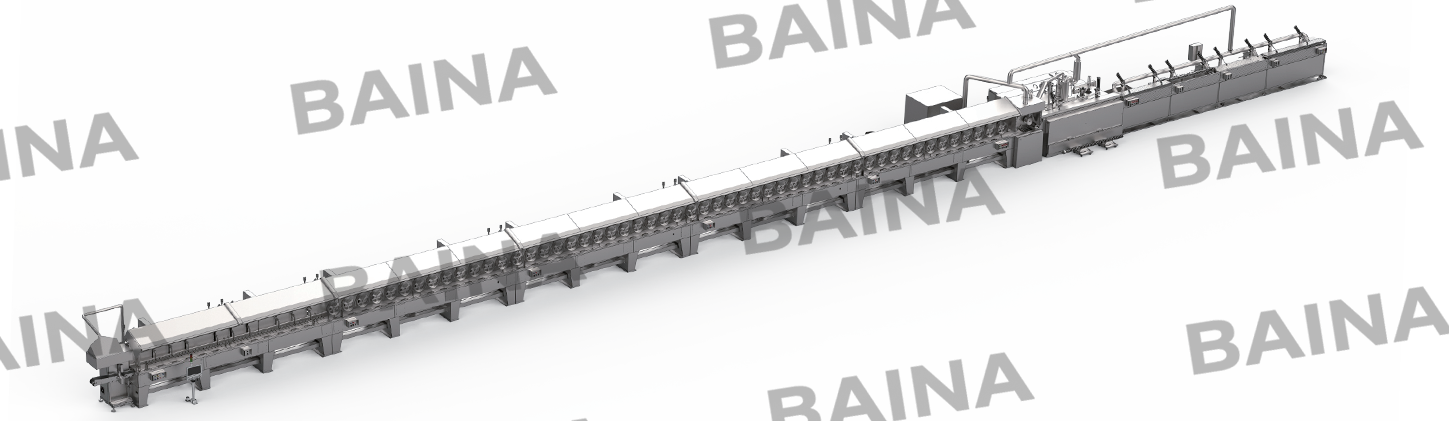
Ф75mm 16D Cold Feed Rubber Extruder
Cat:Extruder Series
Motor Power: 37 kWMaximum Output: 150 kg/h
See Details

The Rubber Extruder has evolved significantly over the years, becoming one of the critical machines in modern manufacturing. This machine is essential for transforming raw rubber materials into usable forms, such as tubes, seals, profiles, and other rubber-based components, that are integral to a range of industries, including automotive, construction, and consumer goods. The development of the Rubber Extruder has been shaped by technological advancements, material innovations, and the changing needs of industrial production.
Early Development of the Rubber Extruder
The concept of extrusion dates back to the early 19th century, but it wasn't until the late 1800s that the Rubber Extruders were developed for industrial applications. The initial machines were relatively simple in design, focused on forcing rubber through a die to create basic shapes like strips and sheets. Early rubber extruders were manually operated or driven by steam engines, making the process labor-intensive and prone to inconsistencies in output quality.
These early machines lacked the precise temperature control and material handling systems found in modern extruders. As a result, the final products often exhibited variations in thickness and texture. Despite these limitations, the Rubber Extruder played a crucial role in expanding the range of rubber products that could be mass-produced, particularly in the growing automotive and manufacturing sectors, which began relying on rubber for seals, gaskets, hoses, and various other components.
Technological Advancements and Innovation
As the industrial revolution progressed, there was a growing demand for higher-quality rubber products and more efficient production methods. This demand prompted numerous innovations in the design and technology of the Rubber Extruder. One of the significant advancements was the development of the screw extruder, which replaced earlier plunger-type machines. The screw extruder utilized a rotating screw to push the rubber compound through the die, providing greater control over the extrusion process and enabling continuous, higher-volume production.
The introduction of the screw extruder allowed for better mixing and blending of raw materials, which led to more uniform and consistent rubber products. Additionally, the screw design improved the overall efficiency of the process, reducing material waste and increasing output speeds. This was particularly important for industries that relied on large-scale production, such as the automotive sector, which required high volumes of rubber components for tires, weather seals, and interior parts.
The next major leap in the development of the Rubber Extruder came with the introduction of precise temperature control systems. In the early years, the lack of temperature regulation meant that the quality of the rubber could vary depending on the ambient temperature and the operator's skill. However, with the integration of heating elements and sophisticated control systems, it became possible to maintain consistent processing temperatures, ensuring better material flow and a more uniform final product.
The Role of Computerized Controls and Automation
As technology continued to advance, the role of computerized controls and automation became increasingly important in the operation of the Rubber Extruder. The 1980s and 1990s saw the introduction of automated systems that allowed for the precise monitoring and adjustment of various parameters, such as temperature, pressure, and screw speed. These advancements greatly improved the accuracy and repeatability of the extrusion process, ensuring that each batch of rubber met strict quality standards.
Computerized control systems also made it possible to integrate the Rubber Extruder into larger, automated production lines. By automating the feeding, mixing, and extrusion stages, manufacturers could reduce labor costs, human error, and increase overall throughput. Additionally, data collection and analysis capabilities enabled operators to optimize the extrusion process by providing real-time feedback on machine performance and product quality.
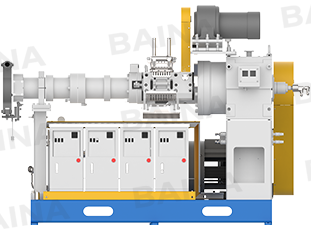
Motor Power: 37 kWMaximum Output: 150 kg/h
See Details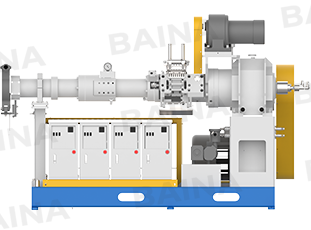
Motor Power: 37 kWMaximum Output: 150 kg/h
See Details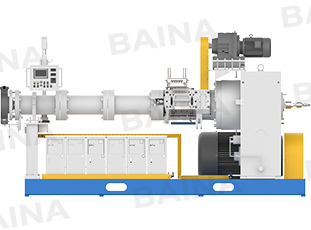
Motor Power: 160 kWMaximum Output: 1000 kg/h
See Details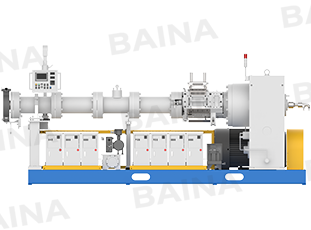
Motor Power: 160 kWMaximum Output: 1000 kg/h
See Details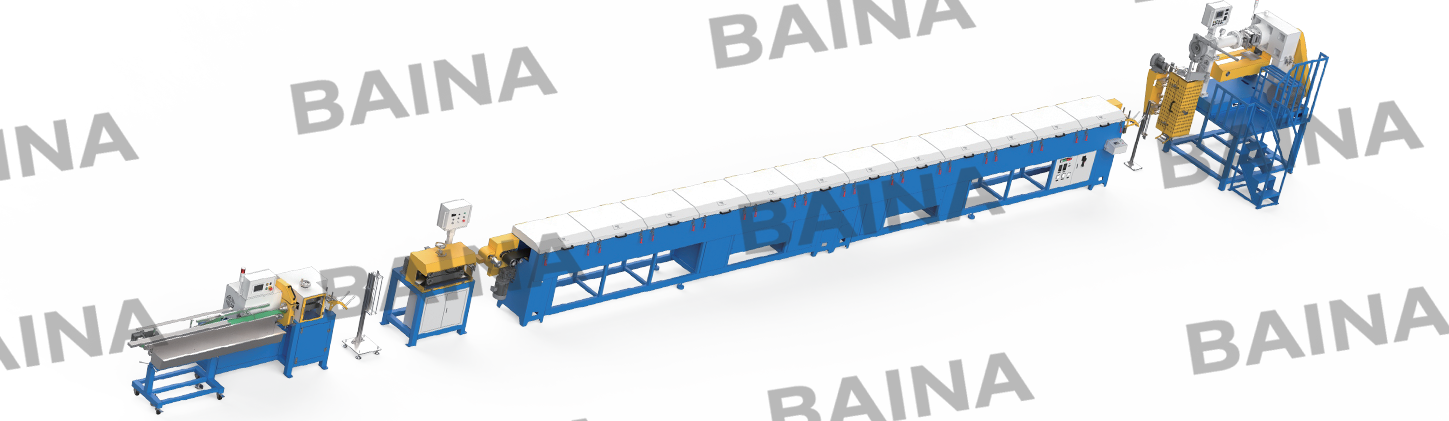
Product advantages1. High Space Utilization, Suitable for Compact Production Environments2. High Mol...
See DetailsA rubber profile can leave an extrusion die with the correct shape and still change during curing. T......
READ MORECutting a rubber tube to a specified length sounds simple until the material starts to compress, str......
READ MORERubber seals rarely share the same geometry. A flat gasket may have a relatively simple cross-sectio......
READ MORE

Rubber Extrusion Machine and Equipment