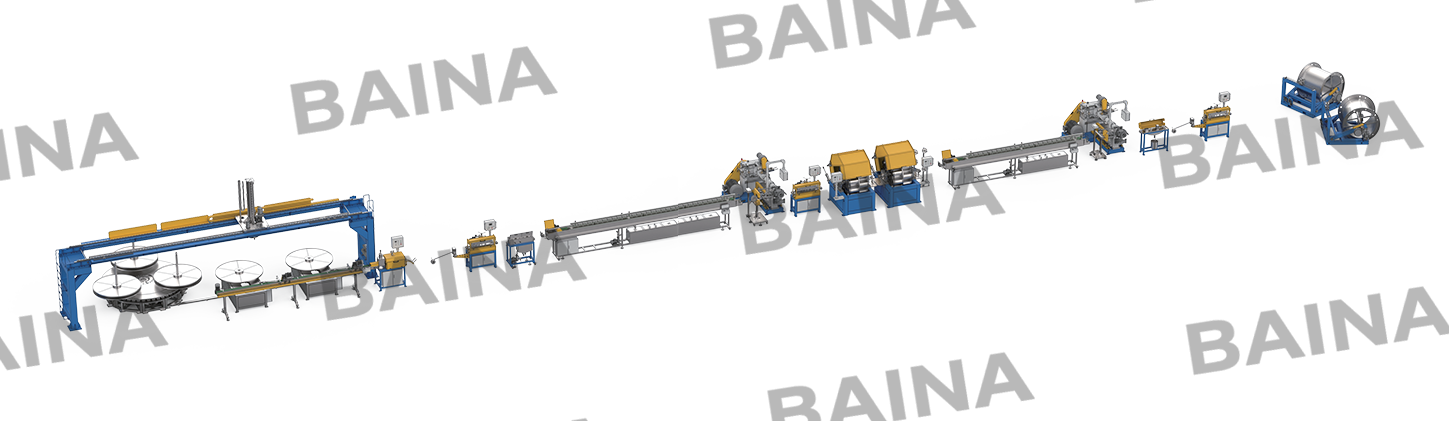
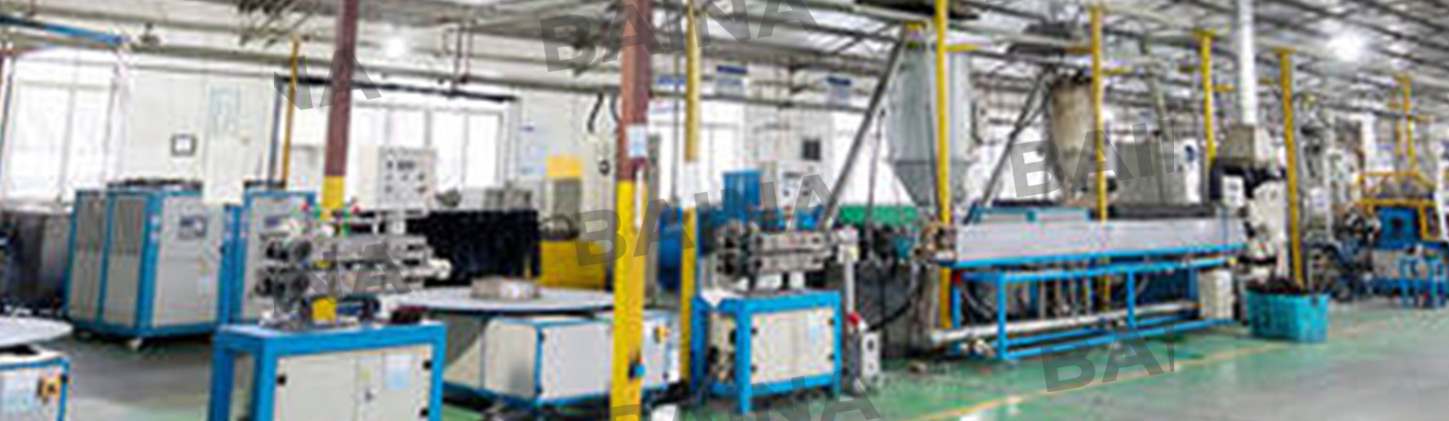
Ф120mm 16D Cold Feed Rubber Extruder
Cat:Extruder Series
Motor Power: 110 kWMaximum Output:700 kg/h
See Details

Rubber extruder machines play a critical role in the production of rubber products used across various industries. These machines are essential for shaping and molding rubber into specific forms, whether for automotive parts, electrical cables, or consumer goods. Over the years, advancements in technology have drastically improved the performance and efficiency of rubber extruders, better quality products, reduced energy consumption, and enhanced production capabilities.
Early Beginnings and Basic Functionality
The rubber extruder machine was initially developed to address the need for shaping rubber into uniform profiles. The basic principle of extrusion involves forcing rubber through a die to form a specific shape. In the early stages of industrial rubber processing, extruders were simple mechanical systems that employed a screw mechanism to push the material through the die. The primary challenge was ensuring that the rubber could be effectively shaped without compromising its quality, particularly in terms of consistency and strength.
In the early years, extruder machines had limitations related to control, material consistency, and throughput. The rubber’s behavior during extrusion varied depending on its formulation, and there were significant challenges in managing the heat and pressure required for different rubber types. This made it necessary to develop more advanced systems that could offer better control over temperature, pressure, and the speed at which the rubber was extruded.
Advancements in Screw Design
One of the significant technical developments in rubber extruder machines is the evolution of the screw design. The screw is the heart of the extruder, and advancements in its design have allowed manufacturers to improve the efficiency and versatility of the extrusion process. Modern extruders employ twin-screw systems, as opposed to the earlier single-screw models. The twin-screw extruders allow for better material mixing, which is crucial in producing uniform and high-quality rubber products.
In the past, screws were designed primarily to move material along the extrusion chamber. Today, the design of the screw has been optimized to not only transport the material but also to knead and mix it. This process, known as plastication, ensures that the rubber is processed evenly, the risk of defects in the final product. The introduction of intermeshing, co-rotating twin screws has enabled even better material distribution, as the two screws work together to create a more uniform flow.
Furthermore, screw designs now incorporate various geometries, including segmented, modular, and reverse-flow sections, each of which enhances the material handling characteristics of the extruder. These innovations provide manufacturers with greater flexibility when working with different rubber formulations, such as natural rubber, synthetic rubber, or thermoplastic elastomers.
Improved Temperature and Pressure Control
Temperature and pressure regulation are crucial aspects of the rubber extrusion process. Variations in these parameters can affect the material’s properties and the final product’s performance. In the past, extruders lacked sophisticated systems for managing heat and pressure, with inconsistent results. However, modern rubber extruder machines now feature advanced control systems that maintain precise temperature and pressure throughout the extrusion process.
Technological advancements in this area include the development of more efficient heating and cooling systems, such as electric heating bands, water-cooling jackets, and advanced thermal insulation techniques. These systems ensure that the rubber remains at the processing temperature, preventing overheating or underheating that could cause defects such as bubbling, cracking, or poor curing.
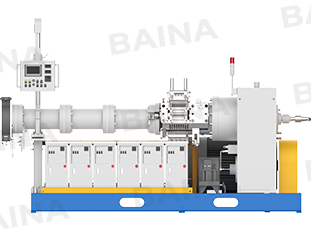
Motor Power: 110 kWMaximum Output:700 kg/h
See Details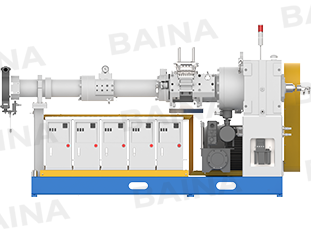
Motor Power: 55 kWMaximum Output: 320 kg/h
See Details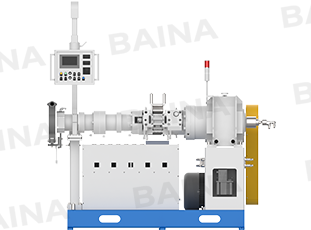
Motor Power: 22 kWMaximum Output: 120 kg/h
See Details
Product AdvantagesThis production line is primarily used for manufacturing rubber products that are ...
See DetailsCutting a rubber tube to a specified length sounds simple until the material starts to compress, str......
READ MORERubber seals rarely share the same geometry. A flat gasket may have a relatively simple cross-sectio......
READ MORESilicone extrusion may look straightforward from the outside: a rubber compound enters the extruder,......
READ MORE

Rubber Extrusion Machine and Equipment