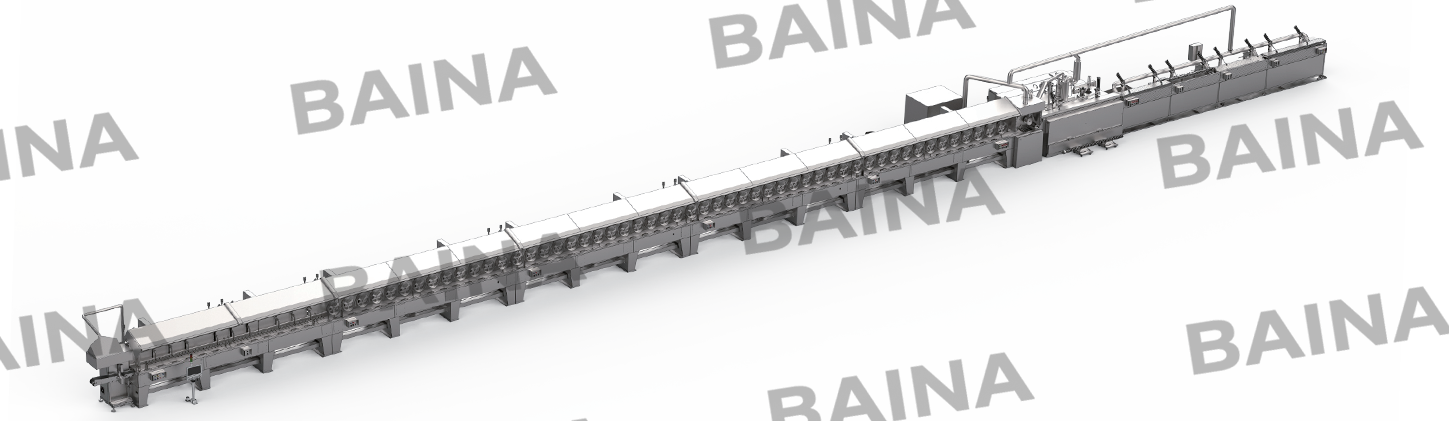
Ф75mm 16D Cold Feed Rubber Extruder
Cat:Extruder Series
Motor Power: 37 kWMaximum Output: 150 kg/h
See Details
Position of the EPDM Extruder in Rubber Production
The EPDM extruder is a core forming device within the broader rubber extrusion production line. In a typical rubber processing workflow, raw rubber and compounding ingredients such as fillers, oils, accelerators, and curing agents are mixed in internal mixers or open mills. Once the EPDM compound reaches a uniform state, it is transferred to the extruder for shaping.
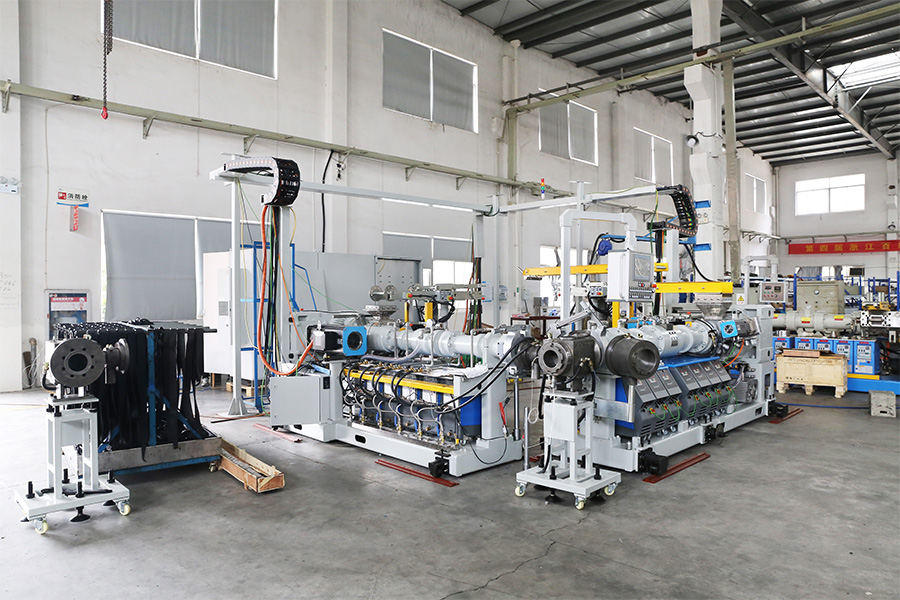
At this stage, the EPDM extruder serves as the bridge between material preparation and final product formation. Without the extruder, the rubber compound would remain in bulk form and could not be transformed into continuous profiles or precise cross-sections. Therefore, the extruder occupies a central position between mixing equipment, downstream curing systems (such as hot air tunnels, microwave curing, or salt bath curing), and cutting or winding units. Its role is not isolated but closely linked with the stability and efficiency of the entire rubber production line.
Basic Structure and Working Principle of the EPDM Extruder
The basic working principle of an EPDM extruder is similar to that of other rubber extruders, but its structure and configuration are adapted specifically for the processing behavior of EPDM. The core components include the feeding system, barrel, screw, heating and cooling units, drive system, and extrusion die.
The feeding system introduces the EPDM compound into the barrel in a controlled and continuous manner. The rotating screw inside the barrel then conveys the rubber forward. During this movement, the screw applies mechanical shear and compressive force to the material. These forces soften the rubber through internal friction and external heating from the barrel. As the EPDM compound advances, it gradually changes from a solid to a plasticized state suitable for shaping.
At the end of the barrel, the softened rubber is pushed through a die with a specific cross-sectional design. The die gives the extruded EPDM its final shape, such as a strip, tube, seal profile, or gasket form. The controlled pressure built up by the screw ensures that the rubber fills the die uniformly, producing a stable and continuous profile.
Core Role of the EPDM Extruder in Material Plasticization
One of the primary roles of the EPDM extruder is material plasticization. Although EPDM compounds are pre-mixed before entering the extruder, they still require controlled softening to reach the correct flow state for extrusion. The extruder provides this through a combination of mechanical shear, compression, and thermal energy.
EPDM rubber has distinct rheological characteristics compared with general-purpose rubbers such as natural rubber or SBR. It often exhibits higher elasticity and slower thermal softening. The screw design, including its pitch, compression ratio, and groove depth, is therefore optimized to ensure that EPDM achieves uniform plasticization without overheating or degradation. Proper plasticization allows the rubber to flow evenly through the die, which directly affects surface quality, dimensional accuracy, and internal density of the extruded product.
Function of Shaping and Dimensional Control
Another essential function of the EPDM extruder is shaping and dimensional control. The extruder converts the plasticized EPDM compound into a continuous product with a defined cross-sectional geometry. This function is realized mainly through the close interaction between the screw, the extrusion pressure, and the die design.
As the rubber is forced through the die, the extruder maintains a steady output rate and pressure. These parameters determine whether the final product will show uniform wall thickness, consistent width, and stable profile edges. If the output fluctuates, dimensional variations can occur, assembly difficulties or sealing performance issues in downstream applications such as automotive weatherstrips or construction joints.
In addition, modern EPDM extruders are often equipped with speed control systems that synchronize with downstream curing and haul-off equipment. This synchronization allows the extruded EPDM profile to maintain consistent dimensions from start to finish, even during long production runs.
Role in Process Stability and Product Consistency
The EPDM extruder also plays a key role in maintaining overall process stability. During continuous production, variations in temperature, material viscosity, and feeding rate can uneven extrusion. The extruder, through its controlled drive system and temperature regulation, helps reduce these fluctuations.
Barrel heating zones and cooling channels allow operators to fine-tune the thermal environment along the screw length. This prevents premature curing or temperature gradients inside the rubber mass. Stable operating conditions enable consistent flow behavior, which directly impacts surface smoothness, internal structure, and mechanical performance of the EPDM product.
From a quality control perspective, the extruder acts as a stabilizing unit that converts variable upstream material conditions into a standardized extrusion output. This function is particularly important when producing EPDM seals and profiles that must meet precise tolerance requirements.
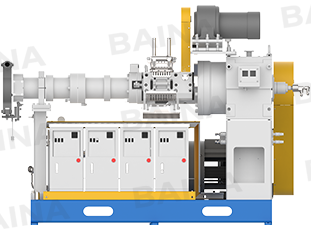
Motor Power: 37 kWMaximum Output: 150 kg/h
See Details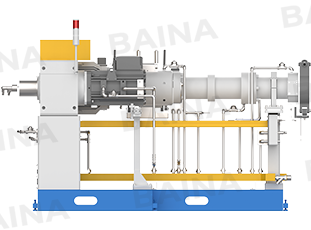
Motor Power: 45 kWMaximum Output: 280 kg/h
See Details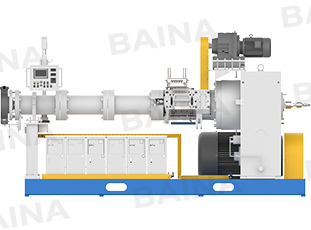
Motor Power: 160 kWMaximum Output: 1000 kg/h
See Details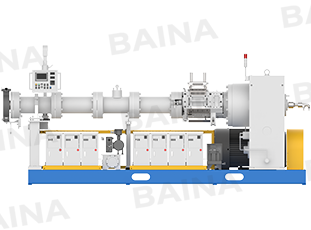
Motor Power: 160 kWMaximum Output: 1000 kg/h
See Details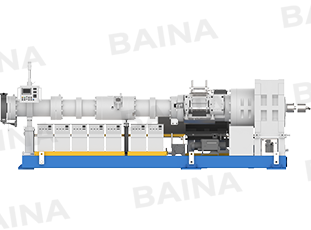
Motor Power: 315 kWMaximum Output: 2,000-2,400 kg/h
See DetailsRubber hose design is often discussed in terms of inner diameter, outer diameter, and wall thickness......
READ MOREA rubber profile can leave an extrusion die with the correct shape and still change during curing. T......
READ MORECutting a rubber tube to a specified length sounds simple until the material starts to compress, str......
READ MORE

Rubber Extrusion Machine and Equipment