



Silicone Rubber Extrusion Manufacturers
A professional production line optimized for the characteristics of silicone rubber. Offers both vertical and horizontal layouts. The line is equipped with a silicone-specific extruder, ultra-high-temperature infrared sizing ovens, and multi-layer hot air vulcanization ovens, precisely matching the processing and high-temperature vulcanization processes of silicone rubber. This ensures high-precision molding and excellent performance for products like silicone tubes and sealing strips.
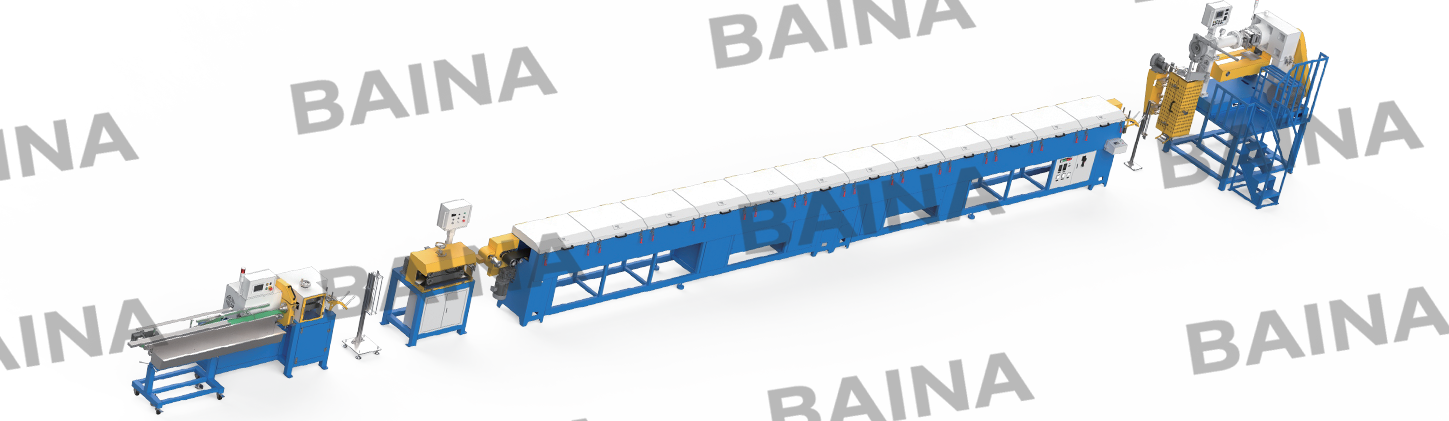
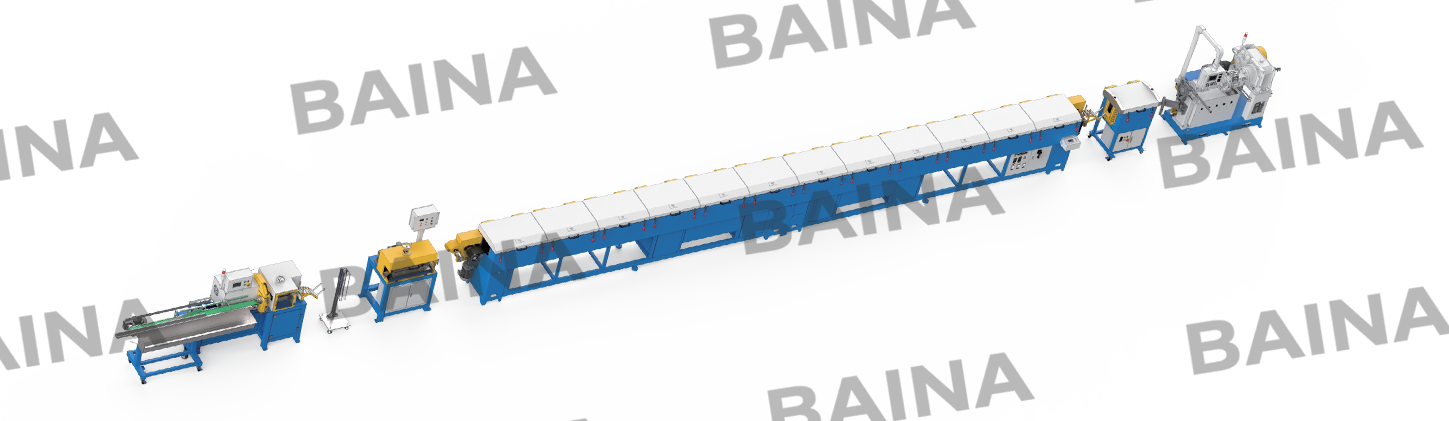
Silicone Extrusion and Curing Production Line: Technical Features and Automation Systems
Technical Features of a Silicone Extrusion and Curing Production Line
A silicone extrusion and curing production line looks similar to a rubber line at first glance. But look closer, and the differences appear everywhere. Silicone behaves differently from carbon-black-filled rubber compounds. It is stickier, more heat-sensitive, and requires precise control throughout the process.
Water-cooled extruder barrels
Unlike rubber extruders that rely on barrel heaters to soften the compound, silicone extrusion lines need active cooling. The friction from the screw generates heat quickly. Too much heat starts the curing reaction inside the barrel. A water-cooled barrel jacket keeps the silicone at 20–30°C from feed throat to die head. Without this cooling, the screw would lock up from premature vulcanization.
Hot air vulcanization (HAV) tunnels
Most rubber cures in steam autoclaves or salt baths. Silicone cannot handle moisture or salt residue. The standard curing method for silicone extrusion is a horizontal hot air tunnel. The extruded profile passes through a heated chamber several meters long. Air temperatures reach 300–400°C. The silicone cures in 30–120 seconds, depending on wall thickness and line speed.
- Multiple temperature zones along the tunnel prevent thermal shock
- Air circulation fans eliminate dead spots where curing would slow
- Infrared pre-heaters at the tunnel entrance accelerate surface curing
Laser diameter measurement with feedback control
Silicone expands when heated. The extruded profile grows slightly after leaving the die. A laser micrometer mounted after the curing tunnel measures the final diameter. If the measurement drifts, the system adjusts screw speed or haul-off rate automatically. This closed-loop control holds tolerances within ±0.1mm, which rubber lines often cannot match.
Talc or soapstone applicator
Cured silicone sticks to itself. Without a release agent, the finished profile would weld to the take-up reel. A powder applicator dusts the surface with talc or soapstone before winding. Some food-grade silicone lines use a water bath instead, followed by hot air drying. The powder method is simpler and more reliable for high-volume production.
Environmental and Safety Considerations for Silicone Rubber Extrusion Manufacturers
Running a silicone extrusion line creates fewer environmental headaches than rubber processing. No carbon black dust. No solvent-based cements. But the hazards are real and require attention.
Heat stress management
Hot air curing tunnels run at 300–400°C. The exterior surface of a well-insulated tunnel stays below 50°C. But every time an operator opens an access door or clears a jam, radiant heat hits them. Work rotations become necessary. Some facilities install reflective shields and air curtains to protect operators. Others enclose the entire curing section behind interlocked doors—the line stops before the doors open, preventing burns but reducing uptime.
Dust control for talc applicators
Powdered talc is a respiratory irritant. The applicator enclosures should be negative-pressure and vented through a baghouse filter. Operators need N95 masks when changing talc hoppers or cleaning the applicator chamber. Open-top talc baths found on older lines would never pass a modern OSHA inspection.
Spill containment for uncured silicone
Uncured silicone compound is a slip hazard. It feels greasy and does not absorb into concrete easily. Spill kits should include absorbent pads specifically for silicone oil, not general-purpose floor sweep. The standard absorbent clay used for rubber compounds floats on silicone. It does not soak in.
Fire prevention in the curing tunnel
Silicone is less flammable than natural rubber, but it will burn. The bigger risk is an uncured plug of silicone stopping in the hot air tunnel. The plug overheats, decomposes, and releases acrid smoke. The smoke triggers the building fire alarm. The solution is an infrared sensor at the tunnel exit that verifies profile movement. No movement for five seconds triggers an alarm and shuts the tunnel heaters. Operators clear the jam before the silicone decomposes.
Control Systems for Silicone Extrusion Lines
Running a silicone extrusion line without modern controls is like driving a car without a dashboard. It moves, but you have no idea how fast or how hot.
Comparison of control system tiers
|
Feature |
Entry-level |
Mid-range |
Premium |
|
Temperature control |
On-off |
PID single-loop |
PID cascade with zone interaction |
|
Recipe storage |
None (manual entry) |
50 recipes |
Unlimited with USB transfer |
|
Data logging |
No |
Shift summary |
Second-by-second, exportable |
|
Remote access |
No |
Read-only via web |
Full control via VPN |
|
Typical line cost impact |
– |
+5–8% |
+15–20% |
A silicone extrusion and curing production line without a proper control system is not a production line. It is a collection of motors and heaters waiting to fight each other. The control system is what makes them work together. Spending on controls never shows up in the product specifications. But it shows up in the uptime numbers, the scrap rate, and the sanity of the operators.
-

-
No. 18, Chunhui Est. Rd., Yong’An Ind. Area, Xianju, Taizhou, Zhejiang, ChinaRoom 707, Building 1, Baolong Plaza, Hangzhou Sci-Tech City, Yuhang District, Hangzhou, Zhejiang, China+86-576-87685299
+86-571-89059793+86-576-87685311 - Home Machinery&Solutions About Baina Industry Applications Support Info Contact Us
-
Copyright © 2025 by Zhejiang Baina Rubber & Plastic Equipment Co., Ltd. All Rights Reserved.

Silicone Extrusion And Curing Production Line