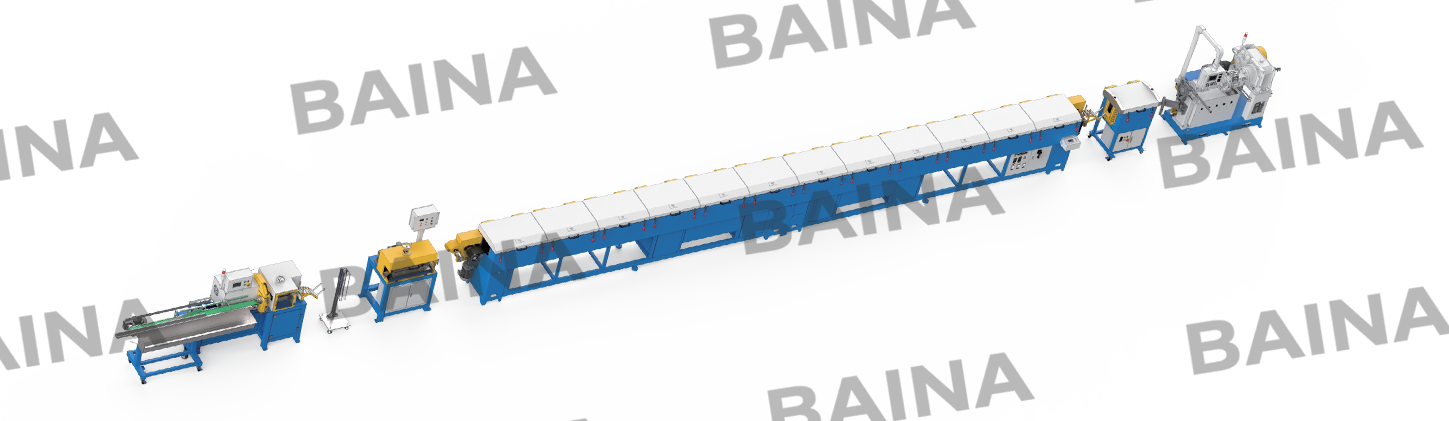
Ф90mm 16D Cold Feed Rubber Extruder
Cat:Extruder Series
Motor Power: 55 kWMaximum Output: 320 kg/h
See Details

Energy costs in rubber vulcanization lines have a way of growing quietly until they become impossible to ignore. If your production floor runs continuous extrusion around the clock, the gap between a well-matched curing system and a mismatched one shows up directly in your electricity bill, your scrap rate, and your line uptime. Engineers evaluating curing technology upgrades often find that published specifications tell only part of the story - the rest lives in how heat actually transfers to the rubber compound, how much of that energy goes to waste, and how the system behaves over a full production shift. A microwave curing oven, for example, operates on fundamentally different physics than a hot air tunnel, and that difference changes how you measure, compare, and ultimately justify the investment in each direction.
Three systems dominate continuous rubber extrusion and vulcanization lines: hot air vulcanization (HAV), salt bath or liquid curing medium (LCM), and microwave (UHF) technology - often used in hybrid configurations alongside a hot air post-cure section.
Understanding how each transfers heat to the rubber is the foundation of any meaningful energy comparison.
HAV tunnels heat the air surrounding the extrudate and rely on convection to transfer that energy into the rubber profile. The rubber is a poor thermal conductor, so energy must travel inward from the surface layer by layer.
Key energy characteristics:
In LCM systems, the rubber extrudate passes through a bath of molten salt mixture held at cure temperature. Direct contact with the liquid medium gives LCM better heat transfer than hot air alone.
Key energy characteristics:
Unlike surface heating methods, UHF energy penetrates the rubber compound and excites polar molecules throughout the cross-section simultaneously. The heat is generated within the material itself rather than transferred to it from outside.
Key energy characteristics:
Comparing kilowatt-hour figures from different systems without controlling for the same variables produces conclusions that do not hold in real production conditions. The factors that must be aligned before any comparison is meaningful include:
A reliable comparison metric is energy per kilogram of cured rubber, or energy per meter of extruded profile at a defined cross-sectional area. This normalizes the comparison across different line configurations and production rates.
To calculate it:
Tracking this across multiple production runs and product types gives a more reliable picture than a single test.
Process efficiency compares the energy actually absorbed by the rubber compound against the total energy drawn from the grid during curing. HAV systems typically show lower process efficiency because a substantial portion of the energy heats the tunnel structure, air volume, and exhaust rather than the product.
This metric is harder to measure directly but can be estimated through:
Plants that run multiple shifts or products on the same line experience the energy cost of system state changes differently depending on which technology is in use.
Tracking startup energy separately from production energy reveals a cost that seldom appears in headline comparison figures.
This category is frequently omitted from equipment-level comparisons but belongs in any plant-level audit:
Follow this sequence when auditing or comparing systems, whether on an existing line or evaluating new equipment:
When evaluating equipment you are considering purchasing rather than comparing systems already in your plant, the methodology shifts to:
HAV and LCM both apply energy to the outside of the rubber profile and rely on thermal conduction to carry that energy inward. Rubber is a poor thermal conductor, which is why HAV tunnels need significant length to achieve full cure on profiles with any wall thickness.
The practical consequences for energy:
UHF energy penetrates the compound cross-section simultaneously, which means:
This is why hybrid configurations - a UHF section followed by a shorter HAV post-cure zone - can achieve better energy efficiency and throughput than a standalone HAV system of equivalent capacity.
Not all rubber compounds respond equally to each curing method. Before attributing an energy advantage to the curing technology, confirm that the compound is appropriately formulated for the method in use.
A curing system that runs at low utilization - high idle time relative to production time - carries a disproportionately high energy cost per kilogram of output. This affects HAV more than UHF because HAV must maintain its full thermal state continuously.
Track load factor (productive run time as a proportion of total powered time) for each system and include it in the comparison. A system that appears energy-efficient at full load may not be at typical operating patterns.
Degraded insulation, fouled heating elements, and failing seals all increase energy draw without increasing useful output. Before drawing conclusions from an energy audit, inspect:
Comparisons run on equipment in differing maintenance states produce results that reflect maintenance rather than technology.
HAV, LCM, and microwave curing oven technology compare across the evaluation criteria that matter in a real production audit.
| Evaluation Criterion | Hot Air (HAV) | Salt Bath (LCM) | Microwave (UHF) |
|---|---|---|---|
| Heat transfer mechanism | Convection from surface | Conduction from surface | Volumetric – throughout cross-section |
| Start-up energy demand | High – full tunnel reheat required | High – salt mass reheat required | Low – rapid operational readiness |
| Idle energy loss | High – maintained tunnel temperature | Moderate – salt holds heat well | Low – no large thermal mass |
| Suitability for non-polar compounds | Broad – works across compound types | Broad – works across compound types | Limited – requires polar compound or formulation adjustment |
| Environmental and auxiliary systems | Exhaust treatment required | Salt handling and environmental controls | Generally cleaner; electronics cooling required |
| Physical footprint | Large – long tunnel required | Moderate – shorter than equivalent HAV | Compact – shorter zone; often paired with HAV |
| Profile geometry flexibility | High | Moderate – complex profiles may cure unevenly | Moderate – limited by penetration depth on thick sections |
A straightforward energy comparison does not always capture the full picture. Use a weighted scoring approach that accounts for the criteria that matter in your specific operation:
For a high-volume automotive sealing strip line running polar EPDM compound continuously, the calculation typically favors a hybrid UHF + HAV configuration for energy performance and throughput. For a lower-volume specialty profile operation running non-polar compounds across varied geometries, LCM or HAV may still represent the practical choice.
Neither technology is categorically right for every application - the comparison framework matters because it surfaces which factors actually drive the decision in your context.
Whether upgrading from HAV to UHF or evaluating LCM versus a hybrid line, confirm the following before finalizing equipment selection:
Moving from one curing technology to another involves:
Energy consumption in rubber curing is not a fixed cost - it is a process variable that can be measured, compared, and reduced with the right methodology and the right equipment matched to your compound and production requirements. The comparison framework described above applies whether you are auditing your current line or evaluating new equipment: define your metrics, control your variables, account for the full system including auxiliaries, and score your options against the criteria that actually drive cost in your operation.
Zhejiang Baina Rubber & Plastic Equipment Co., Ltd. engineers and manufactures rubber extrusion and vulcanization production lines across HAV, LCM, and microwave curing oven configurations, including hybrid UHF + HAV systems for continuous automotive sealing strip, hose, and profile applications. If you are working through an upgrade evaluation or building a new line specification, the technical team can support compound-to-system matching, line layout planning, and energy performance projections based on your specific product requirements. Reaching out with your compound type, profile geometry, and target throughput is a practical starting point for a conversation that goes beyond catalog specifications.
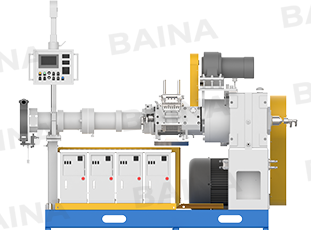
Motor Power: 55 kWMaximum Output: 320 kg/h
See Details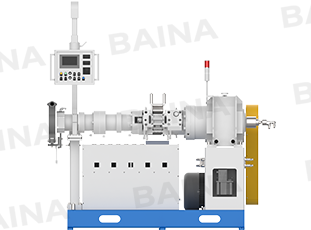
Motor Power: 22 kWMaximum Output: 120 kg/h
See Details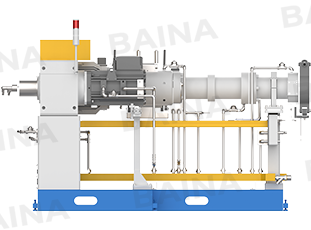
Motor Power: 45 kWMaximum Output: 280 kg/h
See Details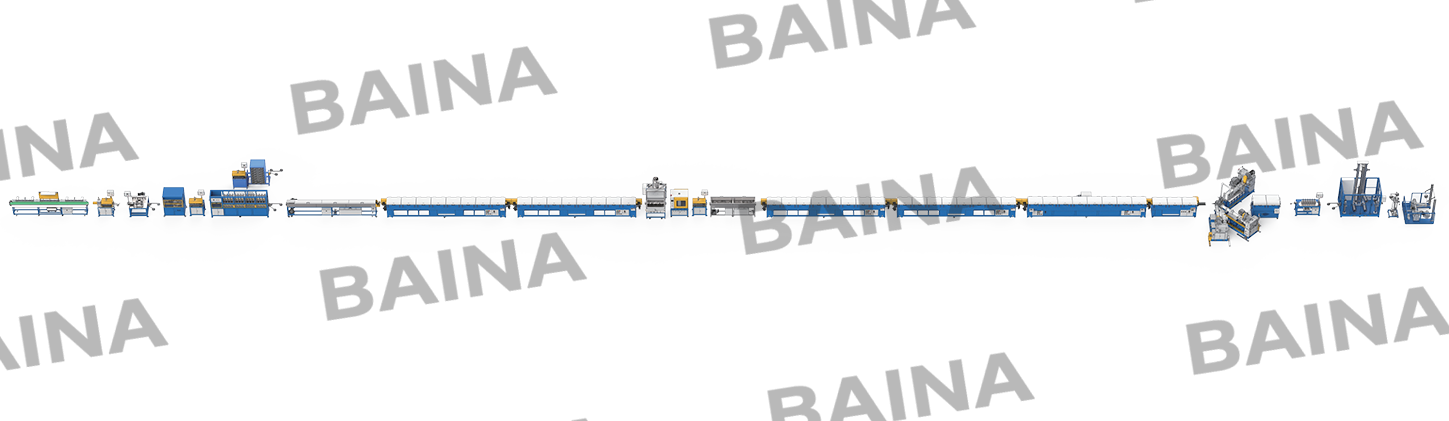
Product AdvantagesThis production line is primarily used for manufacturing rubber products that are ...
See Details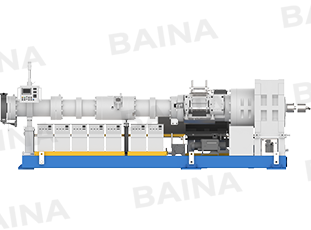
Motor Power: 315 kWMaximum Output: 2,000-2,400 kg/h
See DetailsA rubber profile can leave an extrusion die with the correct shape and still change during curing. T......
READ MORECutting a rubber tube to a specified length sounds simple until the material starts to compress, str......
READ MORERubber seals rarely share the same geometry. A flat gasket may have a relatively simple cross-sectio......
READ MORE

Rubber Extrusion Machine and Equipment