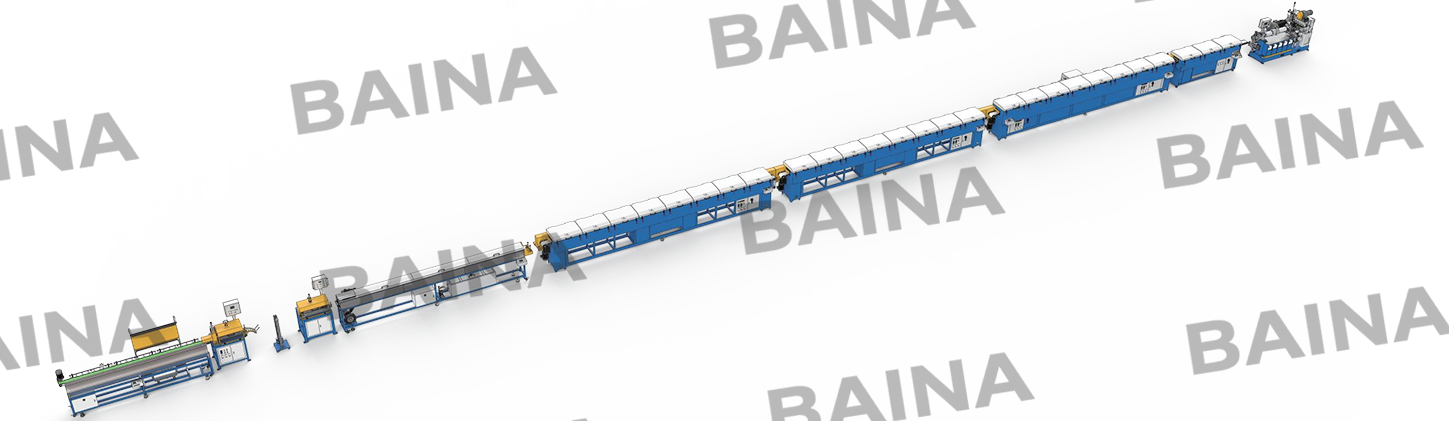
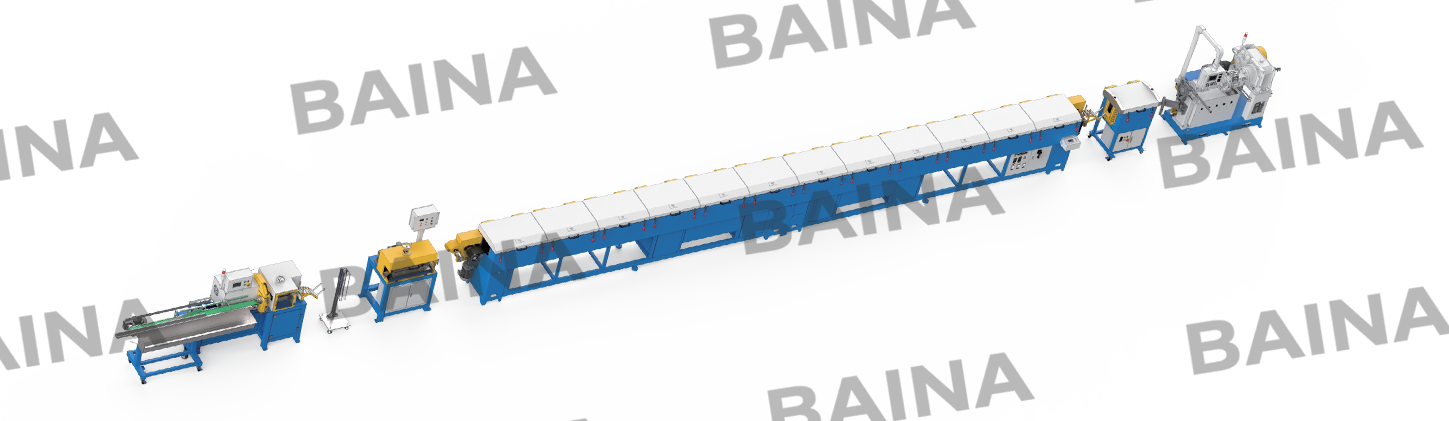
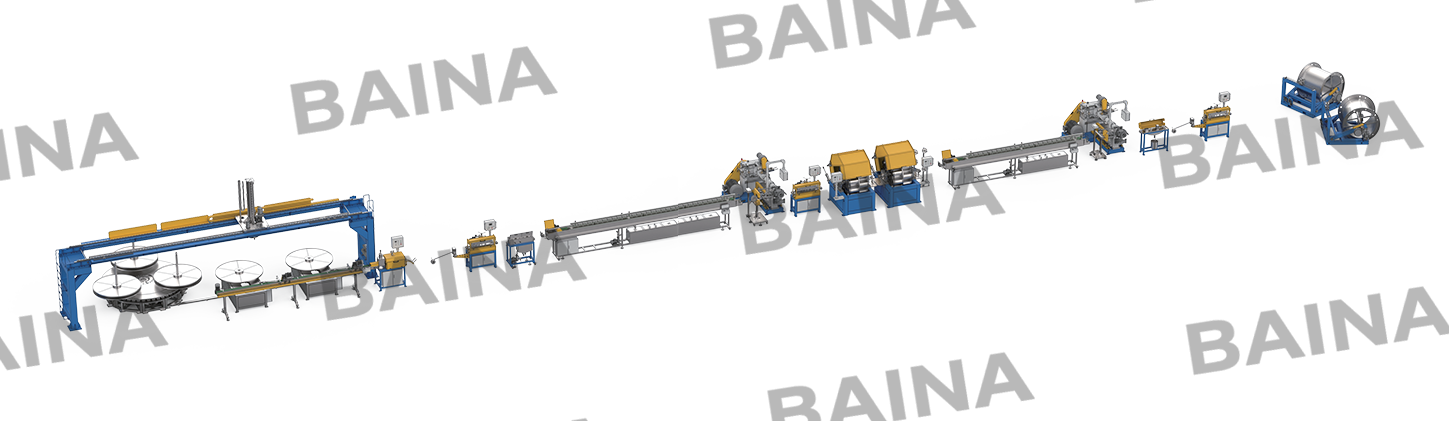
Ф90mm 20D Cold Feed Vacuum Rubber Extruder
Cat:Extruder Series
Motor Power: 55 kWMaximum Output: 320 kg/h
See Details

Automotive Fluid Transfer Systems
Rubber hose production lines commonly manufacture hoses for engine cooling circuits. These hoses circulate coolant between the engine block, radiator, and heater core. Typical production involves EPDM (ethylene propylene diene monomer) rubber, which exhibits resistance to diluted glycol-based coolants at temperatures from -40°C to 125°C. The production line includes extrusion of the inner tube, reinforcement with polyester or aramid cord, application of a cover layer, and vulcanization. Automotive specifications such as SAE J20 require burst pressures ranging from 0.7 to 1.5 MPa, depending on hose diameter.
Fuel and vapor handling systems represent another segment of automotive rubber hose production. These hoses transport gasoline, diesel, ethanol blends (up to E85), or fuel vapors from the tank to the engine. The inner tube material is often nitrile rubber (NBR) or fluorocarbon rubber (FKM) for resistance to fuel permeation. Production lines incorporate a barrier layer, typically a thin film of polyamide or ethylene vinyl alcohol (EVOH), to reduce hydrocarbon emissions. Permeation rates for modern fuel hose assemblies must stay below 15 g/m² per day under ASTM D-814 testing. The production line controls wall thickness to ±0.1 mm to ensure consistent fuel resistance.
Power steering and transmission oil cooler lines also use rubber hose production lines. These hoses operate at temperatures up to 135°C and carry hydraulic fluids or automatic transmission fluids (ATF). The reinforcement layer uses two to four braids of high-tensile steel wire to achieve working pressures of 10 to 20 MPa. Production lines performing wire braiding typically run at speeds of 20 to 50 meters per hour per head, depending on the number of braiding carriages. Post-curing inspection includes pressure testing at 1.5 times working pressure for leaks or dimensional irregularities.
Air conditioning hoses for automotive assembly represent a more specialized output of rubber hose production lines. These hoses carry R134a, R1234yf, or other refrigerants under pressures of 1 to 3 MPa on the low side and up to 5 MPa on the high side. The production line uses a nylon or polyester barrier layer to prevent refrigerant permeation through the rubber, as standard EPDM or NBR alone allows excessive loss. Permeation limits under SAE J2064 are below 10 g/m² per day for R1234yf. The vulcanization process for these hoses typically uses continuous steam or salt bath curing at 150-170°C for 5 to 20 minutes, depending on wall thickness.
Industrial Hydraulic and Pneumatic Applications
High-pressure hydraulic hoses constitute a major product from rubber hose production lines serving construction, mining, and agricultural machinery. These hoses conform to standards such as SAE 100R or ISO 1436. The inner tube is oil-resistant nitrile rubber, reinforced by two to six steel wire spiral layers or one to two steel wire braids. Burst pressures for four-spiral hoses at ½ inch size reach 215 MPa, while working pressure is typically 35 MPa. The production line must maintain constant wire tension, usually between 20 to 80 N per wire, to ensure that reinforcement layers do not buckle under cyclic pressure impulses. Impulse testing per SAE 100R2 requires withstanding 200,000 cycles at 133% of working pressure without failure.
Return and suction hoses for hydraulic systems represent a lower-pressure product from the same production lines. These hoses operate at pressures up to 2 MPa and rely on textile reinforcement such as polyester or rayon braid. The rubber compound uses SBR (styrene-butadiene rubber) or nitrile rubber for the cover, which resists oil mist and abrasion. Production line parameters for suction hose require maintaining a round internal cross-section to avoid collapse under negative pressure. A mandrel or rigid core is often used during curing to ensure concentricity. Typical production speeds range from 5 to 15 meters per minute for such hoses, slower than non-reinforced types due to the braiding step.
Pneumatic tool hoses are produced on rubber lines for workshop and industrial compressed air systems. These hoses operate at 0.7 to 1.5 MPa and require moderate flexibility and kink resistance. The rubber is typically a blend of natural rubber (NR) or SBR for good dynamic behavior. Reinforcement uses one or two layers of knitted polyester, which offers higher flexibility than braided reinforcement. Production lines incorporate a bright-colored cover layer (red, blue, or yellow) for shop floor visibility. Abrasion resistance is tested per ISO 4649, with volume loss kept below 200 mm³ for heavy-duty workshop hoses. Vulcanization can be performed in continuous liquid curing medium (LCM) tanks with molten salt or lead bath, running at line speeds of 15 to 30 meters per minute.
Material handling hoses for abrasive solids, such as sand, cement, or plastic pellets, use rubber production lines equipped with thick wear-resistant liners. The inner tube contains high proportions of natural rubber (60–80 phr) for tear strength and resilience. Some designs incorporate steel helix wire embedded in the wall to maintain roundness under vacuum and prevent collapse. Production lines for these hoses often use a pull-through extrusion process over a long mandrel, followed by autoclave curing rather than continuous vulcanization, due to the thicker walls (8 to 15 mm). Wear resistance is measured by ASTM D5963, with an acceptable volume loss of 90–150 mm³; lower values indicate longer service life in slurry transfer applications.
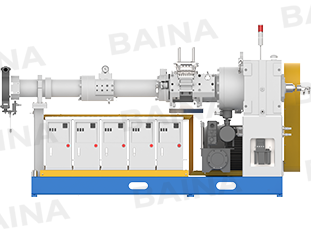
Motor Power: 55 kWMaximum Output: 320 kg/h
See Details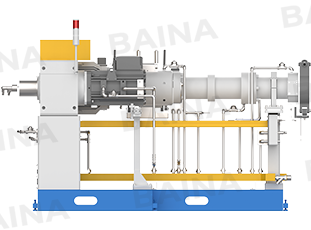
Motor Power: 45 kWMaximum Output: 280 kg/h
See Details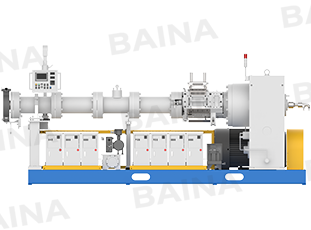
Motor Power: 160 kWMaximum Output: 1000 kg/h
See DetailsRubber hose design is often discussed in terms of inner diameter, outer diameter, and wall thickness......
READ MOREA rubber profile can leave an extrusion die with the correct shape and still change during curing. T......
READ MORECutting a rubber tube to a specified length sounds simple until the material starts to compress, str......
READ MORE

Rubber Extrusion Machine and Equipment