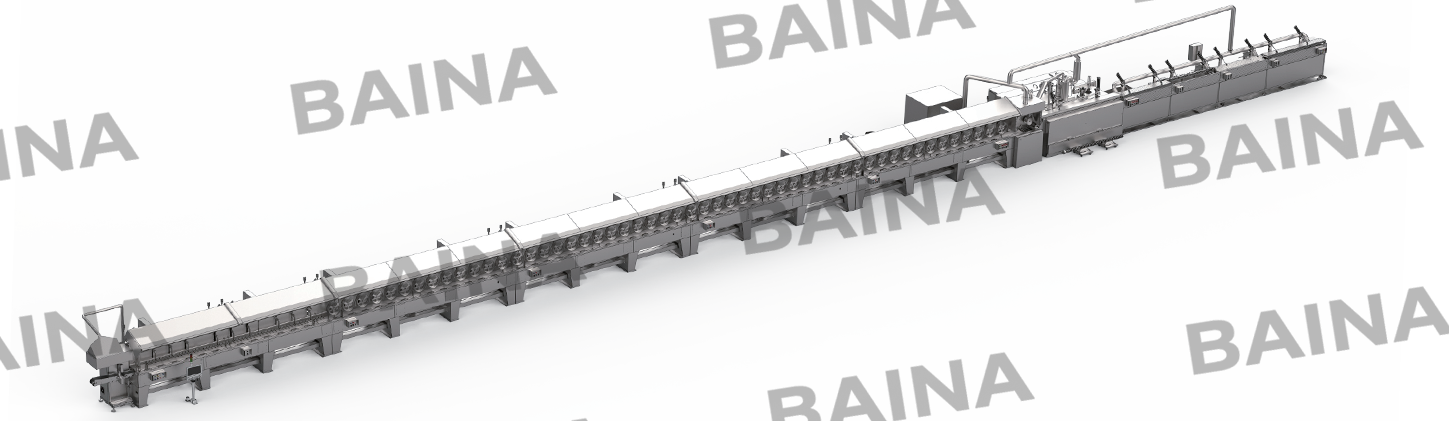
Ф120mm 16D Cold Feed Rubber Extruder
Cat:Extruder Series
Motor Power: 110 kWMaximum Output:700 kg/h
See Details
Building a rubber hose manufacturing facility involves more than purchasing an extrusion machine. Different hose products require specific processing stages, including rubber feeding, tube extrusion, reinforcement, vulcanization, cooling, and final inspection. A properly configured rubber hose making machine production line should connect these operations according to the hose structure, material properties, and required production capacity.
At Baina, we provide rubber processing equipment and production line solutions for manufacturers handling different industrial applications. Our equipment planning considers the relationship between each production stage, helping customers evaluate the machinery required for their intended hose products.

Each stage has a different function, but the equipment must work together as part of an organized manufacturing process. The following sections explain the main machinery involved and the technical factors manufacturers should consider when planning a rubber hose production facility.
Rubber compound preparation determines the material consistency entering the extrusion stage. Raw rubber is mixed with carbon black, fillers, plasticizers, curing agents, and other additives according to the required formulation.
Common preparation equipment includes:
Provide intensive mixing and dispersion of rubber ingredients to prepare compounds for subsequent processing.
Support compound blending, sheeting, and temperature adjustment during rubber preparation.
Helps stabilize mixed compounds before they enter subsequent manufacturing stages.
Manufacturers should evaluate the connection between mixing capacity and downstream extrusion requirements. Inadequate preparation arrangements can create material supply differences that affect the consistency of subsequent operations.
The extrusion section forms the basic structure of the hose. A rubber extruder processes the compound through a screw and die system to produce continuous tubular material with the required dimensions.
Depending on the hose design, the production line may require separate extrusion operations for the inner tube and outer cover. The inner layer provides the fluid-contact surface, while the outer layer protects against abrasion, weather exposure, and external damage.
At Baina, we consider these application requirements when discussing rubber extrusion equipment. The relationship between the extruder and the following reinforcement or curing section should also be included in production line planning.
Not every rubber hose requires reinforcement. However, hydraulic hoses, industrial pressure hoses, and other reinforced products need additional structural layers to withstand internal pressure and mechanical stress.
Two common reinforcement methods are textile or steel-wire braiding and spiral winding. Braiding interlaces reinforcement strands around the inner tube, while spiraling arranges reinforcement materials in controlled helical patterns.
| Evaluation Item | Braiding | Spiraling |
| Basic Process | Interlaces reinforcement strands around the inner tube. | Arranges reinforcement materials in helical patterns. |
| Reinforcement Materials | Polyester, nylon, aramid fiber, or steel wire. | Suitable textile or steel reinforcement materials according to hose design. |
| Layer Configuration | Single-layer or multiple-layer reinforcement. | Single or multiple spiral reinforcement layers. |
| Key Control Factor | Strand tension and distribution. | Spiral pitch and material placement. |
| Production Consideration | Coordination between braiding speed and tube movement. | Coordination between winding arrangement and production speed. |
The reinforcement equipment should match the hose diameter and required mechanical performance. Incorrect tension or uneven strand distribution can affect hose flexibility and pressure resistance.
After tube formation and reinforcement, the rubber hose needs vulcanization to develop its intended elasticity, strength, and resistance properties. The curing system should match the rubber formulation, hose structure, and production arrangement.
Suitable for batch curing of mandrel-based hose products.
Support continuous curing of suitable rubber profiles and hoses.
Combine different heating methods for continuous processing applications.
Used in certain continuous rubber vulcanization processes.
Temperature, curing duration, and line speed must be coordinated with the compound's curing characteristics. Insufficient curing may affect mechanical properties, while excessive curing can damage the finished product.
Choosing a vulcanization system should involve more than comparing heating methods. The curing equipment must connect properly with the extrusion and reinforcement sections to support the intended manufacturing process.
Vulcanized hoses need suitable cooling before dimensional inspection and final handling. Cooling equipment helps stabilize the product and reduces the risk of deformation during transportation or cutting.
Additional finishing equipment may include:
Help reduce product temperature after curing and prepare hoses for subsequent handling.
Maintain controlled product movement and coordinate material transfer between production sections.
Divide continuous hose products into the required lengths according to manufacturing specifications.
Support length measurement and product identification during finishing.
Prepare finished hoses for storage, transportation, and shipment.
The required finishing arrangement depends on whether the factory produces continuous hose rolls, fixed-length sections, or customized assemblies.
A rubber hose production line should include suitable inspection equipment rather than treating quality testing as a separate purchasing consideration. Different applications require different performance checks.
| Inspection Equipment | Key Evaluation |
| Dimensional Measuring Instruments | Inner diameter, outer diameter, and wall thickness. |
| Hydrostatic Pressure Tester | Pressure resistance and leakage performance. |
| Burst Pressure Tester | Pressure limit before hose failure. |
| Impulse Testing Machine | Fatigue resistance under repeated pressure cycles. |
| Tensile Testing Machine | Material strength and elongation characteristics. |
For example, pressure-related applications may require specific hydrostatic, burst, or impulse testing arrangements. Dimensional measuring instruments are also important for checking hose dimensions against production drawings and customer requirements.
Including quality inspection in the original equipment plan helps manufacturers coordinate testing procedures with the actual products being manufactured.
Before purchasing a rubber hose making machine system, manufacturers should clarify several technical requirements. These details help determine whether a standard production arrangement is sufficient or whether customized equipment is necessary.
| Hose Manufacturing Requirement | Equipment to Evaluate |
| Rubber compound preparation | Internal mixers, open mixing mills, cooling equipment |
| Inner and outer tube formation | Rubber extruders and crosshead dies |
| Textile reinforcement | Rubber hose braiding equipment |
| Spiral reinforcement | Rubber hose spiraling equipment |
| Rubber curing | Steam autoclaves, hot-air, microwave, or salt-bath systems |
| Product finishing | Cooling, traction, cutting, and winding equipment |
| Product verification | Dimensional and pressure testing instruments |
A production line designed for simple industrial tubing may have different equipment requirements from a system used for multi-layer hydraulic hoses. Reviewing the product structure and manufacturing objectives before purchasing helps determine which processing stages are necessary.
At Baina, we understand that different hose manufacturers have different equipment requirements. A production line designed for simple industrial rubber tubing may not be suitable for multi-layer hydraulic hoses. Equipment configuration should therefore reflect the product structure and manufacturing objectives.
Our rubber processing equipment solutions cover extrusion and related production line applications. We work with customers to review product drawings, material information, required dimensions, and expected production capacity before discussing suitable equipment arrangements.
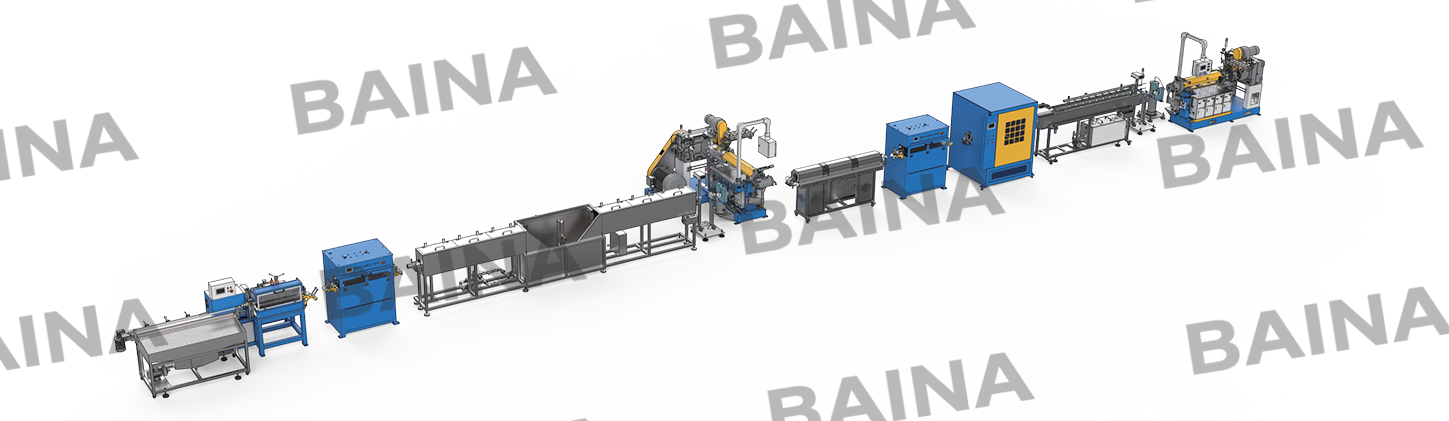
A complete rubber hose production line may include rubber mixing equipment, extruders, reinforcement machines, vulcanization systems, cooling units, cutting machines, and inspection equipment. The exact configuration depends on hose construction, pressure requirements, material properties, and production volume.
At Baina, we focus on connecting these production stages through application-based equipment planning. Contact our team with your hose specifications to discuss a suitable rubber hose making machine configuration for your manufacturing project.
Share your hose construction, material requirements, size range, and production objectives with Baina. Our team can discuss the equipment arrangement required for your rubber hose manufacturing project.
Contact BainaA rubber hose production line may include rubber mixing equipment, extruders, reinforcement machines, vulcanization systems, cooling units, cutting machines, and inspection equipment. The exact arrangement depends on hose structure, application, material properties, and production requirements.
No. Single-layer rubber hoses may not require reinforcement machinery. Hydraulic hoses, industrial pressure hoses, and other reinforced products may need braiding or spiraling equipment according to their structural and pressure requirements.
A braiding machine interlaces reinforcement strands around the inner rubber tube, while a spiraling machine arranges reinforcement materials in helical patterns. The appropriate method depends on hose construction and required mechanical performance.
The appropriate curing method depends on rubber formulation, hose structure, production arrangement, and processing requirements. Steam autoclaves, hot-air systems, microwave and hot-air combinations, and salt-bath systems are used in different rubber curing applications.
Manufacturers should provide hose application, product structure, inner and outer diameter, wall thickness, reinforcement requirements, expected output, curing method, and available factory installation space. These details help evaluate the required machinery and production line configuration.
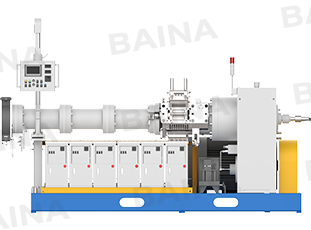
Motor Power: 110 kWMaximum Output:700 kg/h
See Details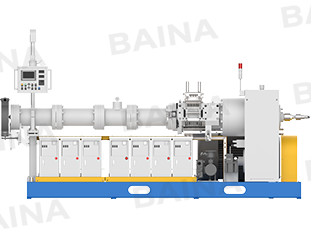
Motor Power: 110 kWMaximum Output: 700 kg/h
See Details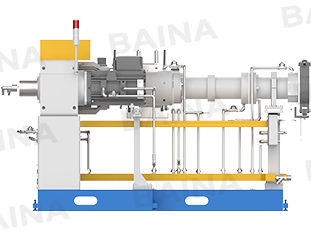
Motor Power: 45 kWMaximum Output: 280 kg/h
See Details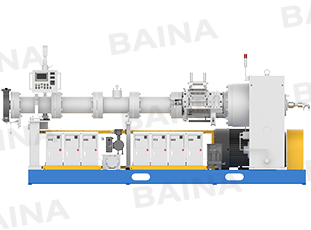
Motor Power: 160 kWMaximum Output: 1000 kg/h
See DetailsBuilding a rubber hose manufacturing facility involves more than purchasing an extrusion machine.......
READ MOREDimensional consistency is a key requirement in EPDM rubber profile manufacturing. Automotive seal......
READ MORERubber extrusion quality depends on more than machine capacity or screw speed. The physical proper......
READ MORE

Rubber Extrusion Machine and Equipment