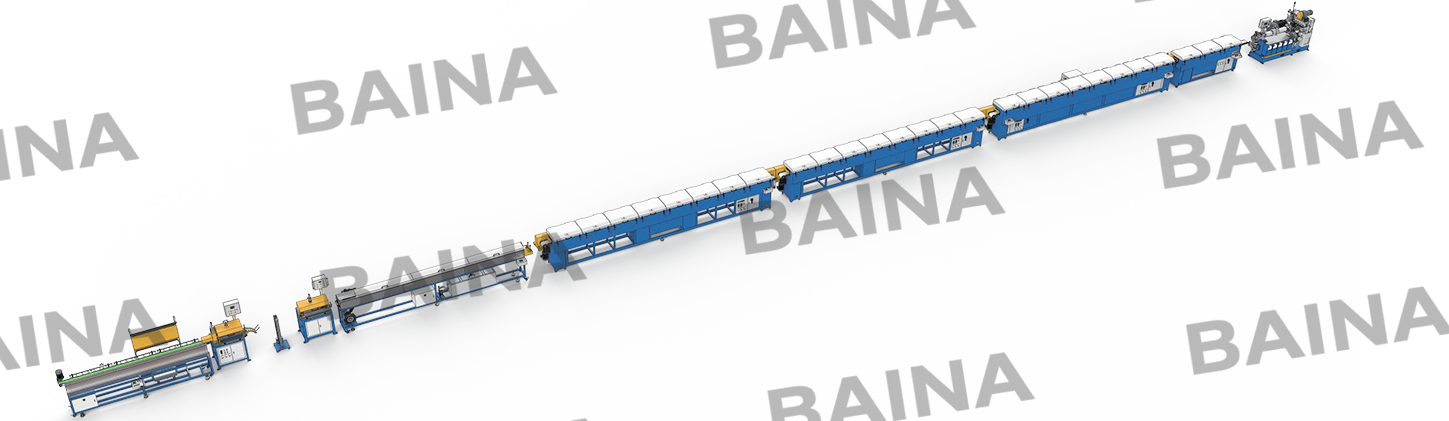
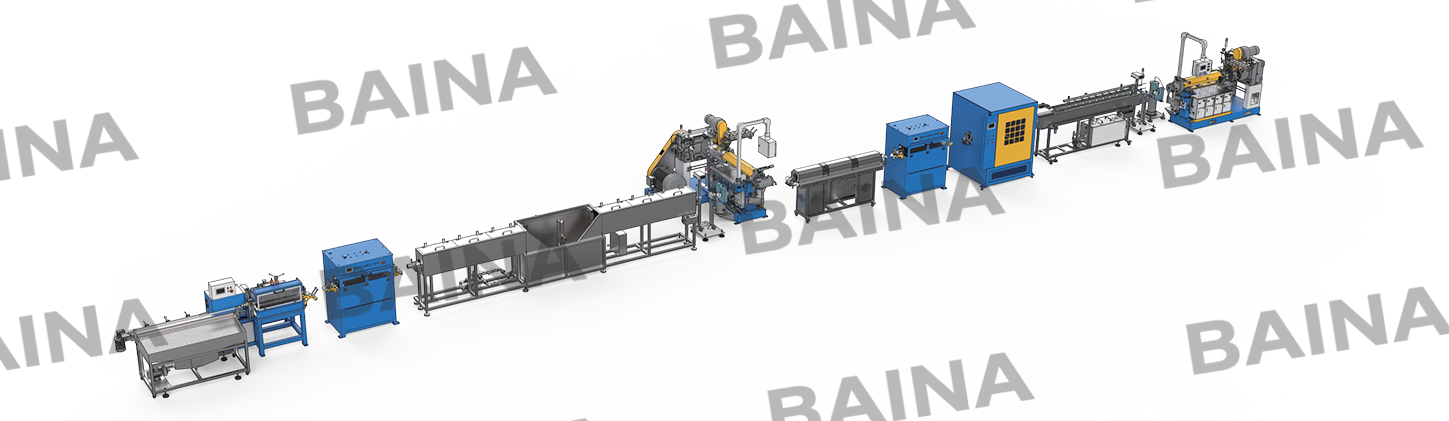
Ф75mm 16D Cold Feed Rubber Extruder
Cat:Extruder Series
Motor Power: 37 kWMaximum Output: 150 kg/h
See Details
Dimensional consistency is a key requirement in EPDM rubber profile manufacturing. Automotive sealing strips, insulation pipes, rubber sheets, and industrial sealing components often require controlled thickness, width, and cross-sectional geometry. However, variations can appear at different stages of production, even when the same rubber formulation is used. Understanding the EPDM rubber extrusion process helps manufacturers identify these variations and improve production control.
At Baina, we focus on the relationship between extrusion equipment, material behavior, and downstream processing. Our experience with rubber processing production lines shows that dimensional deviations rarely come from a single operating factor. Die design, compound viscosity, temperature, screw speed, and haul-off conditions all influence the final product dimensions.
EPDM is a viscoelastic material. Rubber compounds undergo deformation while passing through the extrusion die and partially recover their original shape after leaving the die opening. This behavior is known as die swell.
The extruded profile may become wider or thicker than the die opening, making die compensation an important part of equipment and tooling preparation.
We recommend evaluating die dimensions through actual material trials rather than relying entirely on the nominal opening size. This helps establish a suitable tooling design for the required EPDM profile.
Temperature control is another important factor in EPDM extrusion. Heat generated by screw rotation, friction, and external heating can change compound viscosity during continuous production. Excessive heat may also increase the risk of premature vulcanization.
Temperature differences between the feeding zone, barrel, extrusion head, and die can create inconsistent material flow. A stable temperature profile helps maintain more predictable extrusion conditions.
At Baina, we consider the following aspects during production line configuration:
Extrusion output and downstream pulling speed directly affect profile dimensions. Screw speed determines how much rubber enters the extrusion head, while the haul-off system controls how quickly the extruded material moves through the production line.
A mismatch between these two speeds can cause stretching, thickness changes, or fluctuations in profile width. Excessive pulling force may reduce product dimensions, while insufficient traction can allow the material to expand or deform during transportation.
Our equipment planning considers the coordination of extruder output, conveyor movement, and haul-off speed. Manufacturers should also monitor these settings after material or product specifications change.
EPDM profiles usually require continuous vulcanization after extrusion. Common curing methods include hot-air tunnels, microwave heating, and salt-bath systems. The selected method and curing conditions influence the final product structure and dimensional stability.
Uneven heating or insufficient curing may cause differences in shrinkage, deformation, or surface quality. Product dimensions measured immediately after the die may therefore differ from those recorded after curing and cooling.
We recommend checking the following production conditions:
Dimensional inspection should cover multiple production stages rather than relying only on the finished product measurement. This makes it easier to identify where deviations begin and which equipment settings require adjustment.
| Inspection Stage | Key Parameters | Purpose |
| Die exit | Width, thickness, cross-sectional shape | Evaluate die swell and initial profile geometry |
| After haul-off | Profile dimensions and stretching | Check pulling speed and tension effects |
| After vulcanization | Shape, shrinkage, surface condition | Assess curing-related dimensional changes |
| After cooling | Final width and thickness | Confirm finished product dimensions |
Continuous laser measurement can also help manufacturers monitor profile dimensions during production. Combined with regular sampling and equipment parameter records, this information provides a practical basis for process adjustments.
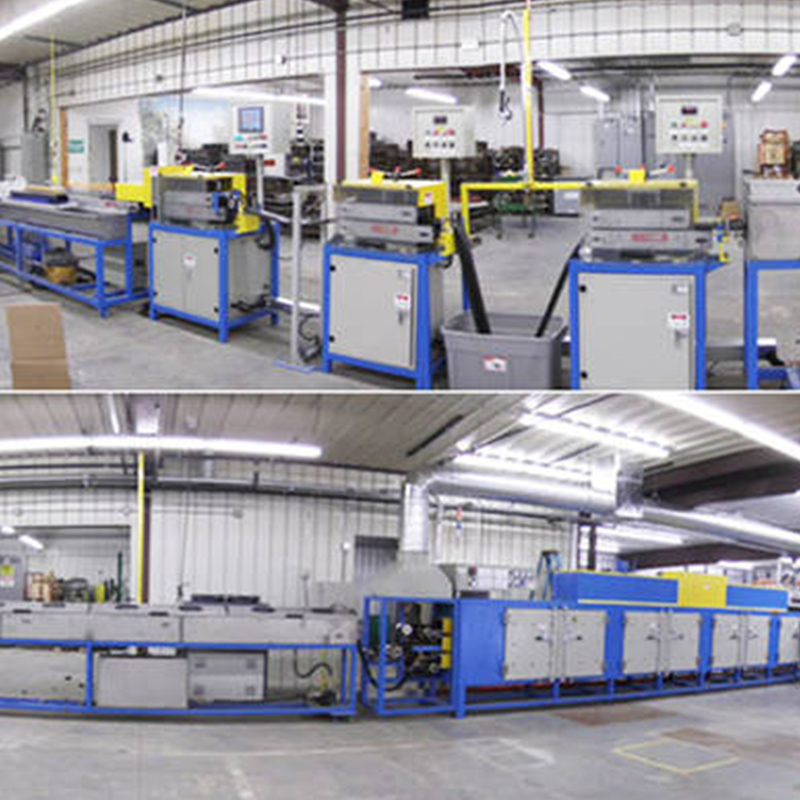
At Baina, we understand that stable EPDM extrusion requires coordination between the extruder, die system, temperature control equipment, vulcanization section, and haul-off unit. Each component has a role in maintaining the required product dimensions.
Our production line solutions are developed around customer application requirements, including rubber compound characteristics, product cross-sections, target dimensions, and expected output. Providing product drawings and available compound processing data helps our team evaluate equipment configuration and discuss suitable production arrangements.
Dimensional variation in EPDM extrusion can begin at the die exit and continue through pulling, vulcanization, and cooling. Die swell, temperature fluctuations, speed coordination, and curing conditions should therefore be evaluated as connected process variables.
At Baina, we focus on helping rubber manufacturers coordinate these production stages through suitable equipment configuration and process control. Contact our team to discuss your EPDM product specifications and rubber extrusion production line requirements.
Die swell is a common reason. EPDM rubber partially recovers its elastic deformation after leaving the die, causing the extruded profile to expand beyond the die opening.
Yes. Changes in screw speed influence material output, shear conditions, and die swell. The haul-off speed should also be coordinated with extrusion output to maintain dimensional consistency.
Vulcanization and subsequent cooling can change the profile dimensions. Final inspection provides a more reliable reference for determining whether the finished product meets the required specifications.
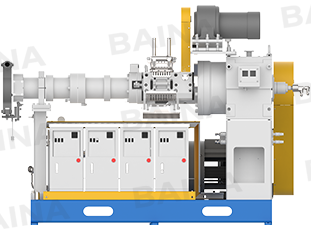
Motor Power: 37 kWMaximum Output: 150 kg/h
See Details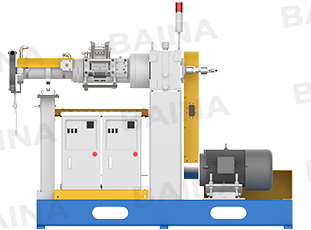
Motor Power: 7.5 kWMaximum Output: 50 kg/h
See Details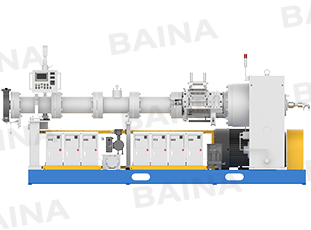
Motor Power: 160 kWMaximum Output: 1000 kg/h
See Details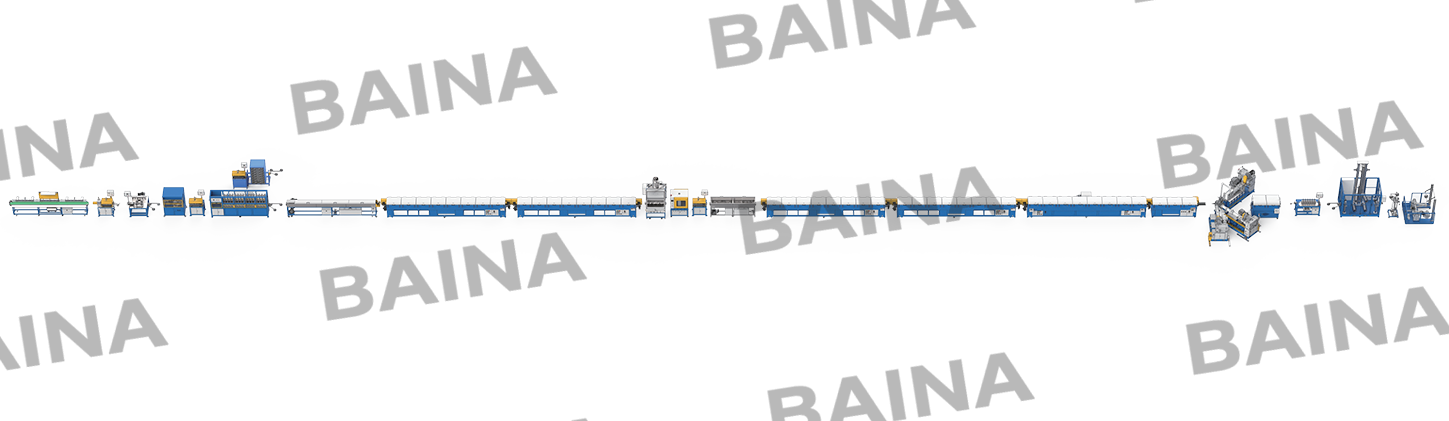
Product AdvantagesThis production line is primarily used for manufacturing rubber products that are ...
See DetailsDimensional consistency is a key requirement in EPDM rubber profile manufacturing. Automotive sealin......
READ MORERubber extrusion quality depends on more than machine capacity or screw speed. The physical properti......
READ MOREA silicone sealing strip may leave an extrusion die with the correct general shape, yet its final di......
READ MORE

Rubber Extrusion Machine and Equipment