Ф90mm 16D Cold Feed Rubber Extruder
Cat:Extruder Series
Motor Power: 55 kWMaximum Output: 320 kg/h
See Details

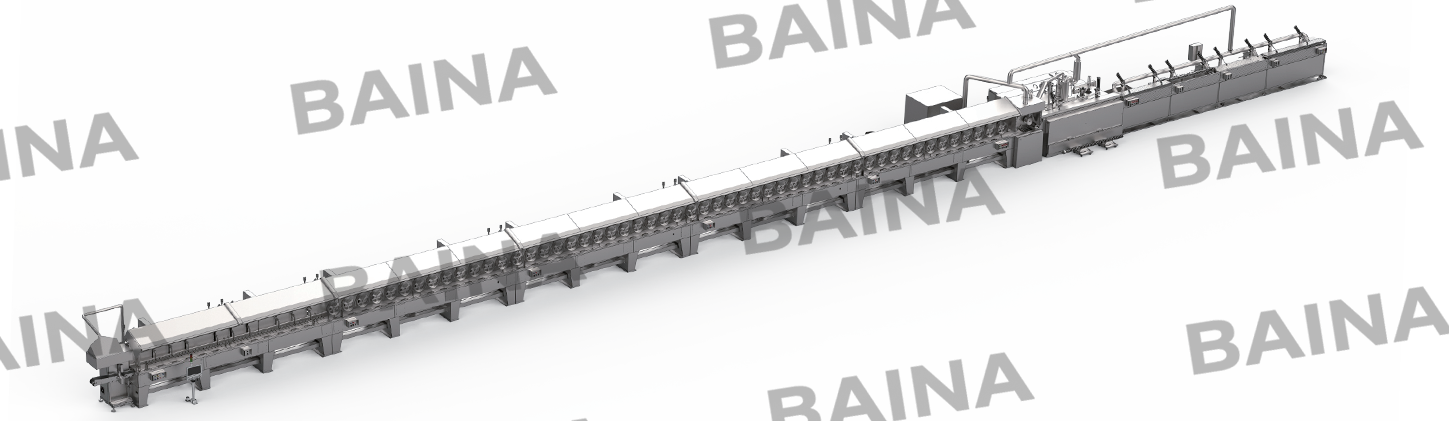
A salt bath curing line is an industrial system used to vulcanize continuous lengths of rubber or silicone profiles, such as weatherstrips for automotive doors, window seals, and gaskets. The process passes extruded uncured rubber through a long tank (10–40 meters) filled with molten salt, typically a eutectic mixture of potassium nitrate (KNO₃), sodium nitrate (NaNO₃), and sodium nitrite (NaNO₂). The salt bath transfers heat to the rubber quickly and uniformly because the molten salt has a thermal conductivity of approximately 0.5–0.6 W/m·K—significantly higher than hot air (0.03 W/m·K). Operating temperatures range from 180°C to 260°C. After leaving the salt bath, the rubber passes through washing stations to remove residual salt, then cooling and drying sections.
|
Application Sector |
Product Examples |
Profile Cross-Section |
Line Speed (m/min) |
Salt Bath Length (m) |
Typical Compound |
|
Automotive weatherstripping |
Door seals, trunk seals, window run channels |
Hollow (sponge) or solid (dense) |
15–40 |
12–25 |
EPDM (ethylene propylene diene monomer) |
|
Construction seals |
Window gaskets, expansion joint seals |
Solid, bulb, or finned |
10–25 |
10–20 |
EPDM, silicone, or neoprene |
|
Appliance gaskets |
Refrigerator door gaskets, oven seals |
Magnetic or non-magnetic hollow |
8–20 |
8–15 |
PVC/nitrile, silicone |
|
Industrial profiles |
Conveyor belt edges, rail pad seals |
Rectangular or custom |
5–15 |
12–30 |
Natural rubber, SBR (styrene-butadiene rubber) |
Automotive weatherstripping: the dominant application. Approximately 70–80% of salt bath curing lines worldwide are installed for automotive weatherstrip production. A typical mid-sized car contains 40–60 meters of rubber weatherstripping. The salt bath method is chosen because EPDM rubber (the standard material for automotive seals) cures optimally at 200–230°C. Hot air ovens require 15–30 minutes of dwell time to achieve the same cure state, necessitating ovens 50–100 meters long. Salt bath lines achieve full cure in 2–5 minutes, reducing line length by a factor of 5–10. The high heat transfer coefficient of molten salt (500–1,000 W/m²·K vs. 30–50 W/m²·K for forced hot air) allows faster line speeds. For a door seal manufacturer producing 10,000 meters per shift, a salt bath line running at 30 m/min produces 14,400 meters in 8 hours (including startup and changeover), meeting demand.
Construction and appliance seals: moderate but established use. Window gaskets for commercial buildings are often EPDM profiles cured in salt baths. However, many construction profiles are cured using microwave or hot air because lower production volumes (500–2,000 meters per shift) do not justify the higher operating cost of salt baths. Salt bath lines require continuous salt replenishment and wastewater treatment for wash water, adding $50–100 per hour in operating costs. Appliance gaskets (refrigerator doors) are a growing application: magnetic gaskets contain a ferrite-loaded PVC or nitrile compound that cures at lower temperatures (180–200°C). Salt baths provide uniform heat without hot spots, preventing distortion of the magnetic strip.
Limitations and alternatives. Salt bath lines are not suitable for profiles containing fabrics or flocking (adhered fibers) because the molten salt penetrates fabric layers and cannot be fully washed out. For these products, hot air or fluidized bed curing (using glass beads instead of salt) is used. Additionally, salt bath lines cannot cure profiles with metal inserts (e.g., carrier clips) because the metal corrodes in the molten salt. The application breadth is therefore wide within the specific category of continuous, all-rubber profiles without inserts or fabric, but narrow compared to all rubber curing methods. Of the approximately 2,000 continuous curing lines globally, roughly 600–800 are salt bath type, with the remainder being microwave (800–1,000), hot air (300–400), and fluidized bed (100–200).
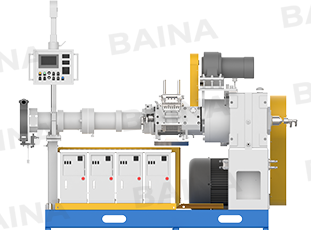
Motor Power: 55 kWMaximum Output: 320 kg/h
See Details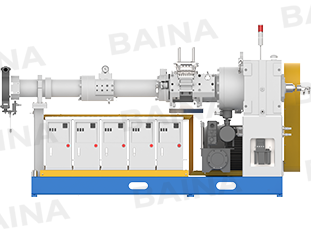
Motor Power: 55 kWMaximum Output: 320 kg/h
See Details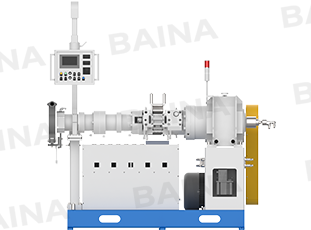
Motor Power: 22 kWMaximum Output: 120 kg/h
See Details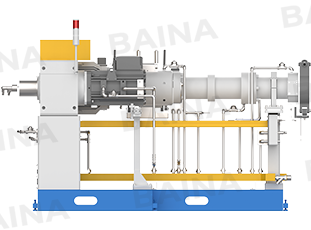
Motor Power: 45 kWMaximum Output: 280 kg/h
See Details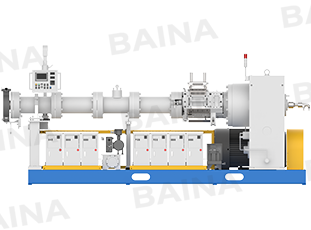
Motor Power: 160 kWMaximum Output: 1000 kg/h
See DetailsRubber seals rarely share the same geometry. A flat gasket may have a relatively simple cross-sectio......
READ MORESilicone extrusion may look straightforward from the outside: a rubber compound enters the extruder,......
READ MOREFuel hoses are critical components in automotive and industrial fuel delivery systems. They must tra......
READ MORE

Rubber Extrusion Machine and Equipment