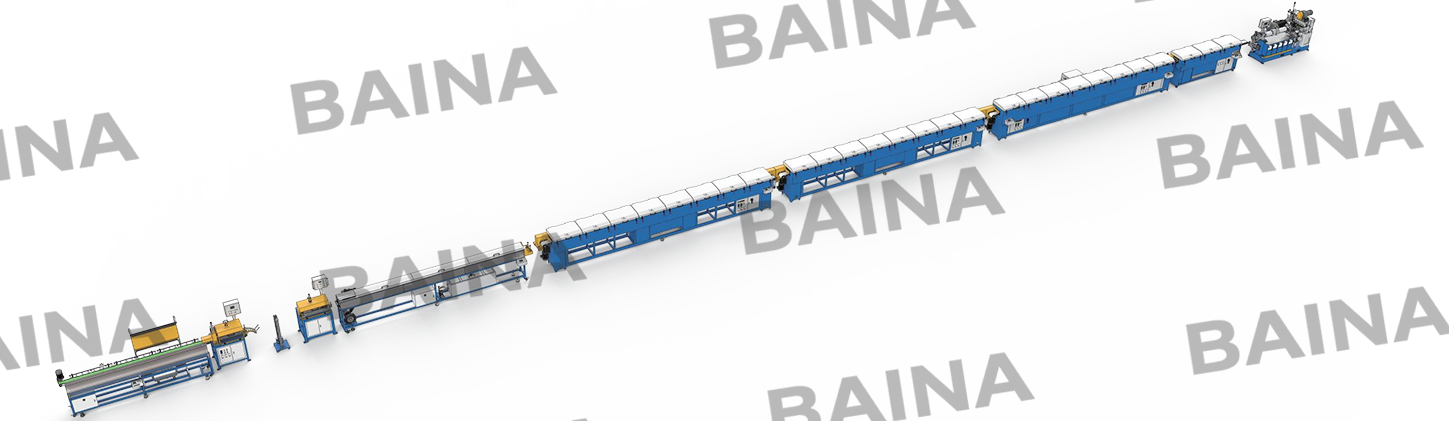
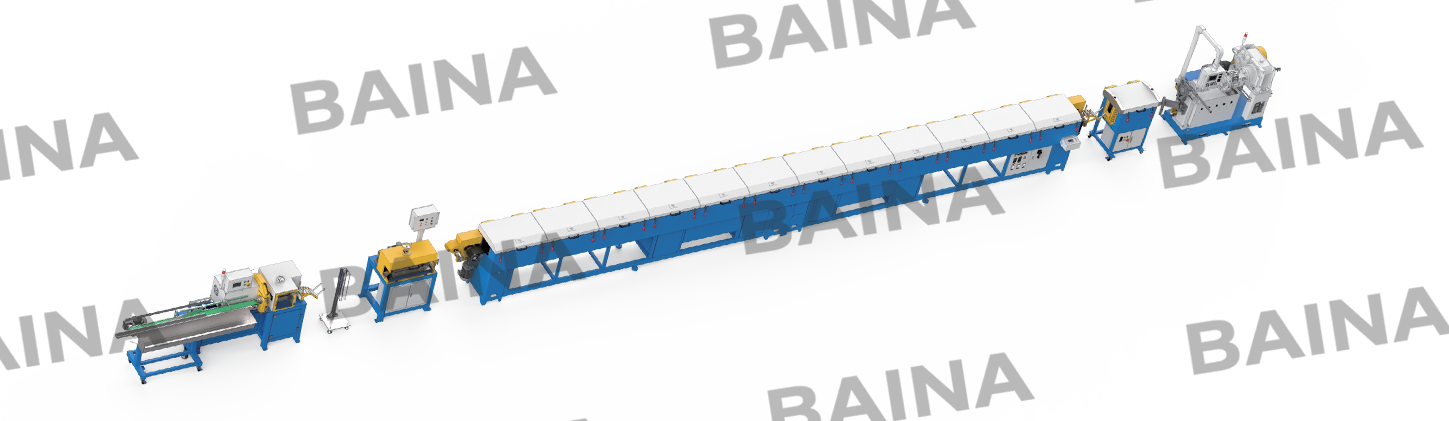
Ф75mm 16D Cold Feed Rubber Extruder
Cat:Extruder Series
Motor Power: 37 kWMaximum Output: 150 kg/h
See Details

Compression molding press – The most common type for general rubber parts. The machine has a heated top and bottom platen. Uncured rubber compound (preform) is placed into a mold cavity, the press closes, and heat and pressure cure the rubber. Platen sizes range from 250 mm × 250 mm to 1,500 mm × 1,500 mm. Clamping force: 50–1,000 tons. Cycle time: 3–10 minutes. Used for seals, gaskets, mounts, and matting. Cost: $15,000–150,000. Simple operation but low automation; flash (excess rubber) must be trimmed manually after curing.
Transfer molding press – A variation of compression molding with a separate pot and plunger. Uncured rubber is placed in a pot above the mold cavity. The plunger forces rubber through runners and gates into the closed mold. This allows molding of complex shapes with inserts (e.g., metal-bonded rubber bushings) and produces less flash than compression molding. Clamping force: 50–500 tons. Transfer pressure: 20–50 MPa. Cycle time: 4–12 minutes. Cost: $30,000–200,000. Higher tooling cost than compression molds due to runner system.
Injection molding machine (rubber type) – Designed specifically for rubber, with a screw or ram injector that plasticizes and injects uncured rubber into a heated mold. Injection pressures: 80–150 MPa. Mold clamping force: 100–1,000 tons. Shot size: 100–10,000 cm³. Cycle time: 1–5 minutes (significantly faster than compression). Used for high-volume production of automotive seals, O-rings, and vibration dampers. Cost: $80,000–500,000. Lower labor cost per part but higher machine and tooling investment. Cold runner systems (rubber remains uncured in runners) reduce material waste to 5–10% vs. 15–25% for hot runners.
Rotary vulcanization press – A carousel-style machine with multiple mold stations (typically 6–20 stations). Each station indexes through loading, curing, and unloading positions. The rotary design allows continuous operation: while one station cures, another is being loaded, and another is being unloaded. Used for high-volume production of small parts like rubber boots, plugs, and bottle stoppers. Production rate: 300–1,200 parts per hour. Cost: $100,000–400,000. Requires precise temperature control across all stations (±2°C). Mold changeover takes 2–4 hours.
Autoclave vulcanizer – A large pressure vessel (1–5 meters diameter, 3–20 meters length) that vulcanizes rubber-covered rolls, conveyor belts, and hose assemblies. The product is placed inside, steam or hot air is introduced (temperature 120–180°C, pressure 0.4–1.5 MPa), and curing occurs over 1–8 hours. Not a press; no mold cavity. Used for retreading truck tires and vulcanizing rubber linings. Cost: $50,000–500,000 depending on size. Operating cost is high due to steam generation and long cycle times.
Hydraulic rubber vulcanizing press with vacuum chamber – A compression or injection press enclosed in a vacuum housing. Vacuum (absolute pressure 10–50 kPa) is drawn before mold closing to remove air from the cavity. This prevents air entrapment, which causes surface blisters and porosity. Required for high-quality parts such as medical rubber stoppers and aerospace seals. Vacuum pump capacity: 40–200 m³/hour. Cost premium: +$20,000–50,000 over standard press.
Mold design optimization
Rubber molds represent 20–40% of the total tooling investment for a vulcanizing machine. Optimizing mold design reduces material waste and cycle time. A compression mold for a 200 mm diameter rubber gasket (10 mm thick) traditionally uses a flash groove that wastes 15–20% of the rubber compound. Optimized mold designs incorporate precision-ground cavity closure (clearance 0.05–0.10 mm) and a tapered flash land that reduces waste to 8–10%. For a production run of 100,000 gaskets, each weighing 80 grams, waste reduction from 15% to 8% saves 80 g × 7% = 5.6 g per part × 100,000 = 560 kg of rubber compound. At $3.50/kg for EPDM rubber, material saving is $1,960. Additionally, optimized mold heating channels (positioned within 15–20 mm of the cavity, compared to 30–35 mm in standard molds) reduce cure time from 8 minutes to 6.5 minutes. For a press operating 4,000 hours per year, the 1.5-minute saving increases annual output by 15–20% without additional labor. Mold optimization adds $2,000–5,000 to tooling cost but pays back within 6–12 months for medium-volume production (50,000+ parts/year).
Automated production
Automated loading and unloading systems reduce labor cost and improve consistency. A compression press operated manually requires one operator per press to load preforms, close the press, remove parts, and trim flash. Cycle time: 6 minutes, labor cost per part: $0.40 (at $20/hour). An automated cell with a pick-and-place robot (4-axis, $40,000) and a rubber preformer (extrudes and cuts preforms, $25,000) allows one operator to run four presses. Labor cost per part drops to $0.10. For a three-shift operation (6,000 parts per day), annual labor saving is $52,000 (6,000 parts/day × 220 days × $0.30 saved). The automated cell pays for itself in 14–18 months. Automated inspection (vision system checking for flash and blisters, $15,000) further reduces scrap by 3–5%, saving an additional $8,000–12,000 per year for a 1-million-part annual production.
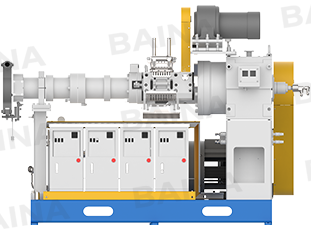
Motor Power: 37 kWMaximum Output: 150 kg/h
See Details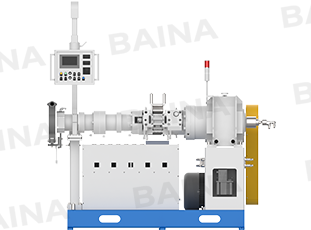
Motor Power: 22 kWMaximum Output: 120 kg/h
See Details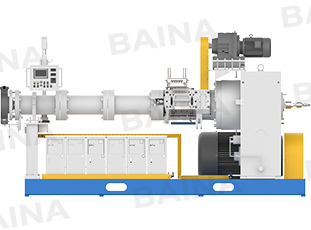
Motor Power: 160 kWMaximum Output: 1000 kg/h
See Details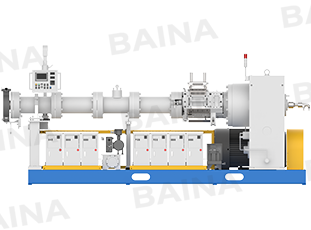
Motor Power: 160 kWMaximum Output: 1000 kg/h
See DetailsSilicone profiles come in many forms, including sealing strips, flexible tubes, gaskets, and custom-......
READ MORERubber hose design is often discussed in terms of inner diameter, outer diameter, and wall thickness......
READ MOREA rubber profile can leave an extrusion die with the correct shape and still change during curing. T......
READ MORE

Rubber Extrusion Machine and Equipment