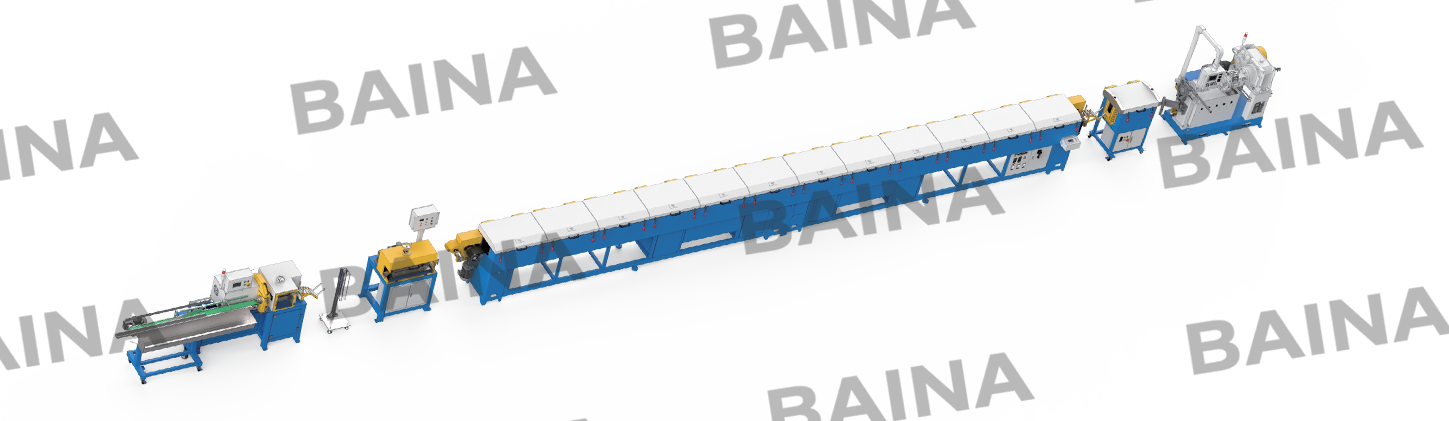
Ф120mm 16D Cold Feed Rubber Extruder
Cat:Extruder Series
Motor Power: 110 kWMaximum Output:700 kg/h
See Details

Rubber extrusion production lines are categorized primarily by screw design, feeding method, and downstream equipment configuration. The following bullet points outline the prevalent types:
Cold Feed Extruders: The rubber compound enters at ambient temperature without prior preheating. These machines rely on screw rotation and barrel friction to generate heat and plasticize the material. They are suitable for profiles requiring tight dimensional control.
Hot Feed Extruders: Rubber strip is warmed on a two-roll mill before entering the extruder. The preheated compound flows more uniformly, reducing energy demands on the screw. This type is often used for larger cross-sections or natural rubber formulations.
Pin Barrel Extruders: The barrel contains retractable pins that improve mixing and heat dispersion. They are effective for compounds with high viscosity or poor thermal conductivity, such as high-carbon black or low-plasticizer blends.
Vacuum Extruders: A vacuum zone removes trapped air and volatiles before the die. This reduces porosity in the final product, enhancing mechanical properties and surface finish.
Co-extruders: Two or more extruders feed separate compounds into a single die head. This allows production of multi-material profiles, such as sponge rubber bonded to a dense rubber core.
Screw-ram Combinations: A screw plasticizes the material, and a ram injects it under high pressure. This configuration is used for large, intermittent extrusions where continuous output is not required.
Each type is matched with downstream equipment—cooling troughs, cutting units, and conveyor systems—configured for specific throughput and tolerance requirements.
Rubber extrusion lines produce continuous profiles used across multiple industries. The following numbered list details typical applications:
Automotive Sealing Systems: Extruded weatherstrips, door seals, window channels, and trunk gaskets. These profiles often include sponge rubber sections for compressibility and dense rubber for structural attachment.
Industrial Hose and Tubing: Fuel lines, coolant hoses, air brake tubing, and hydraulic hose cores. Extrusion allows variable wall thickness and embedded reinforcement (textile or steel wire) via crossheads.
Construction Profiles: Expansion joint fillers, window gaskets, glazing seals, and rubber floor transition strips. These products are often co-extruded with rigid and flexible components.
Electrical Insulation: Rubber sleeves for cable joints, bus bar covers, and vibration-damping grommets. Extruded silicone or EPDM rubber provides dielectric strength and thermal resistance.
Medical and Laboratory Tubing: Silicone rubber tubes for peristaltic pumps, drainage systems, and respirator circuits. Medical-grade extrusion requires cleanroom conditions and post-cure processes.
Railway and Mass Transit: Rubber seals for train doors, window gaskets, and shock-absorbing rail pads. Extruded profiles must resist ozone, UV exposure, and mechanical abrasion.
Agricultural Machinery: Scraper blades, milking tube liners, and irrigation hose seals. Extruded rubber withstands exposure to fertilizers, cleaning agents, and temperature variation.
Marine and Offshore: Bulb seals for watertight hatches, rubber fender profiles, and cable gaskets. These require saltwater resistance and low-temperature flexibility.
Footwear Components: Sole sidewalls, toe caps, and decorative rubber strips. Extrusion enables the continuous production of uniform cross-sections for assembly.
Consumer Appliances: Door gaskets for refrigerators, washing machine drain hoses, and dishwasher seal strips. These typically specify FDA-grade materials for incidental food contact.
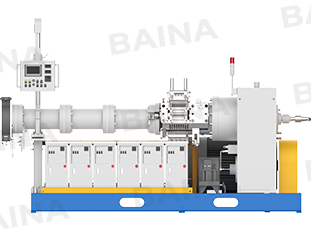
Motor Power: 110 kWMaximum Output:700 kg/h
See Details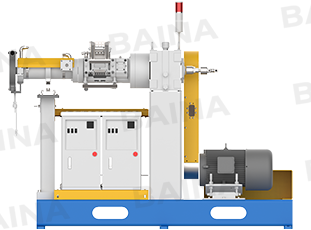
Motor Power: 7.5 kWMaximum Output: 50 kg/h
See Details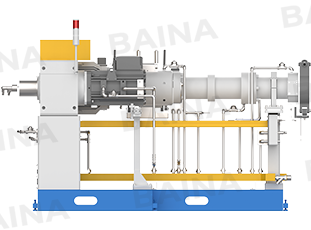
Motor Power: 45 kWMaximum Output: 280 kg/h
See Details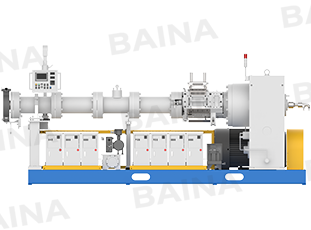
Motor Power: 160 kWMaximum Output: 1000 kg/h
See Details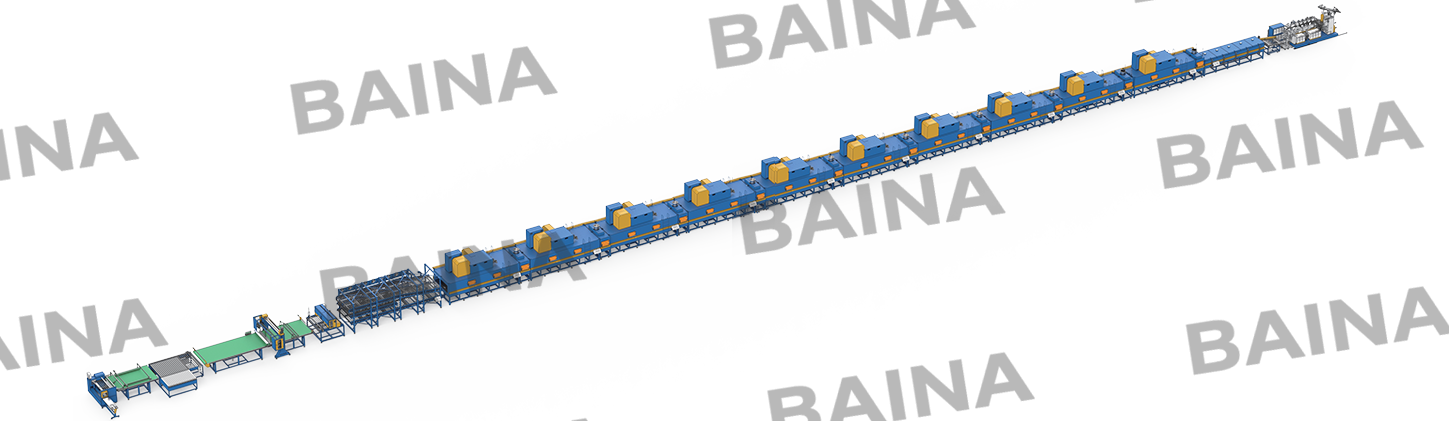
1. Core Control System Advantages: Utilizes Siemens motors, frequency converters, and PLCs paired wi...
See DetailsRubber hose design is often discussed in terms of inner diameter, outer diameter, and wall thickness......
READ MOREA rubber profile can leave an extrusion die with the correct shape and still change during curing. T......
READ MORECutting a rubber tube to a specified length sounds simple until the material starts to compress, str......
READ MORE

Rubber Extrusion Machine and Equipment