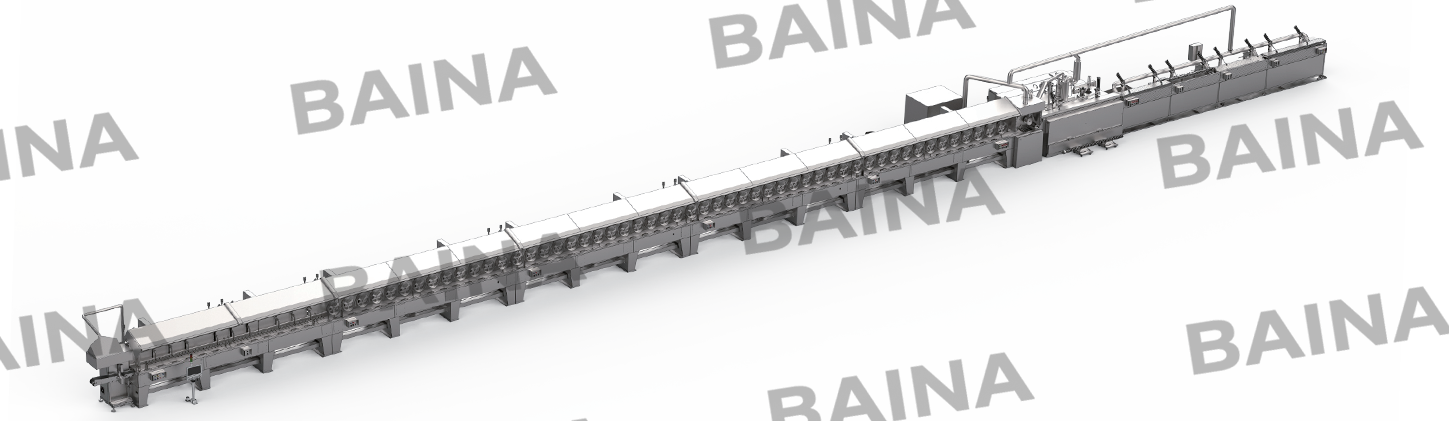
Ф120mm 20D Cold Feed Vacuum Rubber Extruder
Cat:Extruder Series
Motor Power: 110 kWMaximum Output: 700 kg/h
See Details

A common question among window and door manufacturers is whether one rubber seal profile can be used across different aluminum frame systems. At initial glance, many aluminum windows appear similar, but small differences in groove dimensions, glass thickness, frame structures, and installation methods can significantly affect sealing performance.
An aluminum window or door seal is not simply a flexible strip placed between two surfaces. It is an engineered component designed to provide controlled compression, weather protection, noise reduction, and long-term stability. Different window systems often require different profile geometries, which is why the Aluminum Window/Door Seal Production Line must be capable of producing various customized sealing solutions.

Although a universal seal design sounds convenient, it rarely meets every application requirement.
Aluminum window systems differ in many aspects:
A seal that works well in one aluminum profile may create excessive pressure in another system or fail to provide enough contact force.
For example, an EPDM glazing seal used in aluminum windows may require a specific groove fit to maintain stable installation and prevent air or water leakage. Different groove structures often require different cross-sectional designs.
Casement windows rely on the sash pressing against the frame seal.
The gasket must provide:
A seal that is too soft may lose contact pressure over time. A seal that is too hard may increase closing force and affect user experience.
Sliding systems move horizontally, creating different sealing requirements.
The profile must balance:
| Design Factor | Required Performance |
| Low friction surface | Smooth opening and closing |
| Flexible lips | Continuous contact during movement |
| Dimensional accuracy | Stable installation inside aluminum grooves |
| Wear resistance | Longer service life |
Sliding window seals often use specialized lip structures because the sealing area experiences repeated movement.
Commercial curtain wall systems face wind pressure, temperature changes, and large glass panel dimensions.
The seal profile must handle:
These applications often require specially designed gaskets rather than standard window strips.
Different materials provide different performance characteristics.
| Material | Main Characteristics | Typical Applications |
| EPDM Rubber | Weather resistance, UV resistance, stable outdoor performance | Aluminum windows, doors, curtain walls |
| Silicone Rubber | Wide temperature capability and flexibility | Special climate applications |
| PVC | Cost-effective and easy processing | General sealing applications |
EPDM remains widely used in aluminum window and door sealing because it maintains flexibility under outdoor temperature changes and provides good resistance against ozone and weather exposure.
Different customers often require different seal profiles even for similar window systems.
A modern Aluminum Window/Door Seal Production Line usually needs to support:
The extrusion die determines the final cross-section of the sealing profile. Changing the die allows manufacturers to produce:
Seal hardness directly affects compression behavior.
Typical EPDM window seals may use hardness ranges around 55–75 Shore A depending on the application requirements. Adjusting material formulation allows the same production equipment to handle different sealing demands.
Some advanced sealing profiles combine multiple materials in one product.
Examples include:
| Structure | Purpose |
| Soft sealing lip + rigid base | Improved installation stability |
| Colored outer layer + functional inner layer | Appearance and performance balance |
| Dense rubber + sponge rubber | Better compression and recovery |
This design approach allows one seal profile to achieve several functions instead of relying on a single material structure.
Using an unsuitable gasket can create several problems.
A seal should match the aluminum profile instead of forcing one design into different systems.
A reliable development process usually includes several stages:
| Stage | Main Activity |
| Profile Analysis | Study aluminum groove dimensions and installation conditions |
| Material Testing | Evaluate hardness, elasticity, and aging resistance |
| Die Development | Create extrusion tooling based on the required cross-section |
| Sample Verification | Test fitting, compression, and sealing performance |
| Production Adjustment | Fine-tune extrusion parameters for stable output |
This approach helps ensure the finished gasket performs correctly after installation rather than only meeting dimensional drawings.
The answer depends on equipment flexibility. A well-designed Aluminum Window/Door Seal Production Line can manufacture different profiles by adjusting:
The production line itself does not need to create one universal seal for every application. Instead, it should provide the flexibility needed to manufacture various profiles for different aluminum systems.
A single seal profile cannot realistically satisfy every aluminum window and door design because each system has unique mechanical and installation requirements. The right sealing solution depends on the relationship between the aluminum groove, glass structure, material properties, and expected service environment.
Manufacturers that understand these differences can develop more reliable sealing products through accurate profile design and adaptable production technology. The goal is not creating one seal that fits everything, but creating the correct seal for each specific window system.
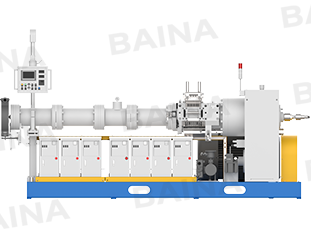
Motor Power: 110 kWMaximum Output: 700 kg/h
See Details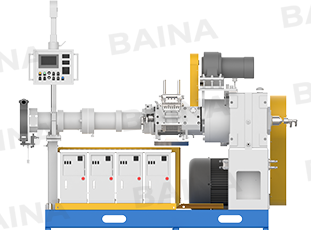
Motor Power: 55 kWMaximum Output: 320 kg/h
See Details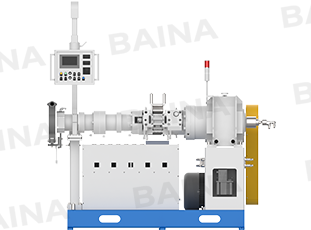
Motor Power: 22 kWMaximum Output: 120 kg/h
See Details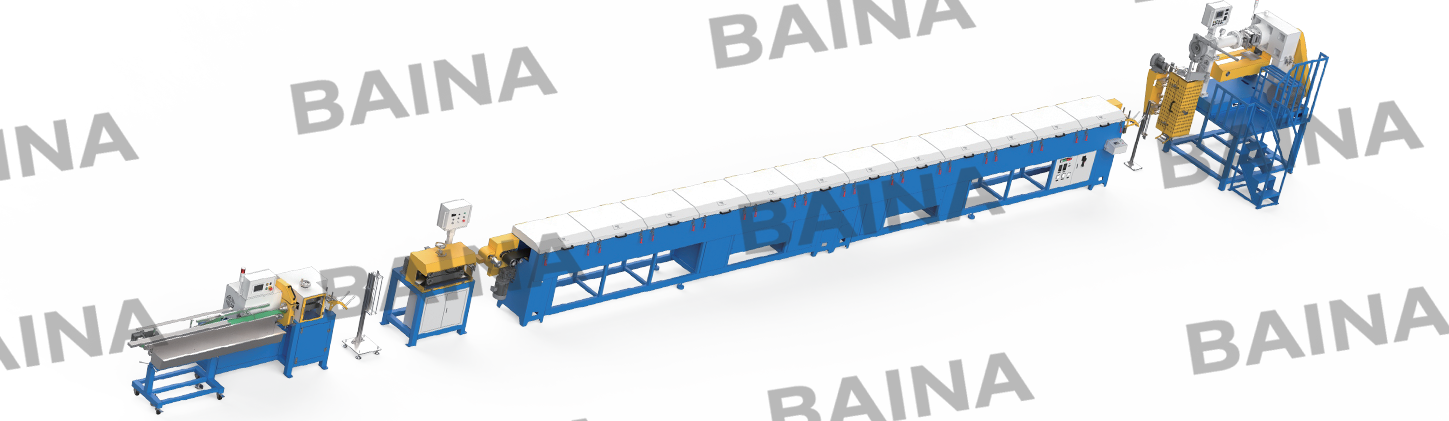
Product advantages1. High Space Utilization, Suitable for Compact Production Environments2. High Mol...
See Details
Motor Power: 315 kWMaximum Output: 2,000-2,400 kg/h
See DetailsRubber hose design is often discussed in terms of inner diameter, outer diameter, and wall thickness......
READ MOREA rubber profile can leave an extrusion die with the correct shape and still change during curing. T......
READ MORECutting a rubber tube to a specified length sounds simple until the material starts to compress, str......
READ MORE

Rubber Extrusion Machine and Equipment