English
 中文简体
中文简体 русский

Ф120mm 20D Cold Feed Vacuum Rubber Extruder
Cat:Extruder Series
Motor Power: 110 kWMaximum Output: 700 kg/h
See Details

Curing time lies at the heart of production bottlenecks in rubber extrusion and continuous vulcanization lines. When the curing stage runs slow, the whole line has to slow with it — extrusion speed gets capped, throughput targets slip, and energy keeps running through equipment that is holding position rather than producing output. The reason a microwave curing oven changes this picture comes down to something fairly fundamental: it does not heat the material from the outside in. It heats from within, which changes everything about how quickly the curing reaction can proceed.
Every conventional curing method — hot air, steam, salt bath — generates heat outside the material and then waits for it to move inward. The surface heats up. The core follows, slowly. That gap between surface temperature and core temperature is where production time disappears.
Microwave energy does not follow that path at all. When the material enters the field, polar molecules throughout the rubber compound begin oscillating rapidly in response to the alternating electromagnetic field. That molecular movement generates heat across the entire cross-section at once — not just at the skin.
What this means in practice:
The thermal lag — the delay between applying energy and getting the core hot enough for vulcanization to proceed — is the rate-limiting step in conventional curing. Removing it is what drives the faster cycle. For continuous extrusion lines, that translates directly into higher line speeds, shorter oven lengths, and less dwell time in the curing zone.
The technical term is dielectric heating, but the underlying idea is straightforward. Rubber compounds contain polar molecular structures — components that have a natural positive end and a negative end. When placed in an alternating electromagnetic field, these molecules keep trying to reorient themselves in response to the changing field direction. That constant reorientation creates internal friction, and that friction produces heat.
The material is not absorbing heat from a hot surrounding medium. It is generating heat within itself. That distinction is what separates microwave curing from every surface-heating approach.
Rubber compounds, silicone, and many common polymer materials respond well to this process because their molecular composition includes the polar structures needed for efficient energy absorption. The sulfur crosslink agents and accelerators in standard rubber formulations sit within a compound that is well-suited to this heating mechanism.
Several things happen together to produce the faster cycle, and they are worth understanding separately.
Preheating lag is eliminated. Conventional systems have to bring a medium — air volume, steam pressure, molten salt — up to curing temperature before any heat transfer to the product can begin. Microwave energy acts on the product directly, skipping that stage entirely.
Because the temperature rise happens throughout the cross-section rather than from the outside in, there is no need to overheat the surface to compensate for the delay in core heating. That overcuring of the surface layer — which happens in hot air or steam curing just to ensure the core reaches temperature — is a source of both time waste and product quality issues. Uniform heating removes the need for it.
Crosslinking initiation happens faster because the compound reaches the onset temperature for vulcanization more quickly. The induction period — the time before active crosslink formation begins — shortens when internal temperature rises rapidly.
And for continuous lines specifically, the process integrates directly with line speed in a way that batch or indirect heating methods do not.
The difference between heating mechanisms shows up clearly when methods are placed side by side.
| Curing Method | How Heat Reaches the Product | Temperature Uniformity | Continuous Line Fit |
|---|---|---|---|
| Hot air oven | External convection, surface to core | Gradient from outside in | Limited by transfer rate |
| Steam curing | External condensation heat | Surface to core gradient | Batch or limited |
| Salt bath | External conduction | Surface to core gradient | Continuous possible |
| Infrared | Surface radiation | Surface-dominant | Better for thin profiles |
| Microwave curing | Internal generation throughout | Uniform across cross-section | Designed for continuous |
Every conventional method depends on heat moving into the material from the outside. For products with any meaningful wall thickness, that dependency is where time gets consumed. The microwave approach bypasses it.
Not every rubber product gains equally from this approach, but certain categories are particularly well-suited.
Continuous extruded profiles — window seals, door gaskets, edge trim — are among the clearest applications. The profile moves through the oven at line speed, and the curing zone can be engineered to deliver full cure without requiring excessive oven length. Automotive sealing components need consistent crosslink density throughout the cross-section for reliable mechanical performance, and uniform internal heating supports that requirement in ways that surface-heating methods struggle to replicate consistently.
Silicone tubing and hose is another strong fit. Silicone compounds absorb microwave energy efficiently because of their molecular structure, and the rapid internal heating is well-matched to the way silicone cures. Foam rubber products benefit from the simultaneous support of both crosslinking and cell structure development — external heating tends to create a surface crust before the interior has developed properly, which microwave heating avoids. Cable insulation for rubber and silicone-jacketed wire has been a long-standing application for the same reasons that extrusion profiles benefit.
Speed is the headline, but it is not the only thing that changes. Production consistency tends to improve alongside cycle time.
Conventional systems introduce variability through the medium they rely on — fluctuations in air flow, steam pressure, or bath temperature all translate into variation in the heat the product receives. Microwave power output can be held stable with precision, which reduces those variation sources. The result is more consistent crosslink density across a production run and fewer surface defects from overcuring.
Energy utilization also shifts. A conventional oven maintains a large volume of heated medium continuously, including during idle periods or when production gaps occur. Microwave energy is absorbed by the product when product is present and not wasted when it is absent. For high-run-time operations this matters less, but for lines with variable production schedules it changes the operating cost picture.
Floor space is a smaller but real benefit. Because curing happens faster, the physical oven length needed to achieve full cure at a given line speed can be reduced. In facilities where layout is constrained, a shorter curing zone creates real flexibility.
The speed advantage is real, but it is not automatic. How well it materializes in practice depends on how the system is designed and set up.
Power level and field frequency need to match the specific product — its cross-section, compound formulation, and the line speed being run. A system sized for the wrong application will either undercure or create hot spots rather than uniform heating. Cavity geometry matters for field distribution; a poorly designed cavity can introduce the kind of temperature variation that the technology is supposed to eliminate.
Conveyor speed and power settings need to work together. Changing line speed without adjusting power changes the energy input per unit of product length, which changes the degree of cure. This relationship needs to be understood and managed during setup and whenever line parameters change.
Temperature monitoring gives the production team visibility into what is happening at the product level rather than just the oven level. It also enables the control system to maintain curing conditions across variations in ambient temperature, material batch differences, or slight changes in compound formulation.
Being clear about limitations is worth the space it takes.
Not all rubber compounds respond efficiently to microwave energy. Compounds without the polar molecular structures needed for dielectric heating will not absorb the energy at useful rates, and the process will not produce the expected cycle time reduction. Material testing before equipment selection is not optional — it is the foundation of the application evaluation.
Very thick cross-sections present a depth limitation. Microwave energy penetrates to a finite depth in any material, and for products with very large cross-sections, the core may not receive sufficient energy for full cure at the surface cure rate. This is a physical constraint of the technology rather than a design issue, and it needs to be assessed against the specific product geometry.
High capital cost and the engineering integration required to connect a microwave curing zone to an extrusion line make the approach more suitable for high-volume continuous production than for small-batch or highly variable production schedules. The economics of the technology favor operations where the speed and efficiency gains can be captured consistently across long production runs.
When assessing the fit for a specific application, a few things need to be worked through in sequence.
Material compatibility matters — confirm the compound absorbs microwave energy well at the relevant frequency. Product geometry follows — check the cross-section dimensions against the effective heating depth for that material. Then line speed and throughput targets can be used to calculate the power level and oven length needed. Integration requirements — how the curing zone connects to the extruder, how cooling is handled downstream, how floor space is allocated — need to be resolved as part of the line design rather than treated as afterthoughts.
Supplier technical capability matters considerably here. Microwave curing systems require tuning to the specific application, and commissioning support from a supplier who understands both the equipment and the rubber processing context is not a luxury — it is what the system is set up correctly.
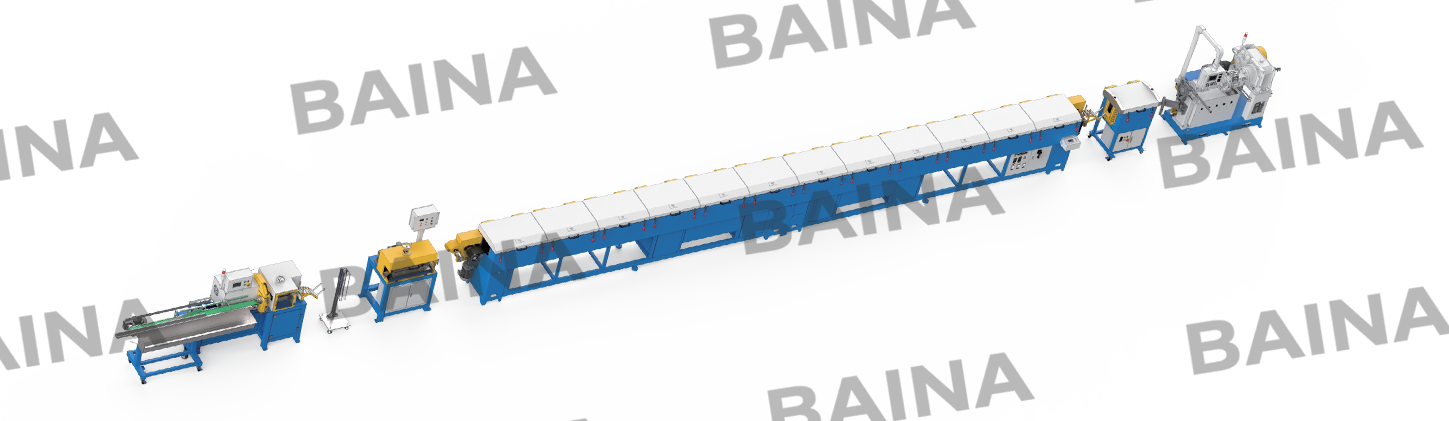
For operations running rubber extrusion lines and looking seriously at this technology, Zhejiang Baina Rubber & Plastic Equipment Co., Ltd. manufactures microwave curing oven systems for continuous vulcanization and extrusion applications, working with manufacturers on equipment specification, line integration, and technical requirements. If you are evaluating curing solutions for a new line or looking to address a throughput constraint on an existing one, their engineering team is a practical starting point for that conversation.
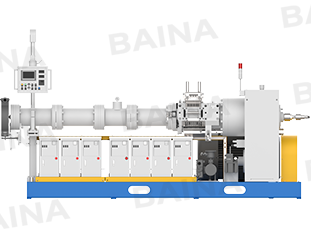
Motor Power: 110 kWMaximum Output: 700 kg/h
See Details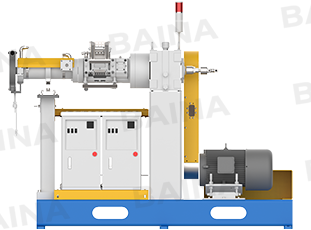
Motor Power: 7.5 kWMaximum Output: 50 kg/h
See Details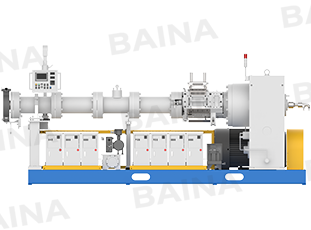
Motor Power: 160 kWMaximum Output: 1000 kg/h
See Details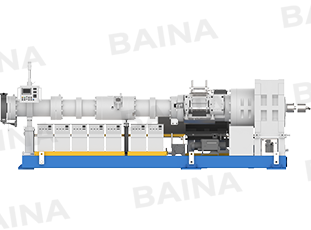
Motor Power: 315 kWMaximum Output: 2,000-2,400 kg/h
See DetailsCuring time lies at the heart of production bottlenecks in rubber extrusion and continuous vulcaniza......
READ MOREA salt bath curing line is an industrial system used to vulcanize continuous lengths of rubber or si......
READ MOREEven with regular maintenance, rubber extrusion production lines can experience faults that impact t......
READ MORE