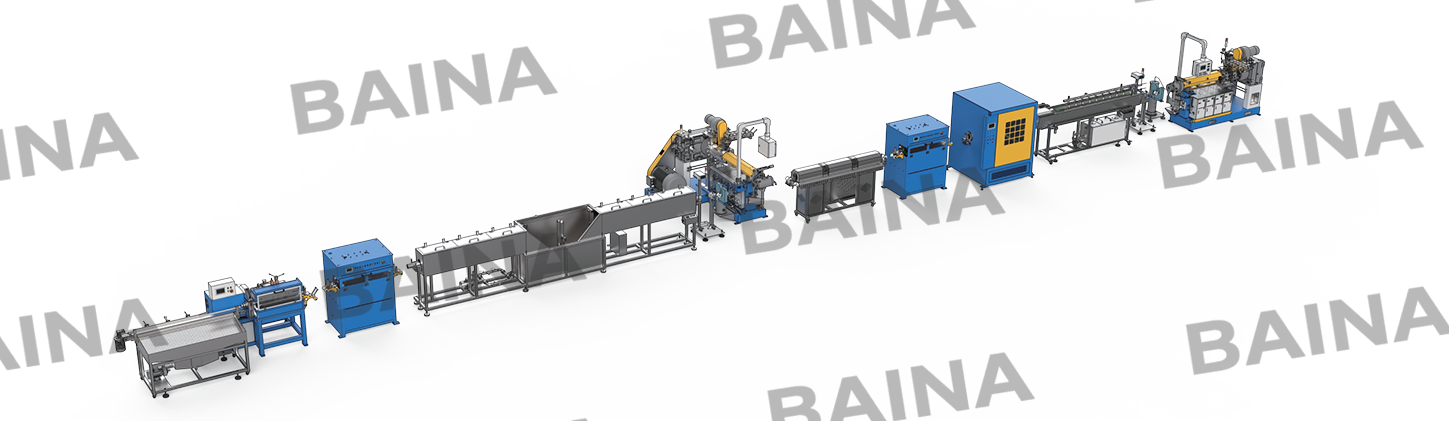
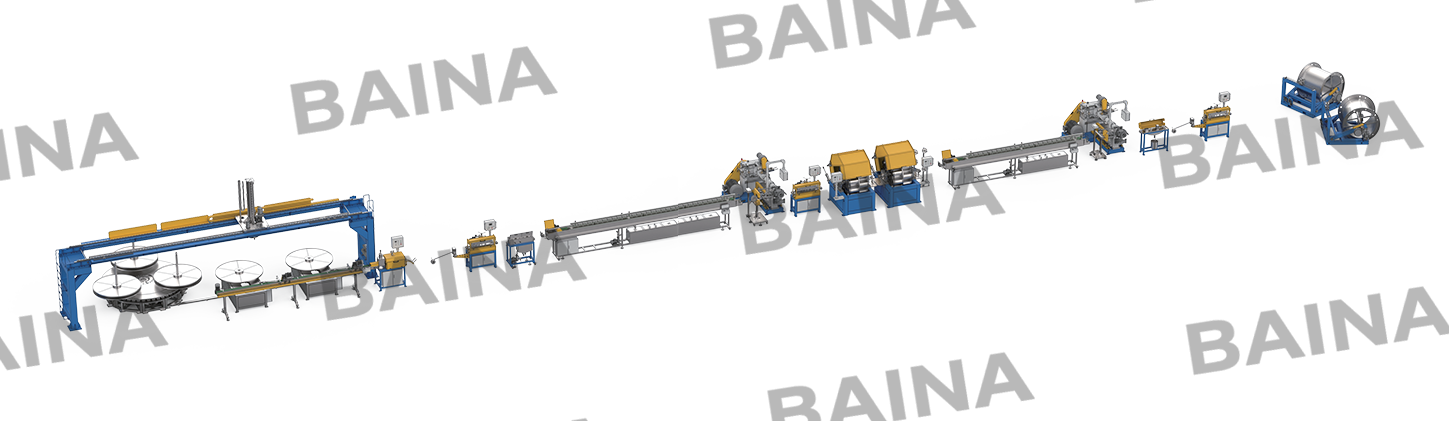
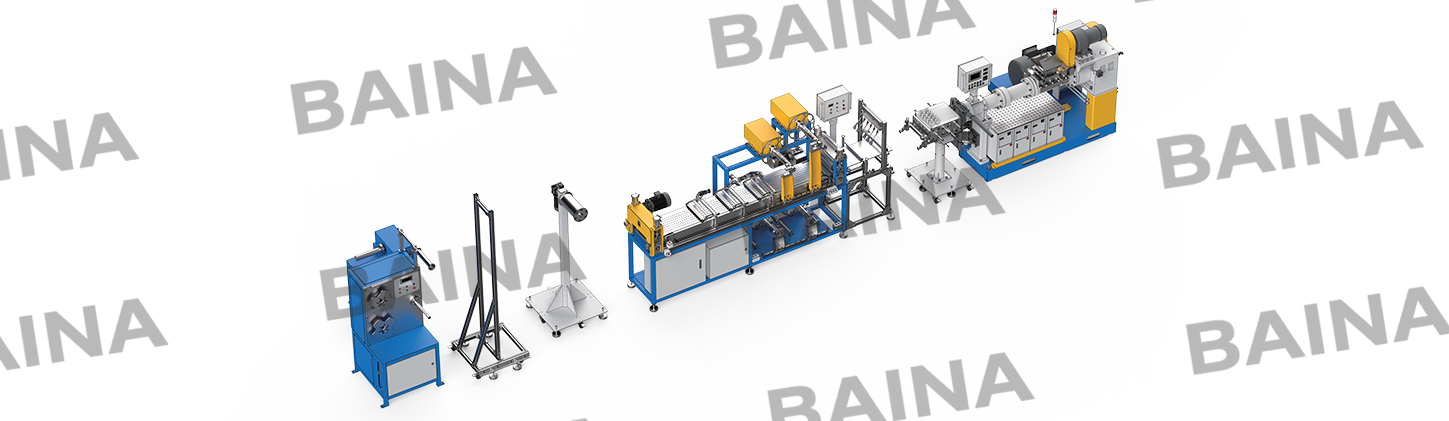
Ф90mm 16D Cold Feed Rubber Extruder
Cat:Extruder Series
Motor Power: 55 kWMaximum Output: 320 kg/h
See Details

A rubber extruder is a complex industrial machine designed to process and shape raw rubber compounds into continuous profiles. Its operation relies on the precise interaction of several key components. Essentially, these machines share a common architecture.
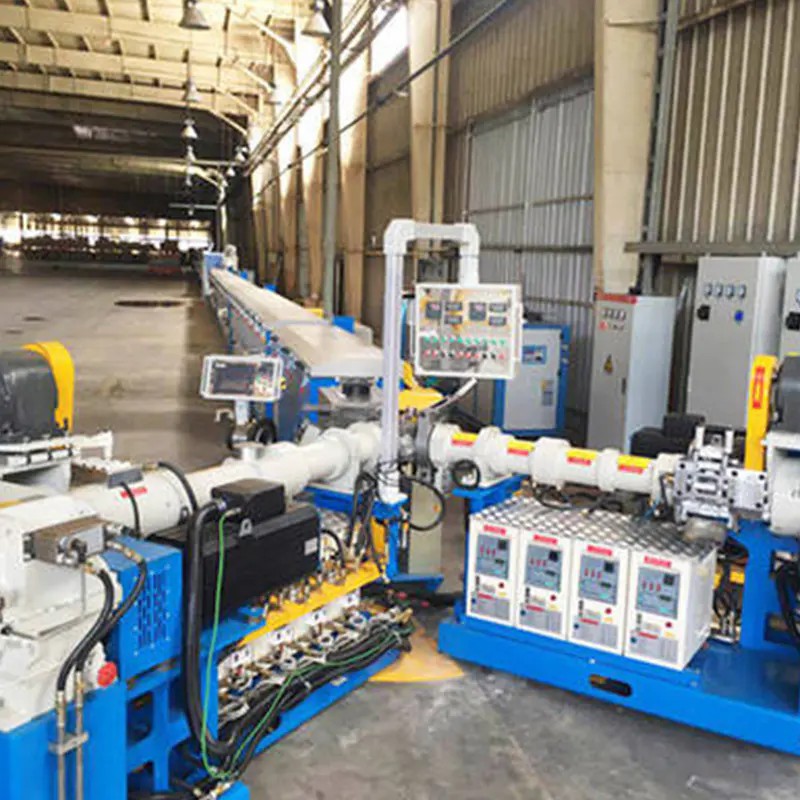
The central component is the extruder barrel – a robust cylindrical housing that contains the processing mechanism. Inside this barrel rotates the screw – a critical part whose design (including feeding, compression, and metering sections) determines the machine's processing efficiency and output consistency. The barrel is typically equipped with heating and cooling systems, often in the form of electric heater bands and circulating fluid channels, to maintain the precise temperature required for the rubber compound. At one end, a feed hopper allows the rubber compound – which may be in the form of strips, pellets, or granules – to be introduced.
The shaped output is created by the die – a specially machined plate attached to the front of the barrel, which gives the extruded rubber its specific cross-sectional profile. A thrust bearing assembly absorbs the significant axial force generated by the rotating screw. The drive system, consisting of an electric motor and a gearbox, provides the necessary torque to rotate the screw at controllable speeds. Finally, a control panel houses instruments and control systems for temperature, screw speed, and other operating parameters, enabling coordinated machine operation.
What are rubber extruder machines typically used for?
Rubber extruders are fundamental to the production of a wide range of rubber products, serving as the primary method for creating continuous linear shapes with a defined cross-section.
Production of profiles and sealing sections
The predominant application is the production of solid and sponge rubber profiles. These include door and window seals for the automotive and construction industries, gaskets, and decorative trims. The extruder can compound, homogenize, and precisely shape these complex profiles in continuous lengths, which are then vulcanized in a subsequent process.
Tire manufacturing
In the tire industry, extruders are indispensable for creating various components. Individual extruders are used to produce the tread (the road-contacting layer), as well as sidewalls, inner liners, and apex strips. These extruded components are then assembled in a precise order on a tire building drum to form a "green" tire before curing.
Hose and tubing fabrication
Rubber hoses and tubing used in automotive, industrial, and household applications rely on extruders to form the inner tube layer. In more advanced setups, cross-head dies are used to simultaneously apply rubber covering layers over reinforcing materials such as braided textile or metal wire.
Pre-forming for other processes
Extrusion is also used as an intermediate step. For example, rubber can be extruded into a simple sheet or blank, which is then molded into a final product – such as a gasket or a shoe sole – by compression or injection molding. This improves material quality, increases efficiency, and reduces waste in the molding press.
Precautions when using a rubber extruder
Operating a rubber extruder requires strict adherence to safety regulations and procedures to prevent accidents, ensure product quality, and protect the equipment. Precautions cover mechanical, thermal, and procedural aspects.
Mechanical and operational safety
Before starting, personnel must ensure that all guards for moving parts – especially the screw drive and gearbox – are securely in place. Loose clothing or jewelry should not be worn. The machine should never be started with material already in the barrel, or with a cold barrel and die, as this can cause pressure buildup and potential rupture. The screw should only be rotated when it is properly supported by the thrust bearing. When cleaning or changing the die, operators must verify that the barrel pressure has been fully released and follow appropriate lock-out/tag-out procedures to isolate energy sources.
Temperature management
Temperature control is critical. Heaters should be activated in advance to bring all barrel zones and the die to the specified set points before introducing the rubber. Feeding a cold compound into a hot barrel can cause sudden cooling and pressure surges, while forcing the compound through a cold die can lead to poor surface quality, dimensional instability, and potential damage. Cooling systems must be functional to prevent overheating, which could degrade the rubber compound.
Material and process monitoring
The rubber compound must be prepared and fed consistently. Inconsistent feedstock in terms of size or composition can cause drastic fluctuations in output and pressure, resulting in defective product. Operators should constantly monitor the current draw (motor load) and pressure gauges; steady readings above the normal range indicate a blockage or improper processing conditions that require immediate adjustment. Furthermore, all personnel must be aware of the specific hazards of the materials being processed, including potential fume generation when heated, and use appropriate local exhaust ventilation and personal protective equipment such as heat resistant gloves and safety glasses.
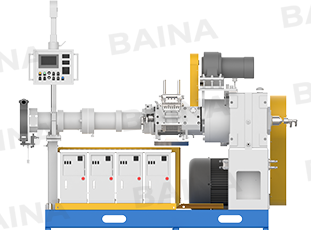
Motor Power: 55 kWMaximum Output: 320 kg/h
See Details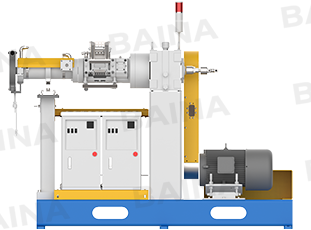
Motor Power: 7.5 kWMaximum Output: 50 kg/h
See Details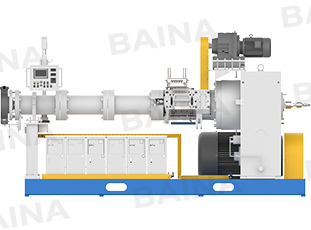
Motor Power: 160 kWMaximum Output: 1000 kg/h
See DetailsA rubber profile can leave an extrusion die with the correct shape and still change during curing. T......
READ MORECutting a rubber tube to a specified length sounds simple until the material starts to compress, str......
READ MORERubber seals rarely share the same geometry. A flat gasket may have a relatively simple cross-sectio......
READ MORE

Rubber Extrusion Machine and Equipment