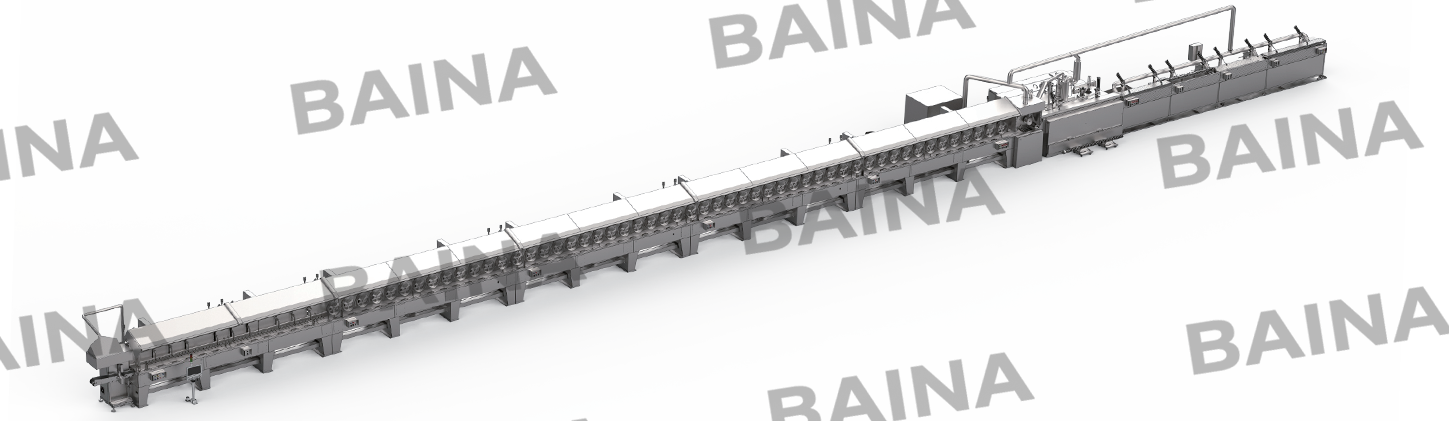
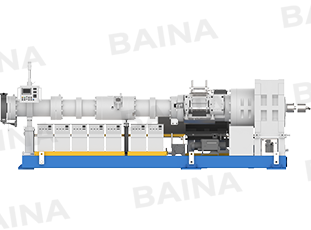
Rubber hose design is often discussed in terms of inner diameter, outer diameter, and wall thickness. Those dimensions are important, but they do not tell the whole story. A hose may contain several rubber layers, textile reinforcement, steel wire, a smooth inner tube, or a specially shaped cover. The equipment used to manufacture it has a direct influence on how these structures can be formed.
A Rubber Hose Making Machine is therefore more than an extrusion unit with a specified screw diameter. Screw geometry, L/D ratio, extrusion head, vacuum capability, speed control, temperature zones, and downstream reinforcement equipment can all affect the design possibilities of the finished hose.
Screw Diameter Sets More Than Output
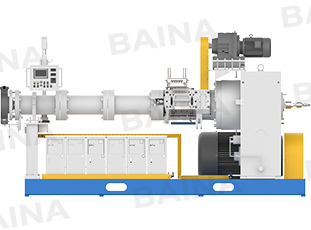
Screw diameter is commonly associated with production capacity, but it also influences the type and scale of hose that can be processed. Commercial rubber extruders are available with screw diameters ranging from relatively small machines to 250 mm industrial models. One equipment range lists 45–250 mm screws, with corresponding capacities from about 30–50 kg/h to 2,800–3,500 kg/h.
A larger screw does not automatically make a better hose. The useful configuration depends on the material volume required by the product and the stability needed at the extrusion die.
| Machine Specification |
What It Influences |
Potential Product Impact |
| Screw diameter |
Material throughput |
Hose size and production range |
| L/D ratio |
Material conveying and processing space |
Compound processing behavior |
| Screw speed |
Extrusion output |
Wall thickness and dimensional stability |
| Vacuum system |
Air removal |
Tube density and internal quality |
| Extrusion head |
Material distribution |
Concentricity and layer structure |
| Temperature control |
Compound temperature |
Surface and dimensional consistency |
L/D Ratio Changes the Processing Window
The screw L/D ratio describes the relationship between screw length and diameter. It can vary considerably across rubber extrusion machines. Current commercial examples include 12:1, 16:1, 18:1, and 20:1 configurations, depending on the extruder design and application.
Different L/D configurations provide different processing characteristics. A longer screw may offer additional space for material conveying, pressure development, and temperature management, while a shorter configuration can be appropriate for applications requiring a different processing approach.
Why This Matters for Hose Structure
- Single-wall hoses: Stable material flow is important for consistent wall thickness.
- Composite hoses: The extrusion system needs to work with additional layers and interfaces.
- Reinforced hoses: The rubber layer must maintain suitable dimensions before and after reinforcement.
- Specialty profiles: More complex cross-sections can place greater demands on die pressure stability.
Vacuum Capability Can Affect Tube Quality
Air trapped inside an extruded rubber tube can become a product-quality issue, particularly with hollow structures. A vacuum system can remove air from the extrusion process and support more stable tube formation.
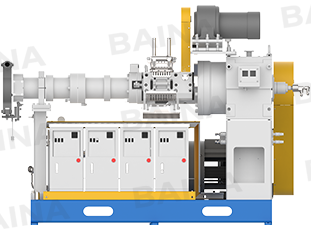
Commercial rubber hose extrusion lines are available with vacuum configurations. One current 90 mm machine, for example, lists a 20:1 L/D ratio, a 2–55 rpm screw-speed range, a 600 kg/h capacity, and a vacuum system.
Vacuum capability becomes particularly relevant for:
- Thin-wall hoses
- Large-diameter hollow tubes
- Multi-layer hose structures
- Products requiring controlled internal dimensions
The vacuum system does not define the hose structure by itself, but it can expand the range of products that can be processed with controlled internal quality.
Screw Speed Can Change Wall Thickness
Adjustable screw speed provides another connection between machine settings and product design. Commercial machines show very different speed ranges. A 90 mm cold-feed extruder may operate around 0–55 rpm, while other machines use different ranges according to screw diameter and design.
Screw speed influences the amount of rubber delivered toward the die. Yet the final hose dimension also depends on line speed, die geometry, compound behavior, traction, and curing conditions.
| Process Change |
Possible Result |
| Higher screw speed |
Greater material delivery |
| Lower screw speed |
Lower material delivery |
| Higher line speed |
Potentially thinner wall |
| Lower line speed |
Potentially thicker wall |
| Different die gap |
Changes initial profile dimensions |
This relationship becomes particularly important for hoses with tight wall-thickness requirements. A machine with adjustable screw and line speeds gives operators more room to match material delivery with the target product geometry.
The Extrusion Head Shapes the Hose
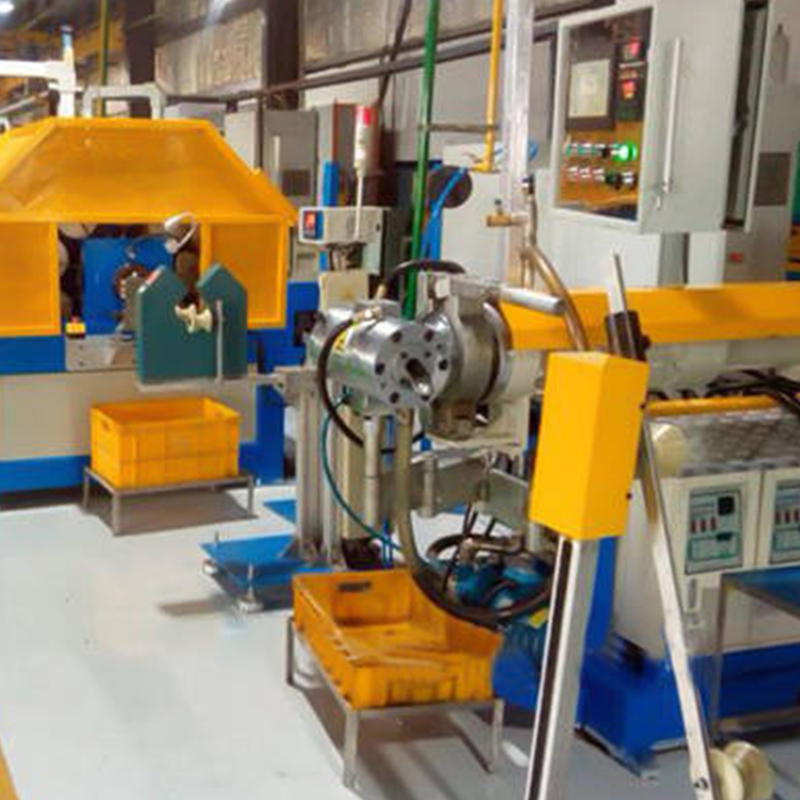
The extruder determines how rubber is delivered, while the head and die determine how that material is distributed into the desired cross-section. For a simple single-wall tube, the tooling may appear relatively straightforward. Multi-layer or reinforced hoses require a more specialized arrangement.
Commercial rubber hose equipment can be configured for single-wall hoses, composite hoses, braided hoses, knitted hoses, winding hoses, foam hoses, and profiles with metal inserts.
Crosshead Design Matters
A crosshead must distribute rubber evenly around the mandrel. Poor distribution can create uneven wall thickness or affect concentricity between the inner and outer surfaces.
This becomes more demanding with:
- Multi-layer constructions
- Small-diameter precision tubing
- Thick-wall industrial hoses
- Hoses with reinforcement layers
Reinforcement Equipment Changes the Product Category
Some hoses are made entirely from rubber, while others use textile, wire, braided, knitted, or spiral reinforcement. Once reinforcement is added, the production line becomes more than an extruder.
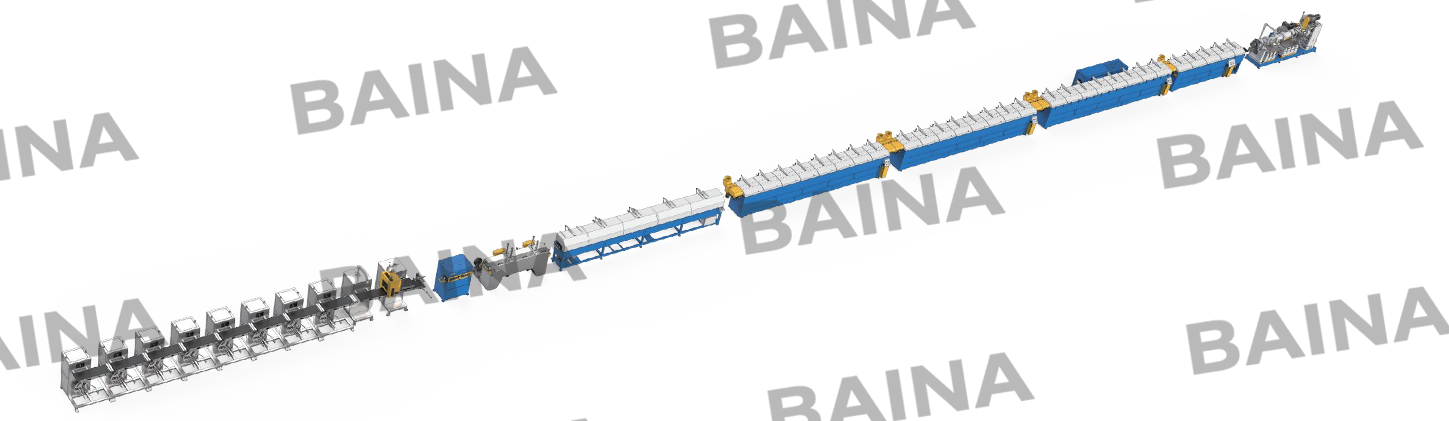
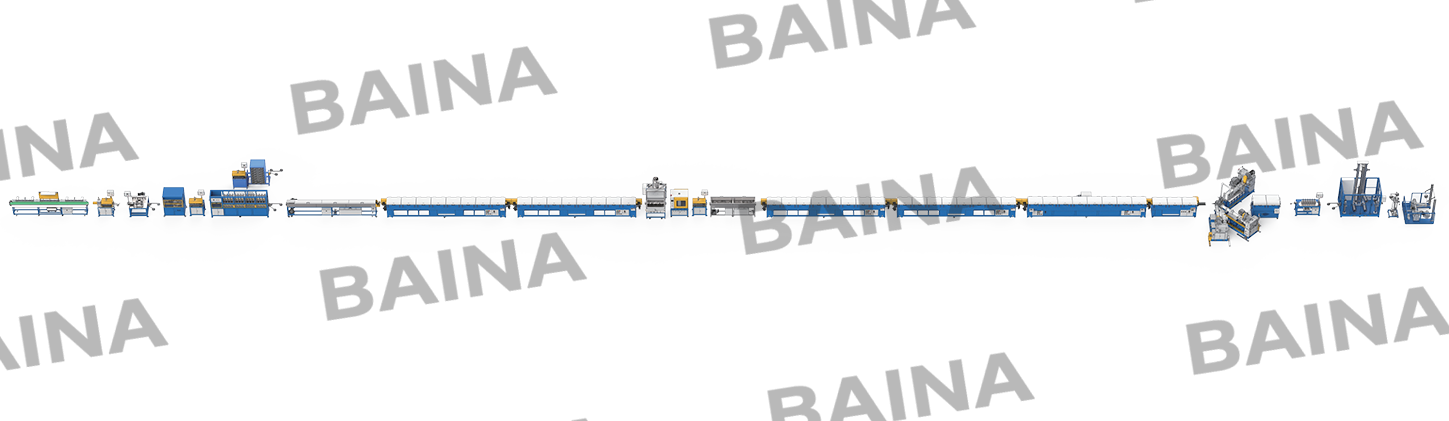
A typical reinforced hose line may connect extrusion, braiding or winding, additional rubber covering, vulcanization, cooling, traction, and cutting. Equipment specifications also show dedicated extrusion systems designed for braided and knitted rubber hoses.
This creates a useful distinction: machine configuration can influence product architecture. A manufacturer planning a textile-reinforced hose needs to consider reinforcement equipment and rubber covering capability rather than evaluating the extruder alone.
Vulcanization Determines How the Design Becomes Permanent
Extrusion creates the initial hose geometry, but vulcanization helps the rubber retain its functional properties. A production line may combine a cold-feed extruder with microwave, hot-air vulcanization, cooling, traction, and control systems. One commercial configuration, for example, lists a 90 mm cold-feed vacuum extruder together with microwave and hot-air vulcanization ovens, cooling, traction, and PLC control.
The curing system needs to match the hose's wall thickness and structure. A thick industrial hose and a thin automotive tube do not necessarily require the same thermal treatment.
Machine Specs Should Follow the Hose Concept
Choosing equipment by hose diameter alone can overlook several important design requirements. A better technical review can begin with the finished product and work backward toward the machine.
- Define the hose structure: single-layer, multi-layer, braided, knitted, spiral, or reinforced.
- Set dimensional requirements: inner diameter, outer diameter, wall thickness, and concentricity.
- Match screw specifications: diameter, L/D ratio, speed range, and output.
- Review the extrusion head: Confirm compatibility with the desired cross-section and layer arrangement.
- Check reinforcement equipment: Braiding, knitting, winding, or other reinforcement processes may be required.
- Evaluate vulcanization: Heating, curing time, cooling, and traction should match the compound and hose structure.
Product Design and Machine Design Work Together
A rubber hose is not defined by diameter alone. Wall thickness, reinforcement, number of layers, compound, flexibility, pressure rating, and cross-sectional geometry all contribute to the final product.
The same principle applies to the equipment. Screw diameter, L/D ratio, speed range, vacuum capability, extrusion tooling, reinforcement units, curing equipment, and cooling systems each influence a different part of the manufacturing process.
That makes the evaluation of a Rubber Hose Making Machine a product-design decision as much as an equipment decision. Starting with the required hose structure and then matching the machine specifications can provide a clearer route toward dimensional stability, suitable reinforcement, and the intended performance of the finished hose.