A rubber profile can leave an extrusion die with the correct shape and still change during curing. The cross-section may expand, contract, soften, or deform as the uncured compound gains heat and develops its final network structure. This is particularly noticeable with long sealing strips, hollow tubes, sponge profiles, and complex automotive weatherstrips.
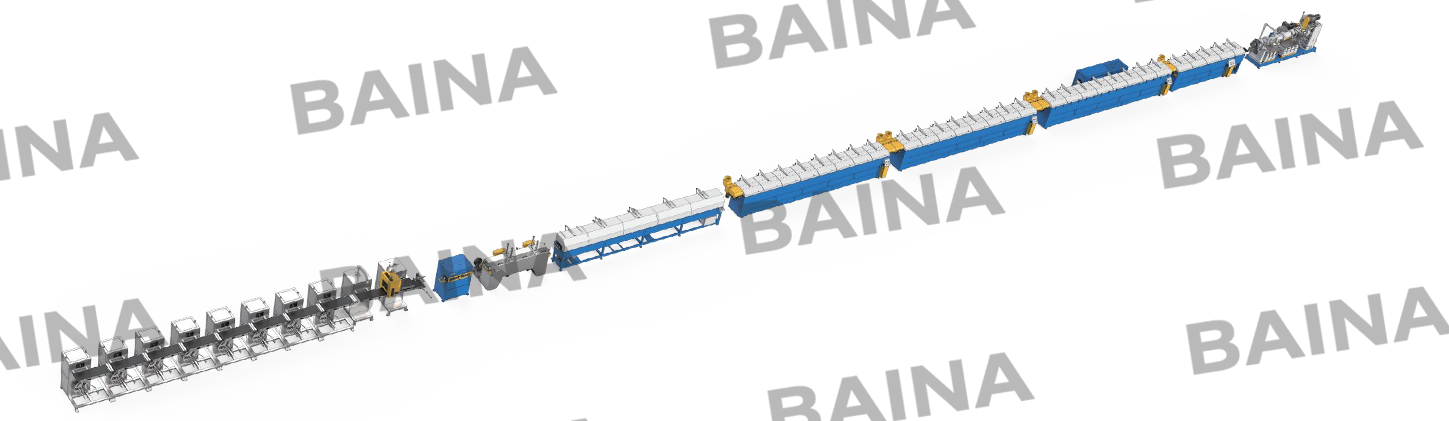
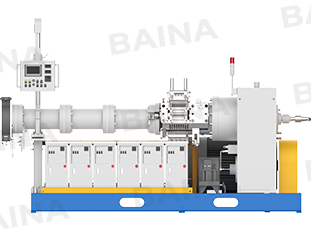
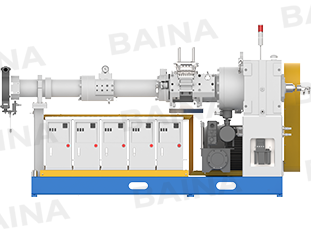
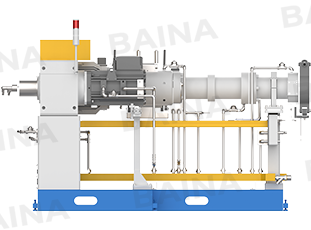
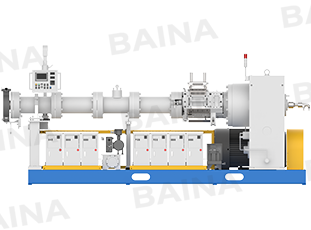
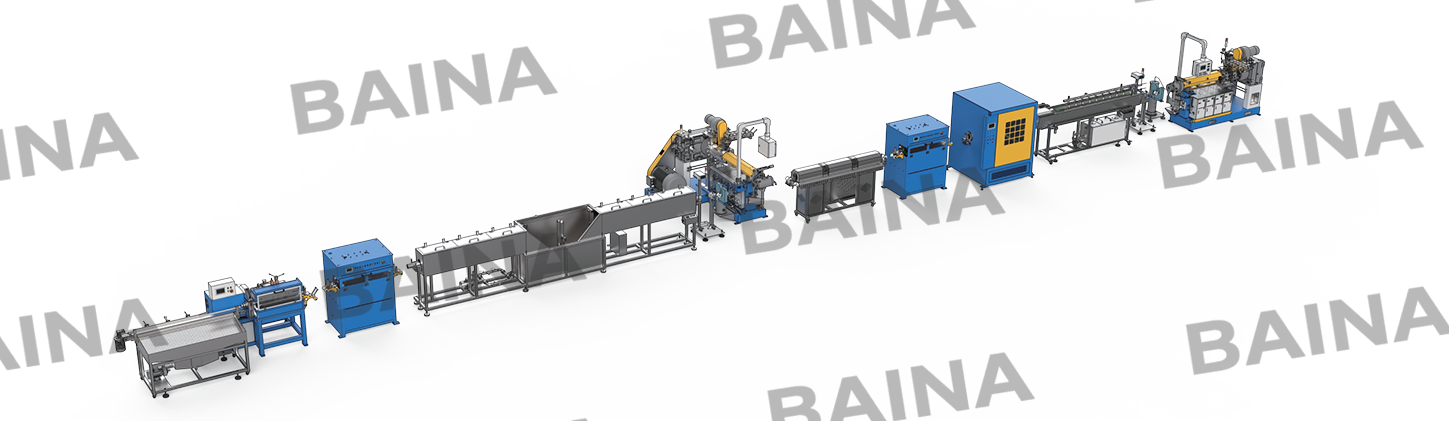
Continuous vulcanization provides a controlled path from extrusion to curing and cooling. A typical line may combine a cold-feed extruder, microwave or UHF heating, hot-air vulcanization, cooling, traction, and winding equipment. Commercial systems are available for silicone hoses, rubber profiles, seals, and gaskets.
The key question is not simply whether continuous curing is faster. The more useful issue is whether the vulcanization process can keep the rubber profile's dimensions and physical properties consistent along its entire length.
Why Does Curing Affect Profile Dimensions?
Uncured rubber is relatively soft after extrusion. Its final dimensions are influenced by die swell, material temperature, traction force, curing reaction, and cooling conditions. Vulcanization changes the material from a plastic-like compound into an elastic network, helping the profile retain its designed shape.
- Cross-section stability: Controlled curing helps the profile retain its intended width, height, wall thickness, and cavity shape.
- Length consistency: Stable line speed and controlled curing reduce dimensional variation along long profiles.
- Surface condition: Balanced heating can reduce differences between the outer surface and internal areas.
- Mechanical properties: A consistent cure state supports more uniform hardness, elasticity, and compression behavior.
Technical literature notes that dimensional stability is associated with vulcanization because the rubber's components become connected through heat and chemical reactions. Continuous systems carry the extruded profile directly through a curing tunnel after forming.
Microwave and Hot Air Serve Different Roles
Many continuous rubber curing lines combine microwave or UHF heating with hot-air circulation. The combination is useful because the two heating methods influence different parts of the profile.
| Heating Stage |
Main Function |
Profile Consideration |
| Microwave / UHF |
Rapid internal heating |
Useful for heating thicker sections |
| Hot air |
External heating and surface curing |
Supports surface temperature control |
| Secondary hot air |
Further curing |
Helps complete the cure cycle |
| Cooling |
Sets the processed profile |
Reduces deformation after curing |
Commercial microwave/hot-air lines are designed around uniform heating of rubber profiles. Some systems use microwave heating followed by a hot-air section, while the microwave stage can be configured with variable power control.
Internal Heating Matters for Thick Sections
A thick rubber profile can behave differently from a thin strip because heat must reach deeper areas of the material. Microwave technology can provide internal heating, while hot air supplies external heating and helps maintain the surface temperature.
This combination has been used for profiles containing sponge sections, where the heating sequence needs to be carefully controlled. Patent literature describing continuous vulcanization systems identifies a primary heating stage using microwave and hot air, followed by secondary heating and cooling.
Line Speed Is Part of the Cure Equation
A continuous vulcanizing line has a moving product, so curing depends on both temperature and residence time. Increasing the conveyor or traction speed reduces the time available inside the heating zones. A lower speed provides more residence time but may change the thermal history of the rubber.
- Higher line speed: Requires sufficient heating capacity to achieve the required cure state within a shorter residence time.
- Lower line speed: Increases heating exposure and may require corresponding temperature or power adjustments.
- Unstable speed: Can create variation in residence time and therefore affect curing consistency.
Research on continuous vulcanization has examined variables such as hot-air temperature and conveyor speed. One experimental setup evaluated air temperatures from approximately 280–380°C and conveyor speeds from 0.3 to 3 m/min for rubber profiles.
Complex Profiles Need More Heating Control
Not every rubber extrusion has the same thermal requirements. A thin rectangular strip may heat relatively quickly, while a profile containing thick ribs, hollow chambers, and sponge sections can have several different thermal zones within one cross-section.
| Profile Type |
Potential Challenge |
Control Priority |
| Thin sealing strip |
Rapid temperature change |
Line speed and surface temperature |
| Hollow rubber tube |
Uneven heating around the wall |
Internal/external temperature balance |
| Thick solid profile |
Longer heat penetration |
Microwave power and residence time |
| Sponge profile |
Expansion during heating |
Heating sequence and dimensional control |
| Multi-rib weatherstrip |
Different section thicknesses |
Uniform curing across the profile |
Continuous curing lines are widely used for rubber extrusions such as automotive weatherstrips, door seals, window seals, edge trims, and other custom profiles. One extrusion facility, for example, operates multiple continuous vulcanization lines using microwave and hot-air curing for EPDM and sponge rubber profiles.
Cooling Can Influence the Final Shape
Vulcanization does not represent the end of dimensional control. The profile remains hot after leaving the curing zone, so traction force and cooling conditions can influence its final dimensions.
A commercial silicone profile production line, for example, combines a microwave vulcanization section with a water cooling channel, traction machine, and winding equipment.
- Cooling reduces the temperature of the cured profile before winding or further processing.
- Controlled traction helps prevent unnecessary stretching.
- Stable support can help protect complex cross-sections during cooling.
- Cooling conditions should match the profile geometry and rubber compound.
Can Continuous Vulcanization Eliminate Variation?
Continuous processing can improve consistency, but it does not automatically remove every source of dimensional variation. Extrusion die design, compound formulation, screw output, die swell, heating uniformity, line speed, traction tension, and cooling conditions remain interconnected.
Long rubber parts can be particularly sensitive to temperature-field variation. Recent technical patent literature points out that maintaining uniform heating across long products can be difficult because hot-air circulation and microwave fields may vary along the heating zone.
This means process monitoring remains important. Temperature sensors, line-speed feedback, dimensional inspection, and controlled microwave power can help operators identify changes before they affect a large quantity of finished profile.
A Consistent Profile Depends on the Whole Line
Continuous vulcanization can provide a more controlled thermal path from extrusion through curing and cooling, which is particularly valuable for long rubber profiles. The benefit comes from coordinating several stages rather than relying on the curing oven alone.
For buyers evaluating a Rubber Continuous Vulcanizing Extrusion Machine, the practical specifications extend beyond rated output. Microwave power, hot-air temperature zones, tunnel length, conveyor speed, cooling method, traction control, and compatibility with the target profile should all be considered together.
A stable rubber profile is ultimately the result of balanced extrusion and vulcanization. Matching the heating method to the compound and cross-section can help keep dimensions, cure state, and physical properties more consistent from one end of a continuous profile to the other.