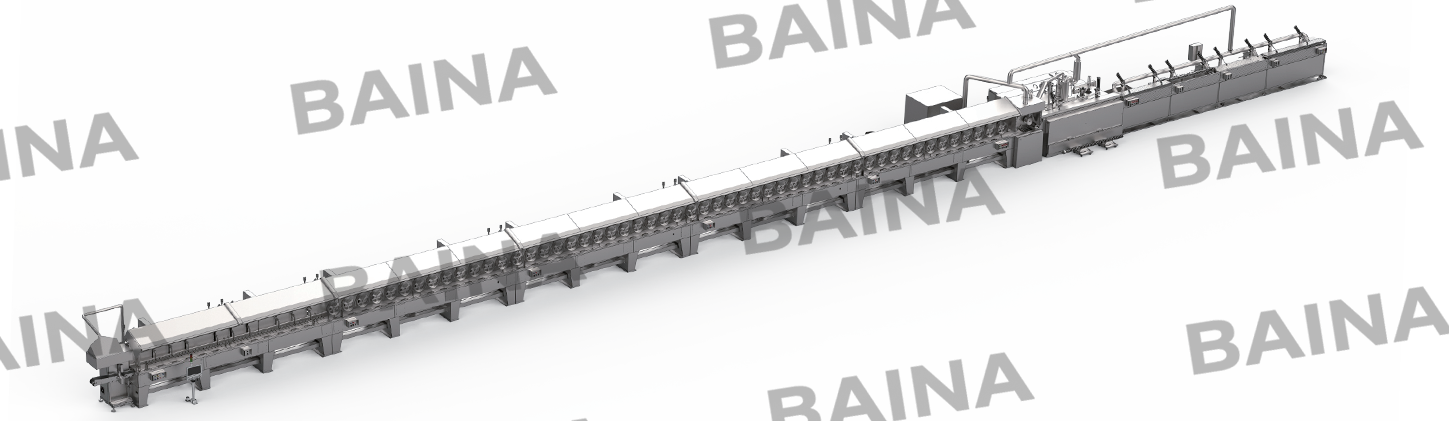
Ф120mm 16D Cold Feed Rubber Extruder
Cat:Extruder Series
Motor Power: 110 kWMaximum Output:700 kg/h
See Details

Cutting a rubber tube to a specified length sounds simple until the material starts to compress, stretch, bend, or shift during feeding. A rigid plastic pipe can maintain its shape relatively well, while a soft rubber tube may change its length slightly under pulling force. This makes cutting accuracy a combination of several factors rather than a number determined by the blade alone.
A modern Automatic Rubber Tube Cutting Machine can provide highly repeatable results, but the achievable tolerance depends on tube construction, feeding technology, cutting method, diameter, length, and machine settings. Some commercial machines specify accuracy around ±0.1 mm, while other industrial systems quote values such as ±0.5 mm or a length-dependent tolerance.
The feeding system has a major influence on final tube length. A machine may have precise electronic control, but the measurement will still be affected by material slippage between the feed mechanism and the rubber surface.
Some automatic tube cutters use servo-driven crawler feeding, while other compact machines use stepper motors or belt feeding. One current machine specification, for example, combines a servo crawler system with a stated length error of ±0.5 mm for tubes from 1 to 40 mm diameter.
Rubber does not behave like a rigid metal tube. Pulling force can elongate the material slightly before the cutting point. Releasing that force may allow the tube to recover part of its original length.
This effect becomes more noticeable with:
The feeding mechanism therefore needs to hold and transport the material without excessive compression. A machine specification that states ±0.1 mm under controlled conditions does not necessarily mean every rubber tube will maintain that tolerance across every production situation. Some suppliers explicitly note that cutting accuracy depends on the material being processed.
Yes, tube diameter can influence how the material responds to feeding and cutting. A small silicone tube may be easily compressed by a roller, while a larger reinforced hose can require stronger clamping and a different blade arrangement.
| Tube Type | Typical Challenge | Useful Control |
| Small silicone tube | Compression during feeding | Controlled belt or roller pressure |
| Soft rubber hose | Stretching and deformation | Stable feed tension |
| Foam rubber tube | Shape recovery | Gentle material handling |
| Reinforced hose | Higher cutting resistance | Suitable blade and clamping |
| Large flexible hose | Weight and bending | Guides and supported feeding |
Commercial equipment covers significantly different size ranges. Compact systems may handle tubes around 22–25 mm in diameter, while industrial machines can process larger hoses, with one current model specifying an OD range of 8–55 mm.
Length accuracy and cut quality are related but separate specifications. A machine can position the tube correctly and still produce an uneven cut surface because of unsuitable blade geometry, insufficient support, or material deformation.
Cold knives are widely used for flexible materials such as rubber, silicone, PVC, and similar tubing. They can provide a relatively simple cutting process without heating the material. Some automatic rubber tube systems use cold knives and specify cutting accuracy around 0.1 mm under their stated operating conditions.
Rotary blades can be useful for applications that require a clean and square cut across continuous tubing. One automatic cut-to-length system uses a motor-driven rotating round blade with crawler feeding and specifies a ±0.5 mm length error.
The appropriate blade depends on wall thickness, hardness, reinforcement, diameter, and the required appearance of the cut face. A simple soft tube does not necessarily require the same cutting system as a steel-wire-reinforced hydraulic hose.
A 50 mm rubber tube and a 5,000 mm hose section present different measurement challenges. A small absolute error can become significant in short components, while long sections are more sensitive to accumulated feeding variation.
Machine specifications illustrate this distinction. Some compact cutting systems offer programmable lengths from 1 mm to 99,999 mm and state a nominal cutting accuracy of 0.1 mm. Industrial equipment may instead express tolerance using a formula such as ±(1 mm + 0.2% of length), showing that the expected error can vary with the programmed dimension.
Looking only at the advertised accuracy figure can give an incomplete picture. A better evaluation should connect the specification with the actual tube application.
A highly accurate cutting process depends on more than the positioning resolution of the controller. The material path, feed mechanism, tube guides, clamping pressure, blade condition, and cutting sequence all contribute to the finished dimension.
That is why two machines with similar electronic specifications may produce different results on the same rubber tube. A compact machine designed for silicone tubing may emphasize fine length adjustment, while an industrial hose cutter may prioritize stable feeding of reinforced products.
The practical question is therefore not simply how accurate an Automatic Rubber Tube Cutting Machine can be on paper. The more useful question is whether it can maintain the required tolerance on the specific tube, diameter, wall thickness, and cutting length used in production. A machine trial with the actual rubber material can reveal this much more clearly than a single accuracy value in a specification sheet.
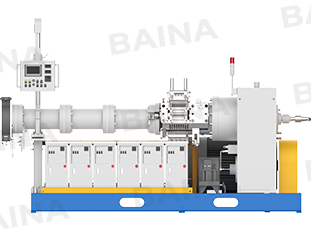
Motor Power: 110 kWMaximum Output:700 kg/h
See Details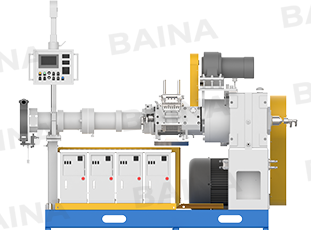
Motor Power: 55 kWMaximum Output: 320 kg/h
See Details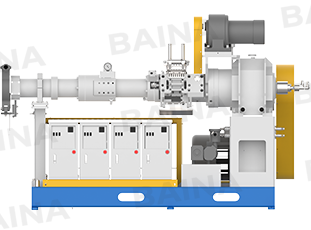
Motor Power: 37 kWMaximum Output: 150 kg/h
See Details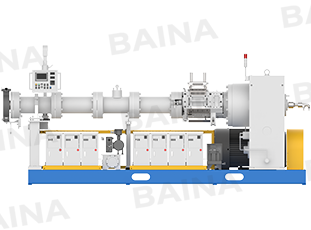
Motor Power: 160 kWMaximum Output: 1000 kg/h
See Details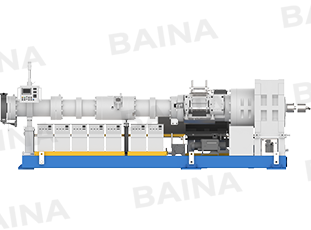
Motor Power: 315 kWMaximum Output: 2,000-2,400 kg/h
See DetailsCutting a rubber tube to a specified length sounds simple until the material starts to compress, str......
READ MORERubber seals rarely share the same geometry. A flat gasket may have a relatively simple cross-sectio......
READ MORESilicone extrusion may look straightforward from the outside: a rubber compound enters the extruder,......
READ MORE

Rubber Extrusion Machine and Equipment