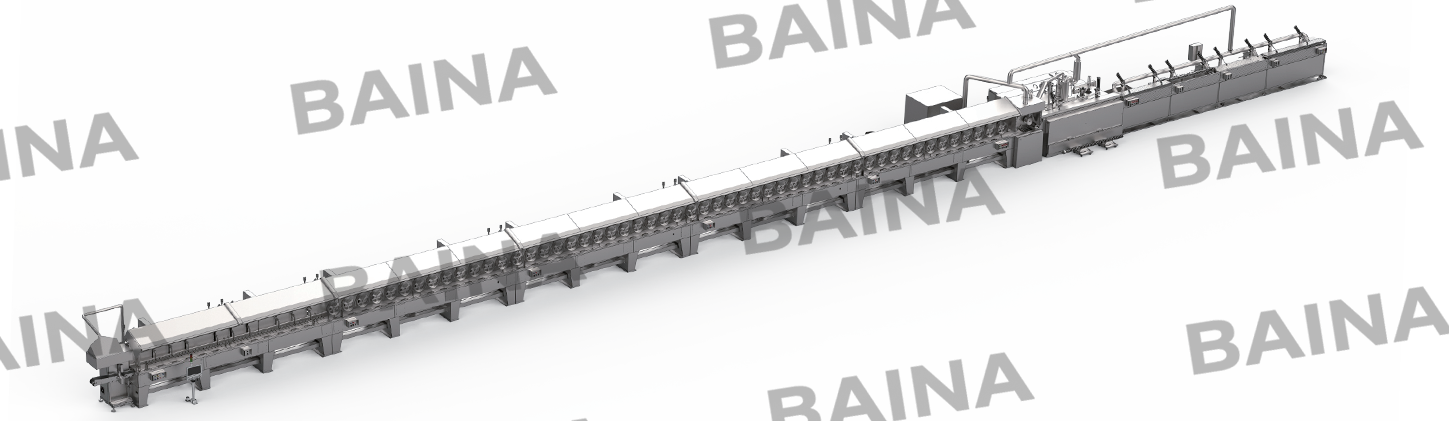
Ф120mm 16D Cold Feed Rubber Extruder
Cat:Extruder Series
Motor Power: 110 kWMaximum Output:700 kg/h
See Details

Maintaining Temperature Control
Temperature management is one of the critical operational parameters in rubber extrusion. Unlike thermoplastics, rubber compounds do not simply melt and flow; they undergo viscoelastic deformation and may begin vulcanization if exposed to excessive heat. Therefore, the temperature profile along the barrel and at the die must be carefully regulated.
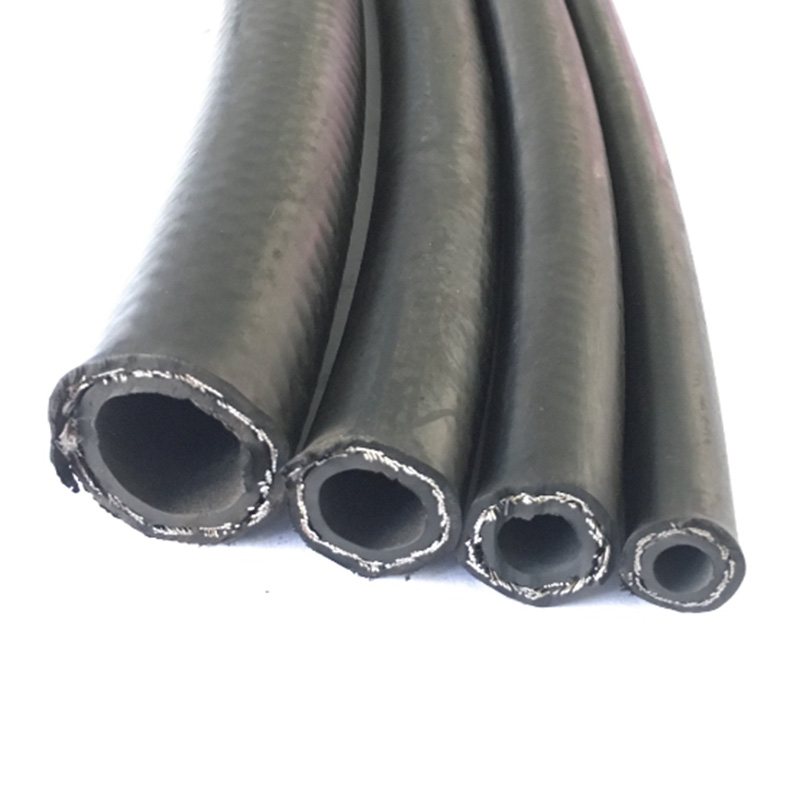
Insufficient temperature can bring about high compound viscosity, resulting in poor flow, surface roughness, and incomplete die filling. Conversely, excessive temperature can initiate premature curing, also known as scorch. Scorch can cause blockages inside the barrel or die, increase torque load on the screw, and bring about inconsistent product dimensions.
Extruders typically use multiple heating zones with independent temperature controllers. However, maintaining stable thermal conditions requires continuous monitoring of barrel heaters, cooling systems, and ambient conditions. Variations in production speed or compound formulation can alter the thermal balance. Operators must therefore adjust temperature setpoints based on material behavior and output requirements rather than relying solely on fixed parameters.
Ensuring Consistent Material Feed
Uniform feeding of rubber compound into the extruder is essential for stable output and dimensional consistency. Rubber is often supplied in strip or pellet form, but its tacky and elastic nature can complicate handling. Irregular feed rates can produce fluctuations in pressure and output, resulting in dimensional variation in the extruded profile.
Feed inconsistency may arise from bridging in the hopper, uneven strip thickness, or variations in compound plasticity. In some operations, preheating or preforming the rubber is necessary to improve flow into the screw. Cold feed extruders, which process rubber at lower initial temperatures, require particular attention to feed uniformity because the compound must be mechanically softened by the screw before reaching processing temperature.
Proper screw design also influences feeding stability. The screw’s compression ratio and channel geometry must match the rheological characteristics of the compound. If the screw is not well matched, slip or surging can occur, bring about unstable extrusion pressure and inconsistent product geometry.
Die Design and Maintenance
The die determines the final cross-sectional shape of the extruded product. Designing a die for rubber extrusion involves accounting for material swell, flow distribution, and pressure drop. Rubber tends to exhibit die swell due to elastic recovery as it exits the die. This phenomenon must be anticipated during design to achieve the desired final dimensions.
Uneven flow distribution within the die can produce distortions, such as thicker walls on one side of a profile or warping. Computational flow analysis is often used in modern die development, but practical adjustments are still common during production trials.
Maintenance is another challenge. Rubber compounds frequently contain fillers such as carbon black, silica, and processing oils. Over time, these ingredients can accumulate inside the die, altering flow paths and surface finish. Regular inspection and cleaning are necessary to maintain dimensional accuracy and surface quality.
Die wear is also a concern. Continuous exposure to abrasive fillers gradually enlarges die openings, which affects tolerance control. Scheduled measurement and refurbishment are therefore required to maintain consistent product specifications.
Cleaning and Changing Dies for Different Profiles
Rubber extrusion operations often involve multiple product profiles. Changing from one profile to another requires the removal of the existing die, cleaning of residual compound, and installation of a new die. This process can result in production downtime and material waste.
Cleaning rubber residue presents practical difficulties because partially cured material may adhere strongly to metal surfaces. Mechanical scraping, solvent cleaning, or controlled heating may be required. Each method must be applied carefully to avoid damaging die surfaces or altering dimensional precision.
Furthermore, when changing compounds or colors, thorough purging of the barrel and screw is necessary to prevent contamination. Incomplete cleaning can bring about surface defects or color streaking in subsequent production runs. Efficient changeover procedures depend on standardized operating protocols and proper tool management.
Dealing with Variations in Rubber Compound Properties
Rubber compounds are formulated from base polymers, curing agents, fillers, plasticizers, and other additives. Even when produced under controlled conditions, slight batch-to-batch variations in viscosity, filler dispersion, or moisture content may occur. These variations directly affect extrusion behavior.
Changes in compound viscosity influence extrusion pressure, die swell, and dimensional stability. A compound with higher viscosity may require higher barrel temperatures or slower screw speeds to achieve stable flow. Conversely, a lower viscosity compound may increase the risk of dimensional overshoot or deformation after exiting the die.
Environmental conditions also contribute to variability. Ambient temperature and humidity can alter compound flexibility and feeding characteristics. Storage time may affect scorch safety or plasticity. As a result, operators must continuously evaluate process data such as motor load, head pressure, and product dimensions to identify deviations early.
Statistical process control methods are often applied to monitor key parameters. Adjustments to screw speed, temperature profile, or line speed are made based on measured trends rather than reactive corrections after defects occur.
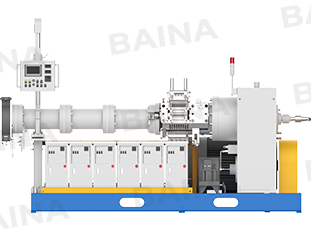
Motor Power: 110 kWMaximum Output:700 kg/h
See Details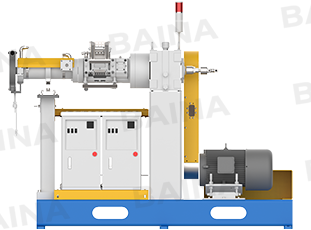
Motor Power: 7.5 kWMaximum Output: 50 kg/h
See Details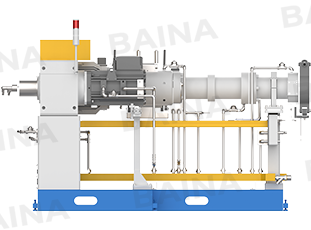
Motor Power: 45 kWMaximum Output: 280 kg/h
See Details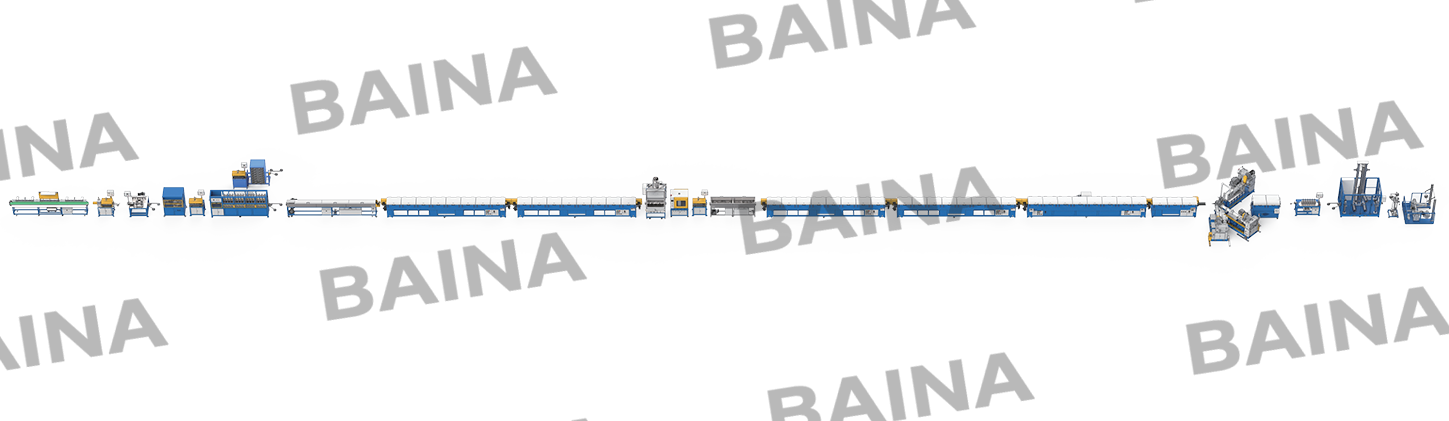
Product AdvantagesThis production line is primarily used for manufacturing rubber products that are ...
See Details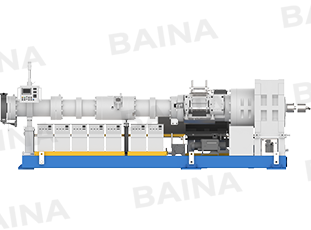
Motor Power: 315 kWMaximum Output: 2,000-2,400 kg/h
See DetailsTwo rubber parts made from the same compound may show different hardness readings, even though they ......
READ MORESilicone profiles come in many forms, including sealing strips, flexible tubes, gaskets, and custom-......
READ MORERubber hose design is often discussed in terms of inner diameter, outer diameter, and wall thickness......
READ MORE

Rubber Extrusion Machine and Equipment