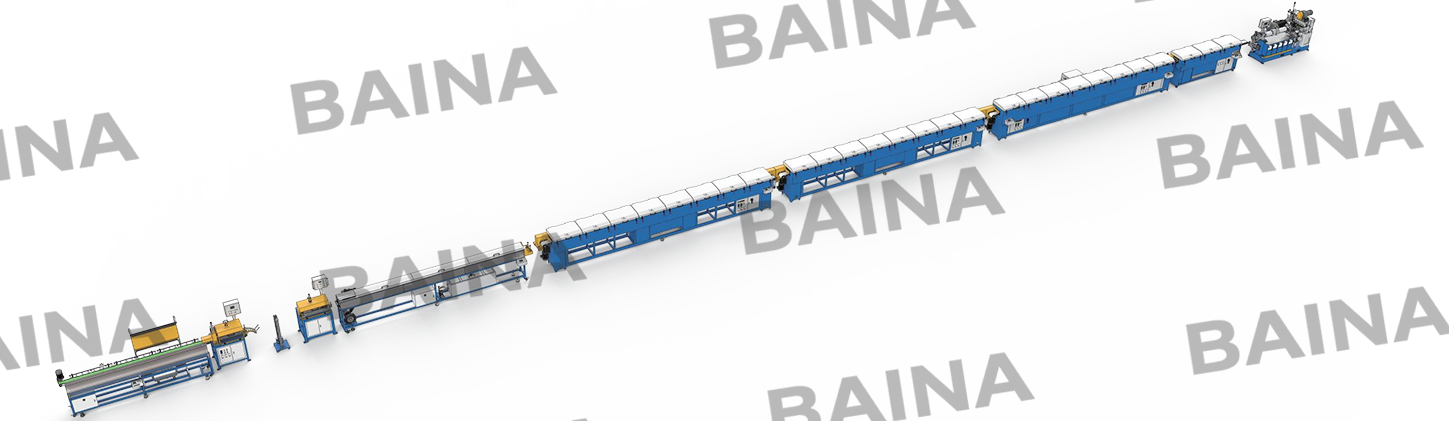
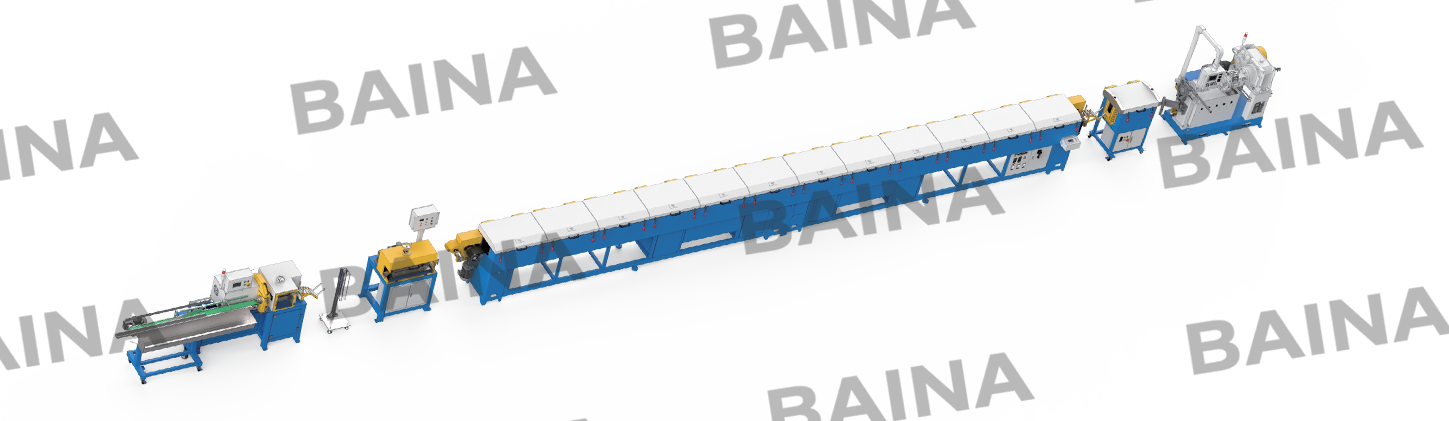
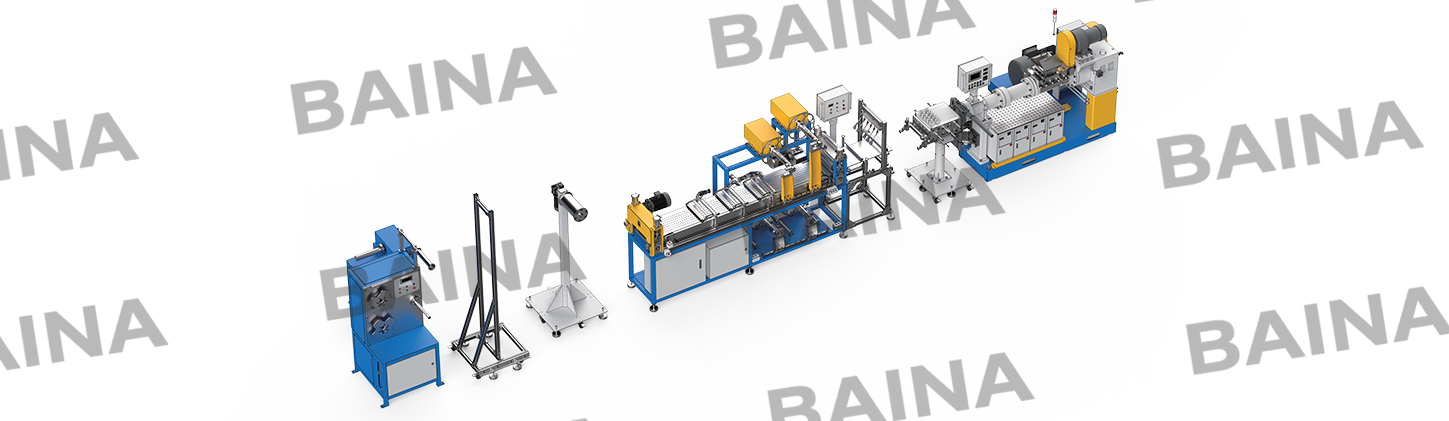
Ф120mm 16D Cold Feed Rubber Extruder
Cat:Extruder Series
Motor Power: 110 kWMaximum Output:700 kg/h
See Details
The manufacturing of rubber hoses is a specialized industrial process that transforms raw elastomeric compounds into flexible conduits used across automotive, hydraulic, and general industrial applications. For professionals entering this field or seeking to optimize existing operations, understanding the fundamentals of the production line is essential.
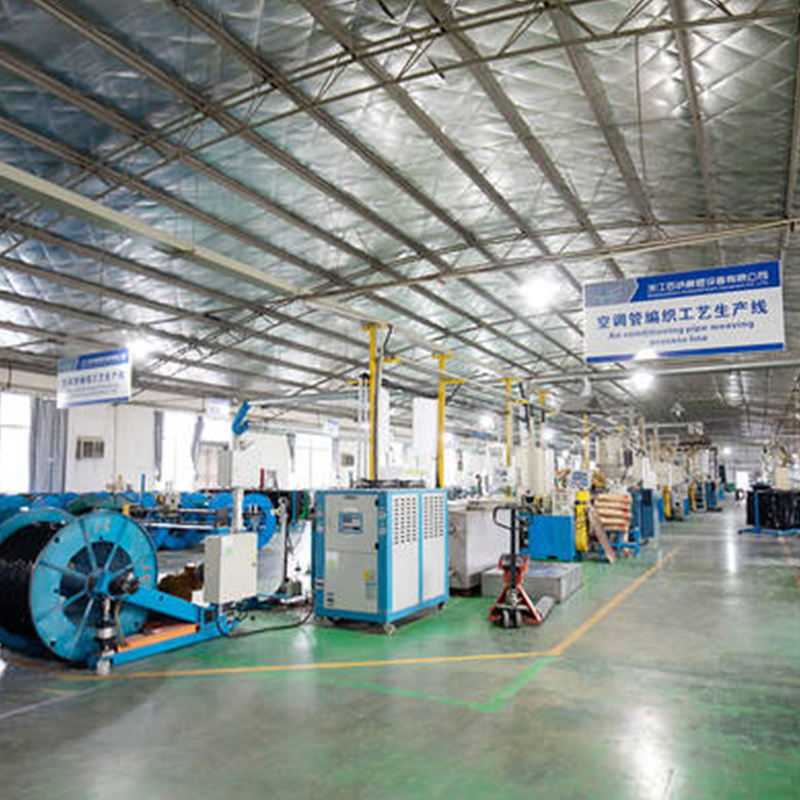
The method chosen for hose production depends primarily on the intended application, pressure requirements, and material characteristics. There are three principal manufacturing processes, each with distinct operational parameters.
Mandrel-Based Production:
Process Overview: In this method, unvulcanized rubber compounds are extruded or wrapped around a rigid metal or flexible plastic mandrel that defines the hose's internal diameter. After the cover and any reinforcement layers are applied, the assembly is wrapped with curing tape or fabric and vulcanized, typically in an autoclave or with steam. Following vulcanization, the mandrel is removed, either by mechanical extraction or by collapsing a collapsible mandrel.
Primary Applications: This process is frequently used for large-diameter hoses, hoses requiring very tight dimensional tolerances on the inner bore, and those made with materials that lack the stiffness to support themselves during curing. It is common in the production of industrial suction and discharge hoses.
Pultrusion or Continuous (On-Mandrel) Systems:
Process Overview: This is a variation of the mandrel method where a long, flexible mandrel is continuously pushed through the production line. The inner tube is extruded onto this moving mandrel, reinforcement is applied (braided or spiraled), and the cover is extruded over it. The continuous length then passes through a curing system, often a continuous vulcanization tube (CV) using steam or hot water under pressure. At the end of the line, the mandrel is extracted and recirculated.
Primary Applications: This method is highly efficient for producing long lengths of hose with consistent dimensions, such as automotive heater hoses or hydraulic hoses.
Mandrel-Less (Extrusion) Production:
Process Overview: Here, the inner tube is extruded without any internal support. The semi-cured tube must possess sufficient "hot strength" or "green strength" to maintain its shape without collapsing before vulcanization. After the tube is formed, it may pass through a cooling trough to set its shape. Reinforcement and cover are then applied, and the assembly is vulcanized continuously. The absence of a mandrel eliminates the extraction step, simplifying the line.
Primary Applications: This process is common for smaller-diameter, general-purpose hoses where tight internal diameter tolerances are less critical. It is widely used in the production of air and water hoses.
A modern rubber hose production line is an integrated system of machinery, each component performing a specific function that contributes to the final product. Understanding these components is fundamental to troubleshooting and maintenance.
Component 1: The Extruder
Function: The extruder is the primary machine for processing the rubber compound. It receives strips of unvulcanized rubber, feeds them into a rotating screw within a heated barrel, and plasticates the material through mechanical shear and thermal energy. This process transforms the solid compound into a homogeneous, viscous melt. The screw forces the material through a die, which shapes it into the tube or cover profile. Key sub-components include the feed throat, screw, barrel, breaker plate, and die head. Temperature control along the barrel is critical for consistent material viscosity.
Component 2: The Reinforcement Applicator (Braider or Spiral Winder)
Function: This component applies strength to the hose, enabling it to withstand internal pressure. For braided hose, high-tensile textile yarns (such as polyester or nylon) or fine steel wires are interwoven in a crisscross pattern around the inner tube. For spiral hose, typically used in high-pressure hydraulic applications, multiple layers of heavy steel wire are wound helically at precise angles. The tension and angle of the reinforcement are precisely controlled, as they directly determine the hose's pressure rating and expansion characteristics.
Component 3: The Cooling System
Function: After the inner tube is extruded, it often passes through a cooling trough. This system, which may use water baths or air blowers, serves to reduce the temperature of the hot, semi-fluid rubber. Cooling increases the material's viscosity and "green strength," providing dimensional stability so the tube can support itself and the subsequent reinforcement layer without deforming. Consistent cooling prevents sagging or ovality in the final hose.
Component 4: The Vulcanization System (CV Line or Autoclave)
Function: Vulcanization is the chemical cross-linking process that transforms the pliable rubber compound into a durable, elastic material. In a continuous vulcanization (CV) line, the assembled hose (tube, reinforcement, and uncured cover) passes through a long, pressurized chamber. This chamber may use high-pressure steam, hot water, or hot air (often in a fluidized bed or salt bath for certain applications) to apply the necessary heat and pressure. This initiates and completes the curing reaction. For mandrel-built hoses, vulcanization occurs in an autoclave—a large, batch-style pressure vessel where assembled hoses are subjected to steam or hot air for a specified time and temperature cycle.
Component 5: The Haul-Off Unit and Cutter
Function: The haul-off unit is a caterpillar or belt-driven device that pulls the finished hose through the production line at a consistent, controlled speed. The speed of the haul-off must be precisely synchronized with the output rate of the extruder to maintain the correct wall thickness and overall dimensions. At the end of the line, a rotary cutter or saw cuts the continuous hose into predetermined lengths for packaging and shipment.
Material selection is driven by the service conditions the hose will encounter. The inner tube material must be chemically compatible with the fluid being conveyed. For example, Nitrile rubber (NBR) is commonly specified for oil and fuel hoses due to its resistance to petroleum-based fluids, while EPDM is preferred for coolant and automotive heater hoses because of its resistance to heat, ozone, and glycol-based coolants. The cover material must resist the external environment, including abrasion, weather, ozone, and chemicals. Reinforcement material selection—textile for low to medium pressures, or steel wire for high pressures—depends on the required burst strength and flexibility. The compound for each layer is formulated with specific fillers, plasticizers, and curing agents to achieve the desired physical properties, such as hardness, tensile strength, and elongation.
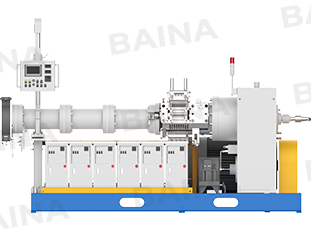
Motor Power: 110 kWMaximum Output:700 kg/h
See Details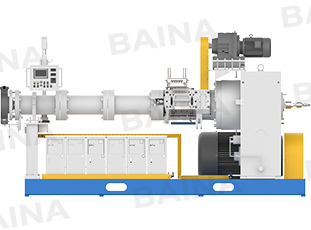
Motor Power: 160 kWMaximum Output: 1000 kg/h
See Details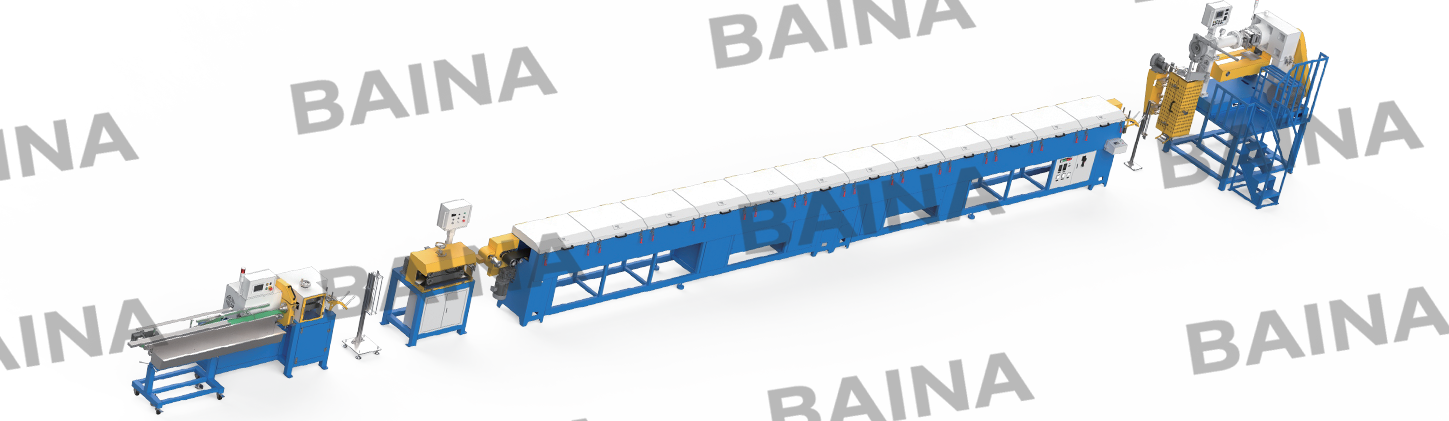
Product advantages1. High Space Utilization, Suitable for Compact Production Environments2. High Mol...
See DetailsRubber seals rarely share the same geometry. A flat gasket may have a relatively simple cross-sectio......
READ MORESilicone extrusion may look straightforward from the outside: a rubber compound enters the extruder,......
READ MOREFuel hoses are critical components in automotive and industrial fuel delivery systems. They must tra......
READ MORE

Rubber Extrusion Machine and Equipment