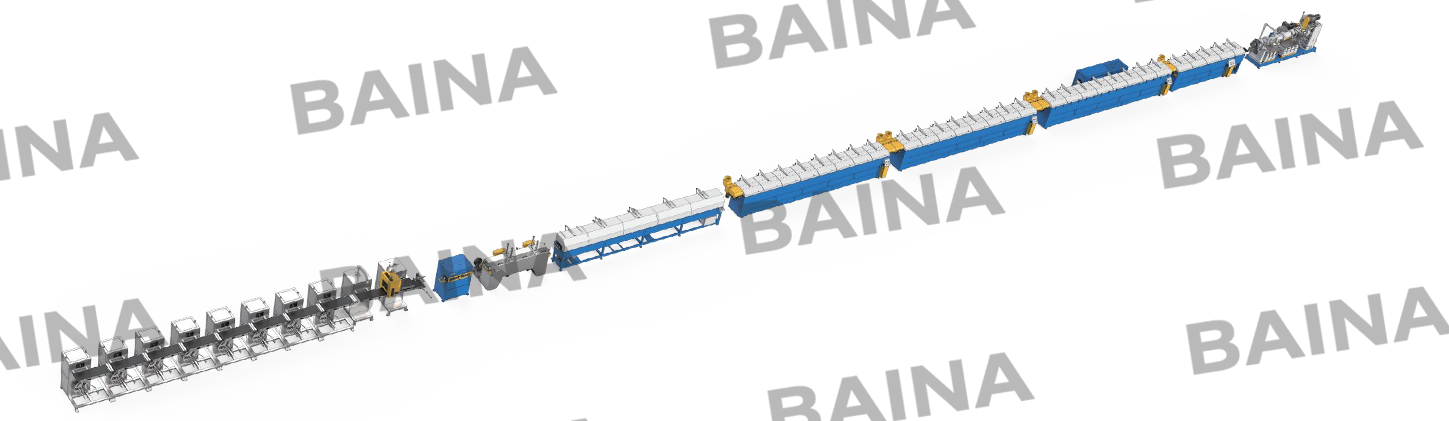
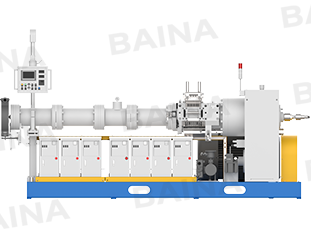
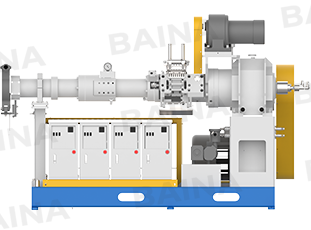
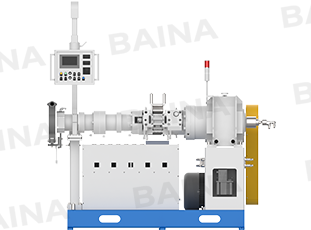
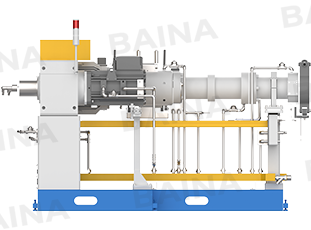
A salt bath curing line is widely used in the continuous vulcanization of rubber profiles such as seals, hoses, and gaskets. In this system, extruded rubber passes through a heated molten salt medium that transfers heat rapidly and uniformly to initiate and complete crosslinking. While the process is technically established, operational efficiency depends on equipment configuration, thermal management, and process control. Improving efficiency requires attention to several interconnected aspects of production.
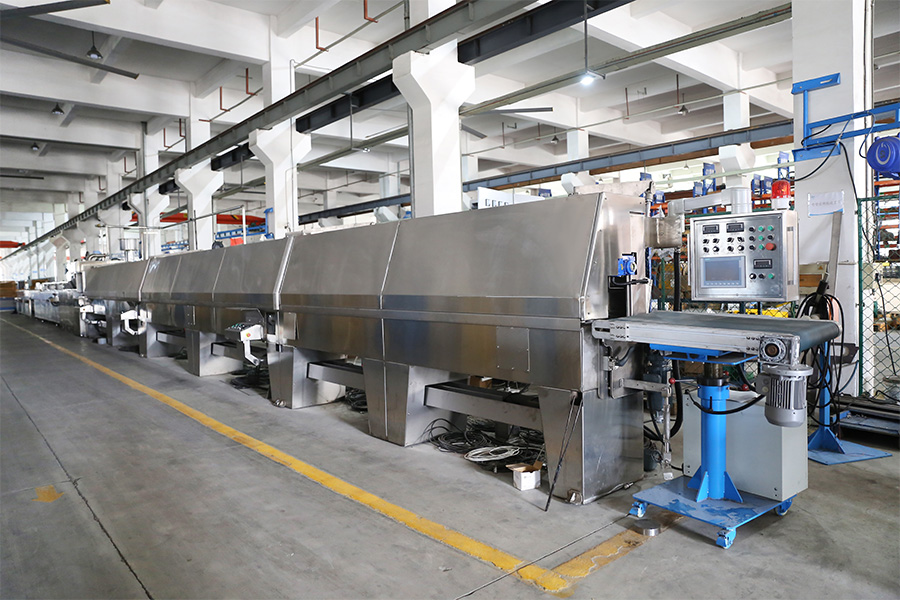
Optimizing Thermal Stability and Heat Transfer
The core advantage of a salt bath system lies in its high heat transfer coefficient. Molten salts, typically nitrate-based mixtures, maintain stable temperatures in the range required for vulcanization. To achieve efficient curing, the temperature must remain consistent throughout the bath.
Fluctuations in temperature can bring about uneven crosslink density, affecting mechanical properties and dimensional stability. Installing multiple temperature sensors along the bath length enables better monitoring of thermal gradients. Automated heating controls, combined with insulation around the tank, help reduce heat loss and energy consumption. Maintaining stable thermal conditions ensures that rubber profiles cure uniformly within a predictable residence time.
Improving Line Speed Through Process Synchronization
Efficiency is closely related to throughput. Increasing line speed without compromising cure quality requires synchronization between the extruder output and the curing section. If the extrusion rate exceeds the curing capacity, under-cured products may result. Conversely, if the curing bath operates below its potential capacity, productivity decreases.
Proper calculation of residence time—based on compound formulation, profile thickness, and target crosslink density—is essential. Adjusting bath length, temperature, and line speed in coordination allows manufacturers to achieve stable curing at higher output levels. Process data collection, including continuous measurement of profile temperature and hardness, supports informed adjustments rather than trial-and-error modifications.
Reducing Maintenance Downtime
Molten salt systems require routine maintenance to maintain efficiency. Salt contamination, oxidation, and drag-out losses can alter bath composition over time. Periodic filtration and chemical analysis help maintain consistent heat transfer properties.
In addition, corrosion management is important. Selecting appropriate tank materials and coatings reduces degradation caused by high-temperature salt exposure. Scheduled inspection of conveyor systems and support rollers prevents mechanical interruptions. By implementing preventive maintenance rather than reactive repairs, production interruptions can be minimized.
Enhancing Automation and Quality Monitoring
Modern salt bath curing lines benefit from integrated automation systems. Sensors for temperature, line tension, and speed provide real-time data that can be logged and analyzed. Statistical monitoring of cure parameters supports consistent product quality.
Automation also assists in safety management, as molten salts operate at elevated temperatures. Controlled feeding systems and emergency shutdown mechanisms reduce operational risk. Improved monitoring not only supports safety but also contributes to stable output and reduced material waste.
Why Is a Salt Bath Curing Line Needed to Achieve Uniform Vulcanization?
Rubber products require controlled heat exposure to complete vulcanization. In thick or complex profiles, uneven heating can bring about internal stress or incomplete curing. A salt bath provides direct contact heat transfer, ensuring that thermal energy penetrates the profile efficiently. This reduces the risk of uncured cores or surface over-curing.
Alternative curing methods, such as hot air tunnels, rely primarily on convective heat transfer. Air has a lower heat transfer coefficient compared to molten salt, resulting in a slower temperature rise within the rubber. For certain profiles, especially dense or solid cross-sections, a salt bath allows faster and more uniform heating.
Consistency in curing directly influences mechanical properties such as tensile strength, elongation, and compression set. When heat distribution is uneven, variations in crosslink density may occur along the product length. A salt bath system supports more stable thermal exposure, bringing about predictable material performance.
Continuous production environments benefit from curing systems that maintain constant temperature conditions over extended periods. A properly managed salt bath provides stable thermal mass, reducing temperature fluctuations during long production runs.
Why Is a Salt Bath Curing Line Necessary for Production Efficiency and Product Stability?
In continuous extrusion lines, curing speed affects overall productivity. Salt baths enable relatively rapid heat transfer, which shortens the required residence time compared to some alternative methods. This allows manufacturers to maintain practical line speeds without compromising cure completeness.
Dimensional control is influenced by the curing method. Rapid and uniform vulcanization helps stabilize the profile shape shortly after extrusion. This reduces deformation that may occur if the rubber remains soft for an extended period. Improved dimensional stability contributes to lower rejection rates.
Energy management is another consideration. Although salt baths operate at elevated temperatures, their high heat capacity and thermal conductivity allow efficient energy utilization. Once heated, the system can maintain stable temperatures with controlled energy input.
For manufacturers producing technical rubber profiles with specific tolerance requirements, process repeatability is essential. A salt bath curing line provides controlled and measurable curing conditions. By combining temperature regulation, line speed control, and compound formulation management, producers can achieve stable and reproducible product characteristics.