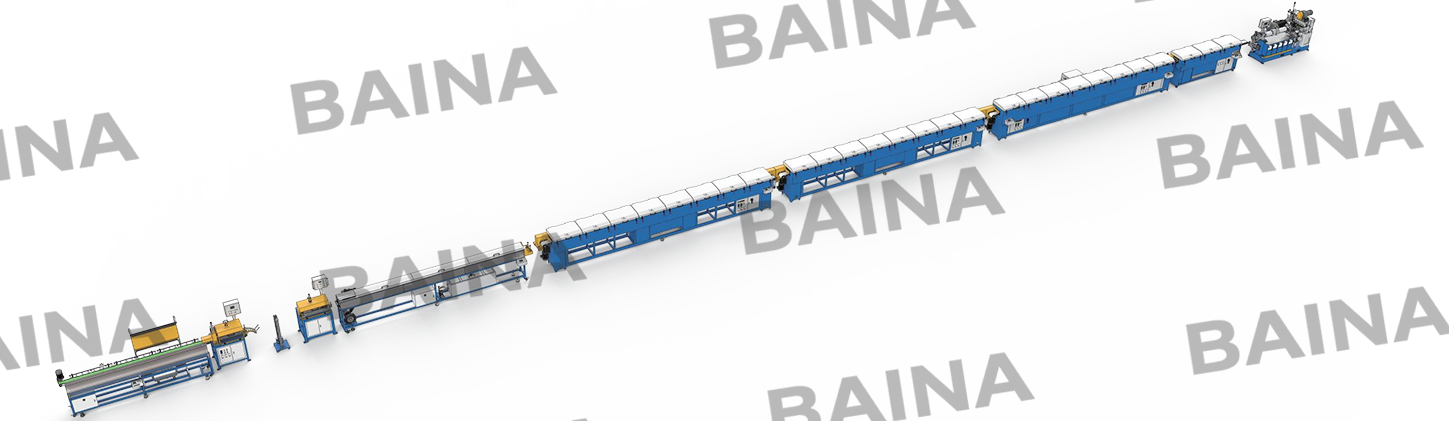
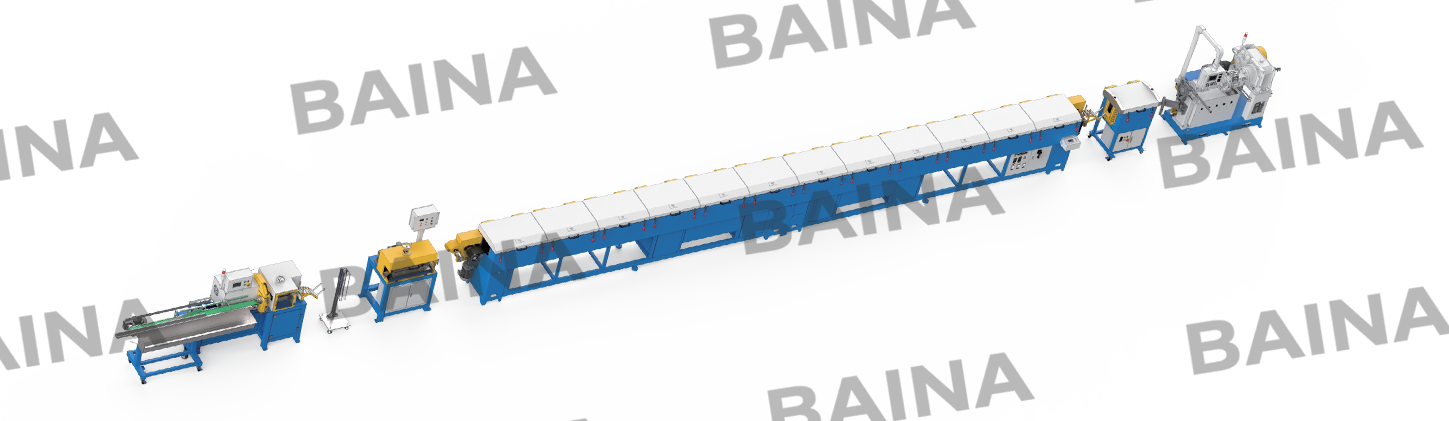
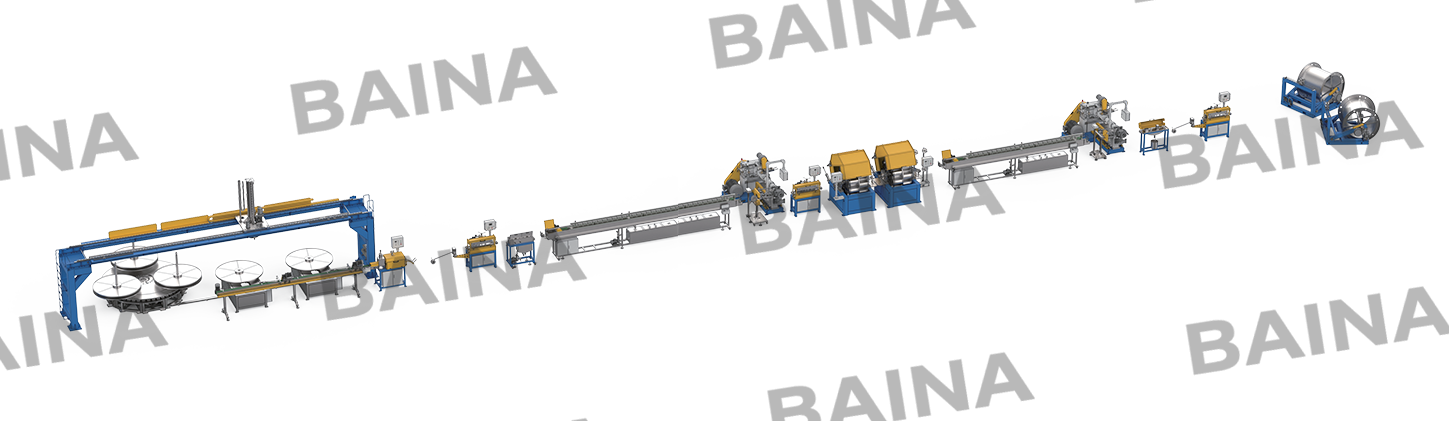
Ф90mm 16D Cold Feed Rubber Extruder
Cat:Extruder Series
Motor Power: 55 kWMaximum Output: 320 kg/h
See Details
Spiral hoses are widely used in hydraulic systems, industrial equipment, and high-pressure fluid transportation because their reinforced structure provides strong pressure resistance and durability. However, some manufacturers encounter a common issue during production: the finished hose does not maintain the expected round shape.
Problems such as ovality, uneven diameter, twisting, or surface deformation can affect installation accuracy and pressure performance. These issues are usually related to the interaction between material behavior, reinforcement structure, extrusion conditions, and cooling processes.
A well-designed Spiral Hose Extrusion Line must control each stage carefully because the hose structure is created through multiple processes, including inner tube extrusion, reinforcement winding, outer layer extrusion, curing, and final inspection.
Wall thickness plays an important role in maintaining hose roundness.
A hose with uneven wall thickness has different levels of resistance around its circumference. During cooling or pressure testing, the thinner area may deform more easily than the thicker section. Common causes include:
For high-pressure spiral hoses, dimensional consistency is especially important because reinforcement layers rely on accurate rubber thickness to maintain structural balance.
The spiral reinforcement layer provides pressure resistance, but it also affects hose flexibility and shape stability.
Steel wire layers are usually applied at controlled angles around the inner tube. Any variation in winding tension or spiral angle may create uneven stress distribution.
Potential results include:
| Issue | Possible Effect |
| Excessive wire tension | Compression and distortion of the rubber layer |
| Low reinforcement tension | Loose structure and dimensional instability |
| Uneven spiral spacing | Irregular pressure distribution |
Research on spiral hose structures shows that reinforcement architecture directly influences stiffness, deformation behavior, and pressure performance.
The rubber compound must flow evenly through the extrusion head to create a uniform tube structure. Pressure fluctuations can cause:
A stable extrusion system helps maintain consistent material distribution before reinforcement and curing processes begin.
Cooling determines how quickly the hose structure becomes stable.
Uneven cooling may cause one side of the hose to contract faster than the other side, creating oval shapes or slight bending. Important control factors include:
| Parameter | Influence |
| Cooling water temperature | Affects dimensional stability |
| Cooling distribution | Controls uniform shrinkage |
| Line speed | Determines cooling time |
A balanced cooling system helps the hose maintain a consistent diameter throughout continuous production.
Not all deformation problems originate from the machine. The hose design itself can influence shape retention.
High-pressure spiral hoses often contain several layers of steel wire reinforcement. These layers provide pressure capability but also increase structural stiffness.
Compared with lower-pressure hoses, reinforced spiral constructions usually require more precise control of:
The additional reinforcement changes how the hose responds to bending, compression, and external forces.
Rubber compound properties also determine how well a hose returns to its original shape. Important characteristics include:
| Property | Function |
| Elastic recovery | Helps restore shape after deformation |
| Tensile strength | Supports structural integrity |
| Hardness | Affects flexibility and resistance |
| Adhesion strength | Maintains bonding between layers |
A suitable compound must balance flexibility with reinforcement support.
Spiral hoses contain multiple layers, including:
Weak bonding between layers may create internal movement. Over time, this can result in swelling, deformation, or uneven pressure distribution.
Common causes of poor layer bonding include:
Strong adhesion between layers helps the hose behave as one integrated structure.
A reliable Spiral Hose Extrusion Line normally requires control over several production variables.
| Production Area | Key Control Point |
| Extrusion section | Material flow and tube thickness |
| Wire winding section | Spiral angle and tension consistency |
| Outer covering section | Rubber distribution accuracy |
| Curing section | Temperature and pressure uniformity |
| Inspection section | Diameter and roundness measurement |
Continuous monitoring helps detect dimensional changes before they become larger quality issues.
Several approaches can improve spiral hose stability:
Advanced measurement systems can also monitor wall thickness and detect dimensional variations during production, allowing faster adjustments.
A certain level of dimensional variation exists in any rubber manufacturing process because materials naturally respond to temperature, pressure, and curing conditions.
The goal is not to remove every change but to maintain controlled and predictable dimensions.
A properly configured Spiral Hose Extrusion Line combines accurate extrusion, stable reinforcement application, uniform curing, and careful inspection to produce hoses with reliable shape retention.
Spiral hose deformation is usually caused by a combination of factors rather than one single problem. Material behavior, reinforcement structure, extrusion stability, cooling conditions, and layer bonding all influence the final shape.
Manufacturers that analyze the complete production process can identify the source of dimensional changes and improve consistency. With accurate equipment configuration and controlled processing parameters, spiral hoses can maintain their designed geometry while delivering reliable performance in demanding applications.
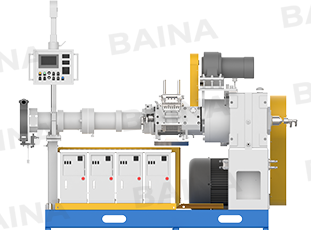
Motor Power: 55 kWMaximum Output: 320 kg/h
See Details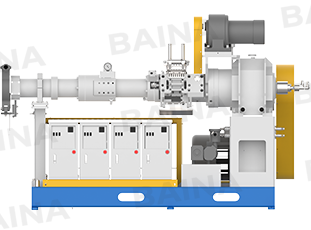
Motor Power: 37 kWMaximum Output: 150 kg/h
See DetailsTwo rubber parts made from the same compound may show different hardness readings, even though they ......
READ MORESilicone profiles come in many forms, including sealing strips, flexible tubes, gaskets, and custom-......
READ MORERubber hose design is often discussed in terms of inner diameter, outer diameter, and wall thickness......
READ MORE

Rubber Extrusion Machine and Equipment