


Ф120mm 20D Cold Feed Vacuum Rubber Extruder
Cat:Extruder Series
Motor Power: 110 kWMaximum Output: 700 kg/h
See Details
The rubber hose industry is continuously developing as manufacturers demand higher consistency, flexible production options, and better control over product performance. A modern professional rubber hose production line is no longer simply a combination of extrusion and cutting equipment. It is an integrated manufacturing system that connects material feeding, rubber extrusion, reinforcement processing, vulcanization, cooling, inspection, and final handling.
Understanding the key features of advanced hose production equipment helps buyers and engineers evaluate whether a production system can meet different application requirements, including automotive hoses, hydraulic hoses, fuel hoses, air hoses, and industrial rubber tubes. A complete hose line normally includes rubber mixing preparation, extrusion units, reinforcement devices, curing systems, and finishing equipment.
The extrusion section is the core part of a rubber hose production system. It determines the tube diameter, wall thickness, surface condition, and dimensional stability of the final product. Modern equipment focuses on accurate pressure control, stable material feeding, and consistent temperature management during extrusion.
A typical rubber extrusion unit includes a screw and barrel assembly, drive motor, temperature control zones, and extrusion die head. The screw pushes the rubber compound forward while controlled heating helps maintain suitable processing conditions.
Stable extrusion pressure is especially important for hoses requiring strict inner diameter and outer diameter tolerances. Small variations during extrusion may influence pressure resistance, connection performance, and service reliability.
One important feature of modern hose manufacturing equipment is flexible configuration. Different rubber hose products require different structures, materials, and processing methods. A production line designed for low-pressure air tubes may not have the same configuration as a system used for high-pressure fuel or hydraulic hoses.
| Hose Type | Typical Structure | Required Production Features |
| Fuel Hose | Multi-layer rubber structure with chemical resistance | Precise extrusion, stable bonding, strict thickness control |
| Hydraulic Hose | Rubber tube with textile or steel reinforcement | Braiding or spiraling equipment, high-pressure capability |
| Industrial Rubber Tube | Single-layer or reinforced construction | Continuous extrusion and accurate cutting |
A professional production line can be adjusted according to hose diameter, rubber compound characteristics, and application requirements. Reinforcement systems may include textile braiding, steel wire spiraling, or other strengthening methods to improve pressure resistance.
Extruded rubber remains soft and unstable before curing. Vulcanization changes the rubber compound structure and provides the elasticity, strength, and durability required for practical applications. The curing section is therefore a key factor affecting finished hose performance.
Modern rubber hose production equipment may use several curing methods depending on product design:
A well-designed curing system must balance temperature, curing time, and production speed. Excessive heat may affect rubber properties, while insufficient curing may reduce mechanical strength.
Modern manufacturing systems increasingly integrate digital monitoring functions to provide real-time information during production. Instead of relying only on manual inspection, operators can monitor important parameters throughout the process.
Automatic control systems help maintain consistent operating conditions and reduce variations between production batches. Thickness measurement equipment and synchronized pulling systems are often integrated into advanced extrusion lines to maintain dimensional accuracy.
After extrusion and vulcanization, rubber hoses require accurate cutting and organized handling. Automatic cutting equipment can provide consistent hose lengths while reducing material waste caused by inaccurate manual operations.
Common downstream equipment includes:
Proper coordination between extrusion speed, cooling, pulling, and cutting directly affects final product appearance and dimensional accuracy.
Before purchasing rubber hose manufacturing equipment, technical teams usually review several factors related to production goals and product specifications.
| Parameter | Recommended Consideration |
| Hose Diameter Range | Confirm whether the equipment supports required tube sizes. |
| Rubber Material Compatibility | Check suitability for EPDM, NBR, silicone, natural rubber, or other compounds. |
| Production Speed | Match output requirements with extrusion and curing capacity. |
| Control System | Evaluate PLC operation, monitoring functions, and adjustment flexibility. |
| Downstream Equipment | Consider cutting, cooling, winding, and inspection requirements. |
The development direction of hose production technology is moving toward smarter control, modular design, and wider material compatibility. Manufacturers are looking for equipment that can handle multiple products while maintaining stable quality.
Future production systems are expected to combine automated adjustment functions, improved data management, and advanced inspection technology. These improvements allow production teams to respond faster to changing market requirements and customized hose designs.
A modern rubber hose production line is defined by more than individual machines. Its value comes from the cooperation between extrusion technology, reinforcement systems, curing equipment, monitoring solutions, and finishing processes. Accurate control of each stage helps create rubber hoses with reliable dimensions, stable performance, and suitability for demanding applications.
As industries such as automotive, transportation, and industrial equipment continue to require specialized rubber products, advanced hose manufacturing systems will focus on flexibility, precision, and intelligent operation. Choosing equipment with suitable technical features allows manufacturers to build a production process that matches both current requirements and future product development.
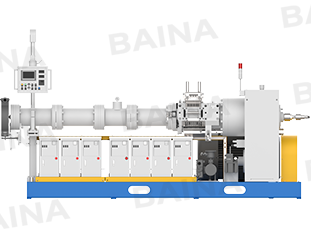
Motor Power: 110 kWMaximum Output: 700 kg/h
See Details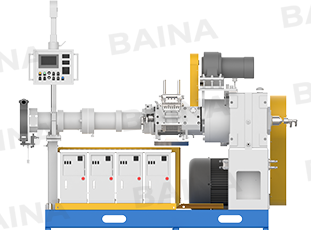
Motor Power: 55 kWMaximum Output: 320 kg/h
See Details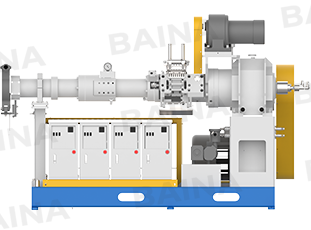
Motor Power: 37 kWMaximum Output: 150 kg/h
See Details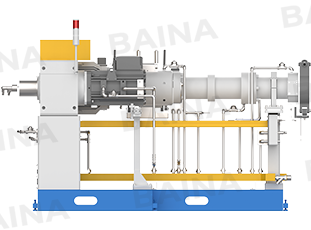
Motor Power: 45 kWMaximum Output: 280 kg/h
See Details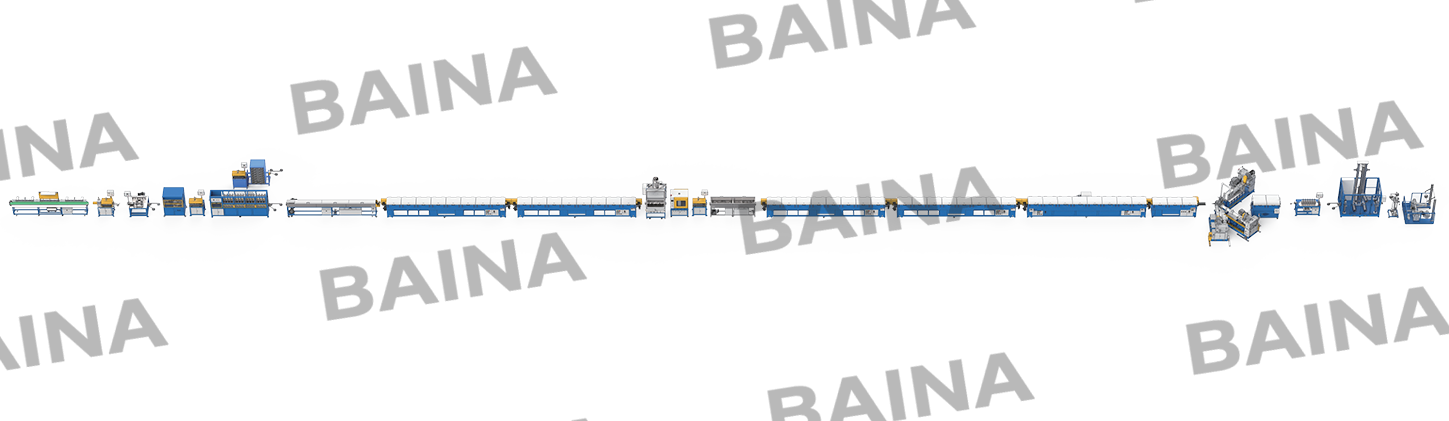
Product AdvantagesThis production line is primarily used for manufacturing rubber products that are ...
See Details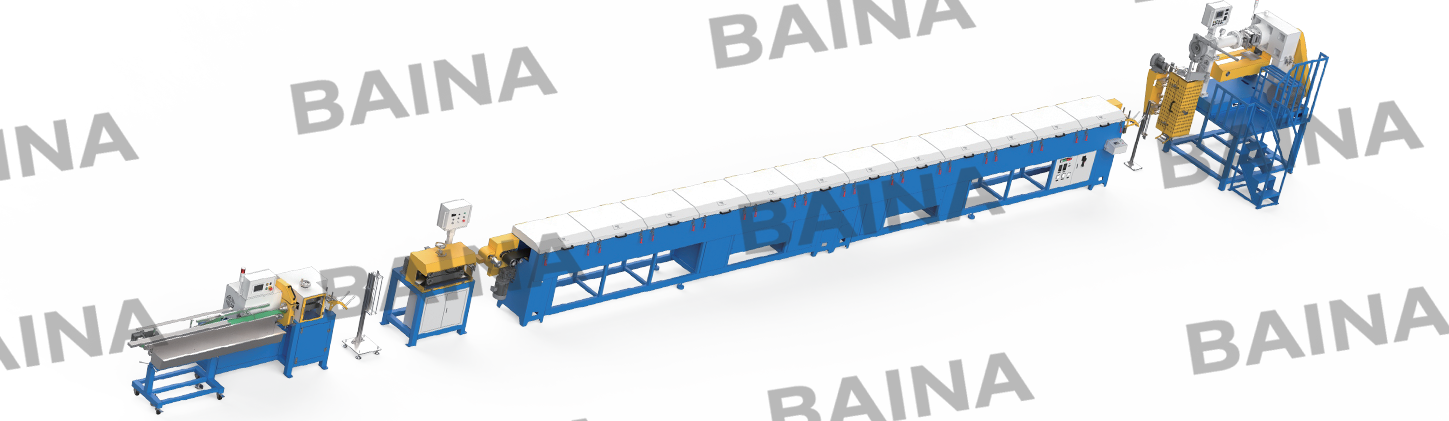
Product advantages1. High Space Utilization, Suitable for Compact Production Environments2. High Mol...
See DetailsCutting a rubber tube to a specified length sounds simple until the material starts to compress, str......
READ MORERubber seals rarely share the same geometry. A flat gasket may have a relatively simple cross-sectio......
READ MORESilicone extrusion may look straightforward from the outside: a rubber compound enters the extruder,......
READ MORE

Rubber Extrusion Machine and Equipment