The cutting stage plays an important role in rubber tube manufacturing. After extrusion, cooling, and curing, rubber tubes need to be divided into accurate lengths for assembly, packaging, or further processing. Traditional manual cutting methods often require repeated measurement and adjustment, which may create variations in tube length and increase operator workload. Modern automation technology is changing this process through advanced cutting systems that improve accuracy, consistency, and production flexibility.
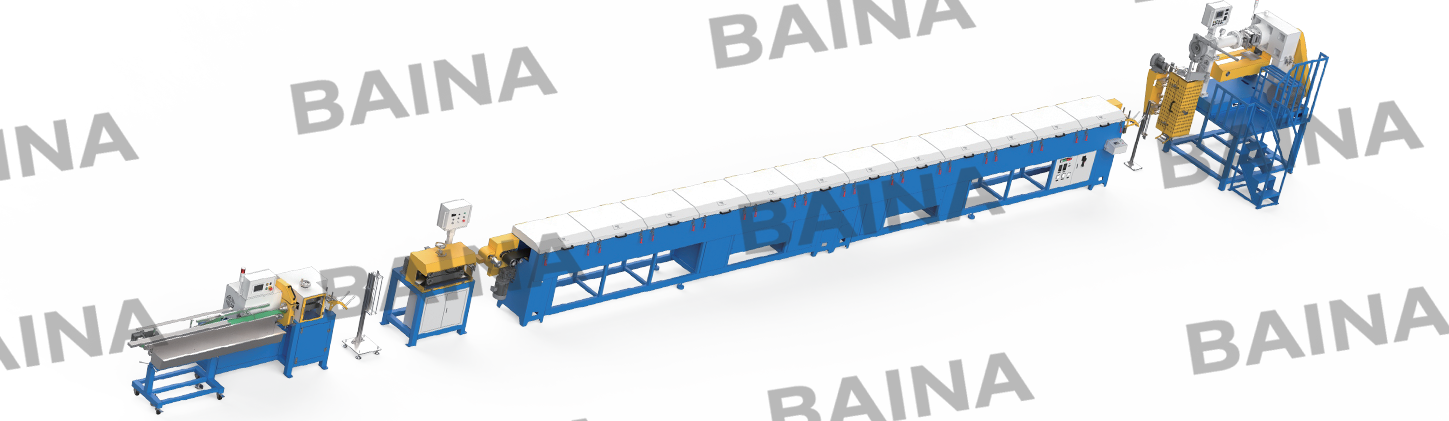
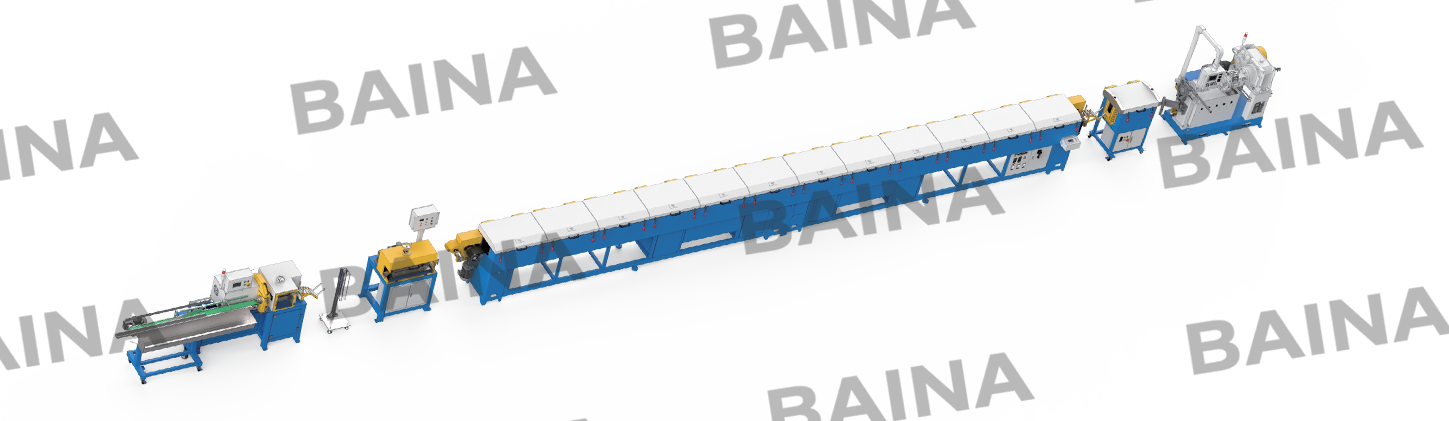
An Automatic Rubber Tube Cutting Machine has become an important part of many rubber processing lines because it combines automatic feeding, positioning, cutting, and control functions in one system. These machines are designed to handle different types of rubber hoses, including automotive hoses, hydraulic tubes, silicone tubes, and industrial rubber pipes. Modern automatic cutting equipment can achieve accurate length control through servo systems, sensors, and programmable controllers.
1. Accurate Length Control Meets Modern Production Requirements
Rubber tubes are often supplied according to strict dimensional requirements. A small difference in cutting length may affect assembly processes, connection accuracy, or product appearance. Automatic cutting technology helps manufacturers maintain stable dimensions during continuous production.
Unlike manual cutting methods that depend heavily on operator experience, automatic systems use programmed parameters to control feeding distance and cutting cycles. Operators can set the required tube length and quantity through a control interface, allowing the machine to complete repeated cutting operations automatically.
- Length setting: Digital control allows operators to input specific cutting dimensions according to production needs.
- Position accuracy: Servo motors or precision feeding systems help reduce positioning errors.
- Repeatability: Automated cutting cycles provide consistent results across large production quantities.
For rubber hose applications such as fuel systems, hydraulic equipment, and automotive components, stable cutting accuracy supports easier assembly and better product consistency.
2. Intelligent Feeding Systems Improve Cutting Stability
One challenge in rubber tube cutting is that rubber materials are flexible and can deform during processing. Without proper positioning, the tube may move during cutting, resulting in uneven edges or inaccurate dimensions.
Modern automatic cutting machines solve this problem through coordinated feeding and clamping mechanisms. The system can automatically transport the hose to the cutting area while maintaining stable positioning before the blade operation begins. Some advanced designs include adaptive clamping structures to reduce deformation during cutting.
Key Feeding Technologies
- Servo-driven feeding: Provides accurate movement control for different hose lengths.
- Pneumatic clamping: Holds flexible tubes securely during cutting.
- Automatic detection: Sensors identify material position and support continuous operation.
A stable feeding system is especially useful for soft rubber tubes, reinforced hoses, and products with different diameters.
3. Multiple Cutting Methods Support Different Rubber Materials
Rubber products vary widely in structure and hardness. A cutting solution suitable for a thin silicone tube may not meet the requirements of a thick hydraulic hose. Therefore, modern cutting equipment offers different cutting methods according to material characteristics.
| Cutting Method |
Suitable Applications |
Main Characteristics |
| Cold Knife Cutting |
Soft rubber tubes, silicone tubes, foam hoses |
Clean edges with low heat influence |
| Blade Cutting |
General rubber hoses and flexible pipes |
Simple structure and wide application range |
| Rotary Cutting |
Continuous hose processing |
Suitable for high-volume production |
| Special Profile Cutting |
Customized rubber parts |
Supports special shapes and processing requirements |
The choice of cutting method depends on tube diameter, wall thickness, reinforcement structure, and final application. Some automatic machines can process rubber tubes with different thicknesses by adjusting cutting parameters.
4. Digital Control Brings More Flexible Production
Modern rubber processing requires manufacturers to handle more product variations and shorter production cycles. Digital control systems allow cutting equipment to switch between different specifications more easily.
Common Control Functions
- Touchscreen operation interface
- Programmable cutting length and quantity settings
- Production speed adjustment
- Automatic error detection
- Data storage for repeated orders
A machine equipped with PLC control can coordinate feeding, cutting, and monitoring functions. This makes the production process easier to manage and allows operators to adjust parameters according to different hose specifications.
5. How Automatic Cutting Supports Different Industries
The demand for accurately cut rubber tubes exists across many industries. Different applications require different hose structures, dimensions, and performance characteristics.
| Industry |
Rubber Tube Application |
Cutting Requirement |
| Automotive |
Fuel hoses, cooling hoses, brake system tubes |
Accurate length and clean cutting surface |
| Hydraulic Equipment |
High-pressure hydraulic hoses |
Stable positioning for reinforced structures |
| Industrial Equipment |
Air hoses and fluid transfer tubes |
Continuous processing capability |
| Medical and Precision Products |
Silicone and flexible tubes |
Low-damage cutting performance |
The flexibility of automatic cutting systems allows manufacturers to process various rubber products while maintaining consistent quality standards.
6. Technical Parameters to Consider
Before investing in tube cutting equipment, production teams usually evaluate several technical specifications to ensure the machine matches their manufacturing requirements.
- Cutting diameter range: Determines the types of hoses the machine can process.
- Cutting length range: Defines tube sizes available.
- Cutting tolerance: Reflects dimensional accuracy during repeated operations.
- Control system: Influences operation convenience and production management.
- Blade material: Affects cutting performance and service life.
For example, some automatic hose cutting machines are designed with precision feeding systems and can achieve cutting tolerances around ±0.2% depending on machine design and application conditions.
7. Future Development of Rubber Tube Cutting Technology
The development of rubber processing equipment is moving toward higher automation, smarter control, and improved adaptability. Future cutting systems will focus on better communication with extrusion lines, automatic quality inspection, and more flexible production scheduling.
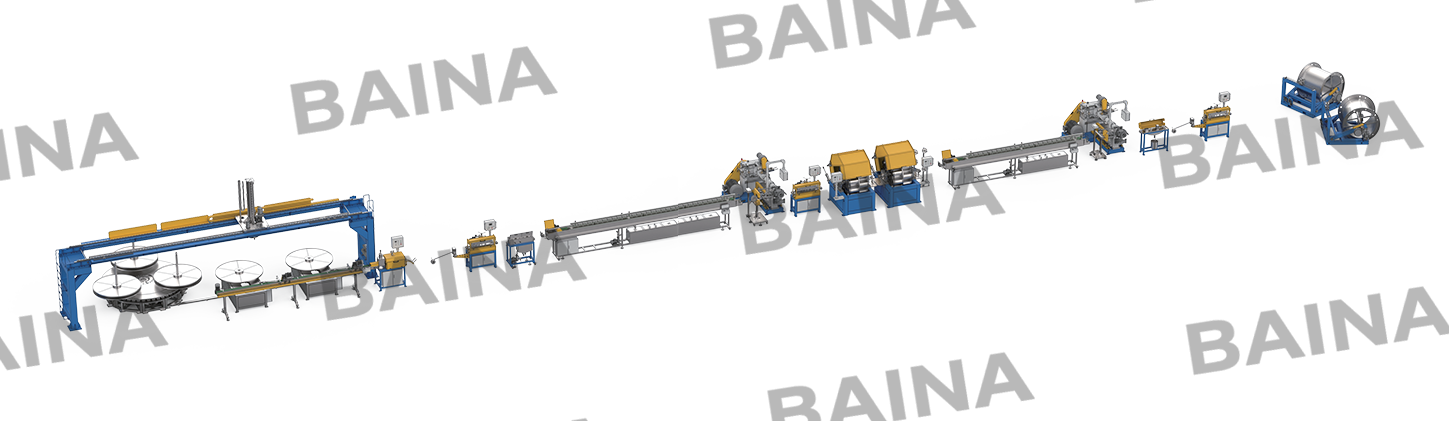
Integration between extrusion equipment and cutting machines can create a continuous manufacturing process. Real-time monitoring systems may help detect dimensional changes earlier and support faster production adjustments.
Automatic cutting technology is transforming rubber processing by replacing repetitive manual operations with accurate, programmable, and flexible solutions. An Automatic Rubber Tube Cutting Machine provides manufacturers with better control over tube length, cutting quality, and production consistency.
As rubber products become more specialized across automotive, industrial, and hydraulic applications, automated cutting systems will continue to play an important role in creating reliable manufacturing processes. The combination of precision feeding, intelligent control, and adaptable cutting methods makes modern tube cutting equipment a valuable part of advanced rubber production lines.