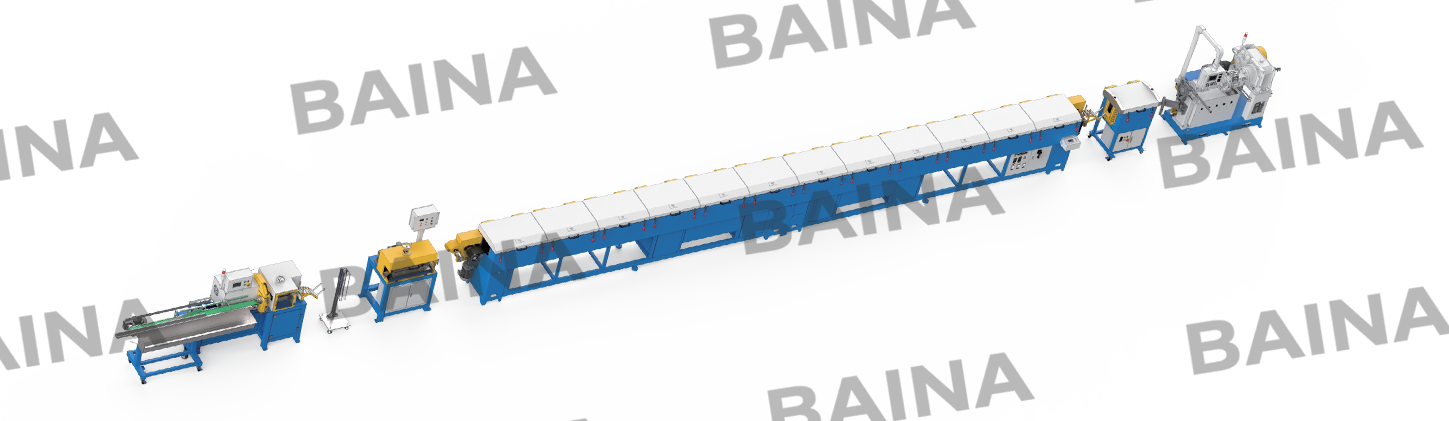
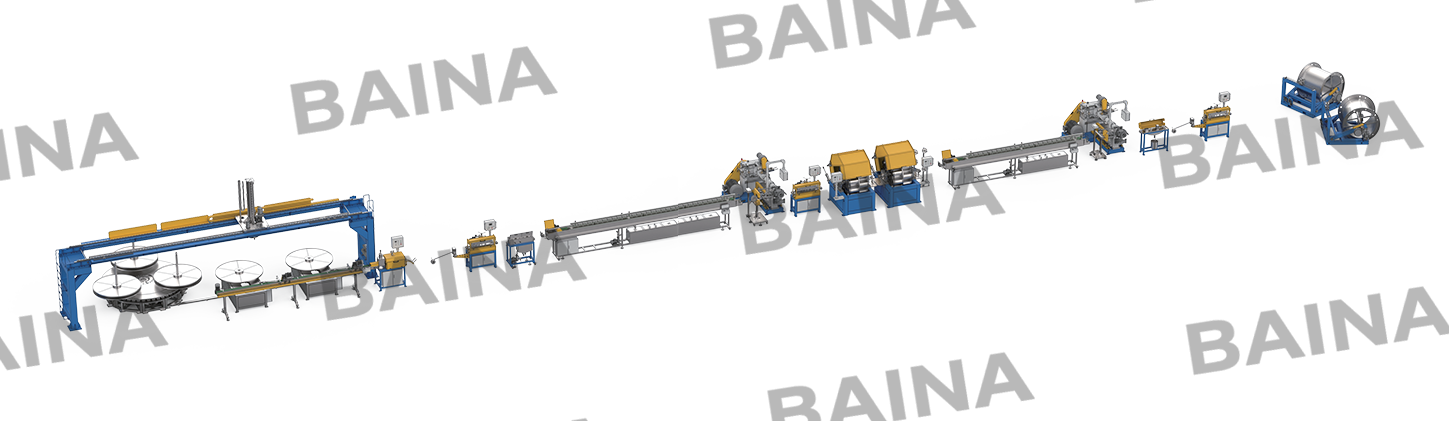
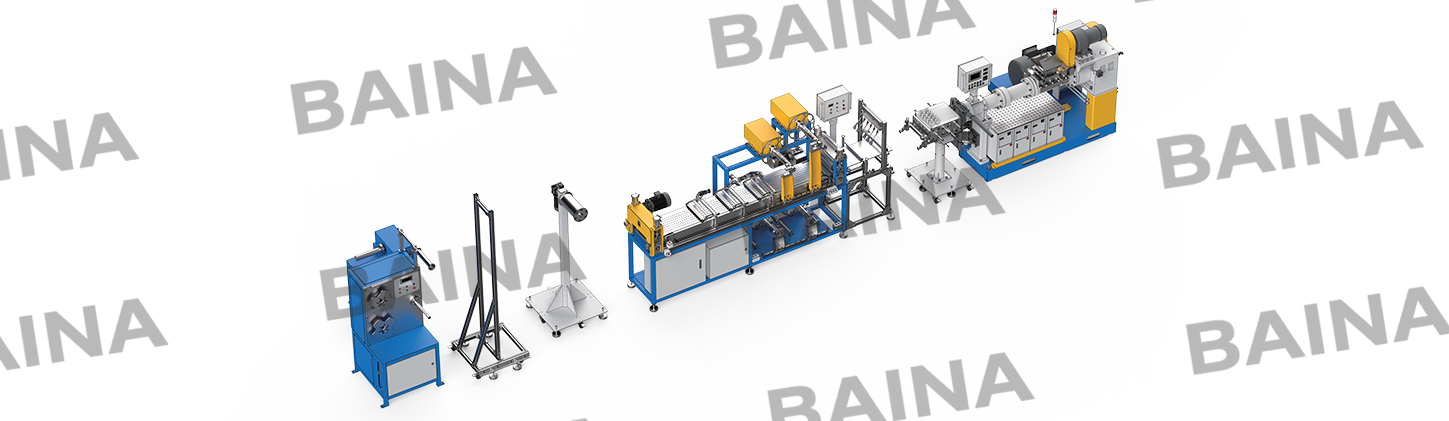
Ф75mm 14D Silicone Extruder
Cat:Extruder Series
Motor Power: 22 kWMaximum Output: 120 kg/h
See Details

Rubber extrusion requires precise control over material flow, temperature, and pressure to produce consistent tubes, profiles, seals, and reinforced hose products. Different rubber compounds have unique processing characteristics, including viscosity, hardness, elasticity, and heat sensitivity. The extrusion equipment must handle these differences while maintaining stable output quality.
A Barrel Cold Feed Rubber Extruder is widely used in modern rubber processing because it can directly process unheated rubber compounds and complete feeding, plasticizing, mixing, and extrusion within one machine. Unlike traditional hot feed systems that require preheating through a separate mill, cold feed technology uses a specially designed screw and barrel structure to prepare rubber material during extrusion.
This design makes cold feed extrusion suitable for many applications, including automotive hoses, industrial rubber tubes, sealing profiles, tire components, and customized rubber products.
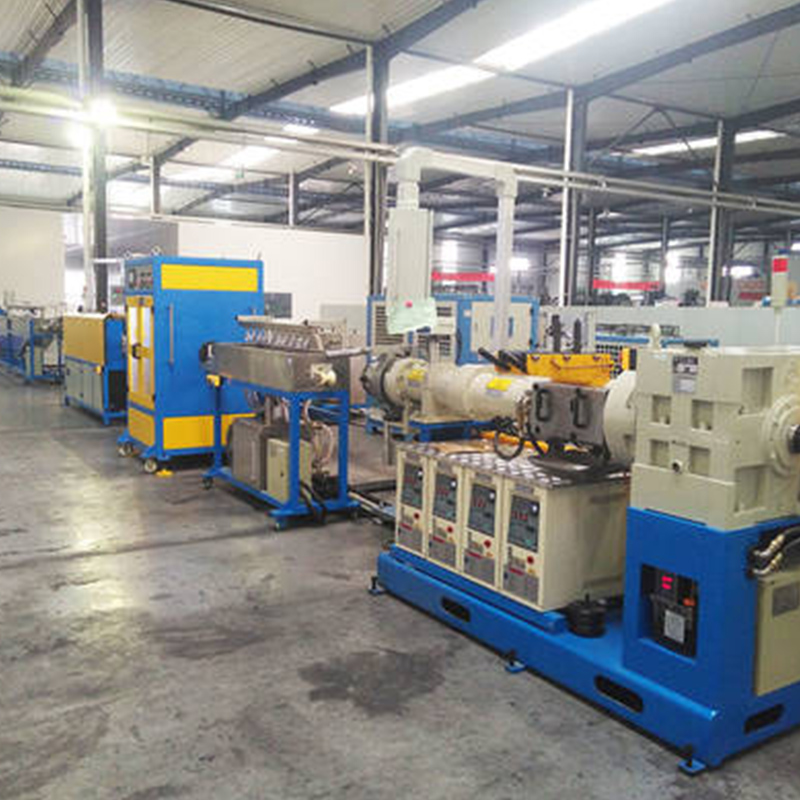
One significant feature of cold feed extrusion is that rubber compounds can enter the extruder directly at room temperature. The machine performs the necessary plasticizing and mixing functions through screw rotation, pressure generation, and controlled temperature management.
Traditional hot feed extrusion usually requires an additional warming mill before extrusion. Cold feed systems reduce dependence on this separate preparation stage because the extruder itself handles material conditioning.
This structure is particularly useful for manufacturers producing multiple rubber products because the equipment can adapt to various compound characteristics with appropriate parameter adjustments.
The screw is the core component that determines how rubber compounds move, mix, and become ready for extrusion. Cold feed rubber extruders generally use longer screws compared with hot feed systems because the machine needs enough processing length to complete material preparation.
During operation, rubber compounds pass through several working zones inside the barrel:
| Processing Zone | Main Function |
| Feeding Zone | Receives rubber material and transfers it into the screw channel. |
| Compression Zone | Compresses and plasticizes the compound through mechanical shear. |
| Mixing Zone | Improves compound uniformity and stabilizes material properties. |
| Metering Zone | Creates stable pressure and consistent material flow before the die. |
A well-designed screw helps achieve uniform rubber temperature and viscosity. This is important because unstable material conditions may affect extrusion dimensions, surface appearance, and final product performance.
Temperature management is a critical factor in rubber extrusion. Rubber compounds must reach suitable processing conditions without excessive heat buildup that could affect material characteristics.
Modern cold feed extruders usually include multiple temperature control zones along the barrel. Heating and cooling systems work together to maintain suitable conditions throughout the extrusion process.
Some industrial cold feed extruders can maintain barrel temperature accuracy around ±1°C through automatic control systems, supporting consistent extrusion conditions.
Different industries use different rubber materials depending on application requirements. A suitable extrusion system should handle variations in compound formulation, hardness, and processing behavior.
| Rubber Compound | Typical Applications | Extrusion Considerations |
| EPDM Rubber | Automotive seals, weather strips, industrial profiles | Requires stable temperature control and smooth surface extrusion |
| NBR Rubber | Fuel hoses, oil-resistant tubes | Needs good mixing capability and dimensional control |
| Silicone Rubber | Medical tubes, high-temperature products | Requires careful heat management and clean processing |
| Natural Rubber | Industrial hoses and mechanical products | Requires stable plasticizing and pressure control |
The ability to process different compounds makes cold feed technology suitable for manufacturers producing rubber products with various performance requirements.
Rubber products often require strict dimensional control, especially hoses and profiles used in industrial equipment or automotive systems. Pressure fluctuations inside the extrusion barrel may create uneven output or surface defects.
Cold feed extruders use optimized screw structures, pressure monitoring systems, and controlled feeding mechanisms to maintain stable material flow.
For products such as fuel hoses and hydraulic tubes, stable extrusion pressure contributes to reliable wall thickness and structural consistency.
Before purchasing extrusion equipment, engineers usually review several technical specifications based on product requirements and production goals.
| Parameter | Typical Consideration |
| Screw Diameter | Common options include 45mm, 60mm, 90mm, 120mm, and larger models depending on output needs. |
| L/D Ratio | Longer screw designs provide additional processing space for plasticizing and mixing. |
| Drive Power | Determines extrusion capacity and material processing capability. |
| Temperature Zones | Multiple zones allow more precise thermal management. |
| Control System | PLC systems support easier operation and production monitoring. |
For example, some cold feed rubber extruder models use screw diameter ranges from approximately 90mm to 150mm with different output capacities according to machine configuration.
Cold feed extrusion technology is used in many industries because it provides continuous production capability and supports complex rubber compound processing.
The rubber processing industry continues to move toward smarter control systems, flexible production, and improved material management. Future cold feed extruders are expected to integrate more digital monitoring functions, automatic parameter adjustment, and advanced data analysis.
These improvements will help manufacturers respond to changing product requirements while maintaining stable extrusion quality. The combination of precise control, adaptable design, and efficient material processing makes cold feed technology an important solution for modern rubber manufacturing.
A Barrel Cold Feed Rubber Extruder is suitable for rubber compounds because it combines direct feeding, internal plasticizing, precise temperature management, and stable pressure control in one integrated system. These features allow the equipment to handle different rubber materials while maintaining consistent extrusion performance.
As rubber applications continue to expand across automotive, industrial, and specialized fields, cold feed extrusion technology provides manufacturers with a reliable approach for producing high-quality rubber tubes, hoses, and profiles with controlled dimensions and stable material properties.
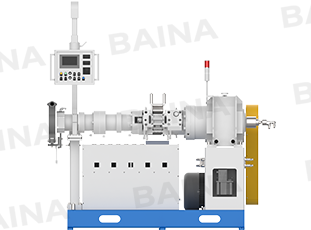
Motor Power: 22 kWMaximum Output: 120 kg/h
See Details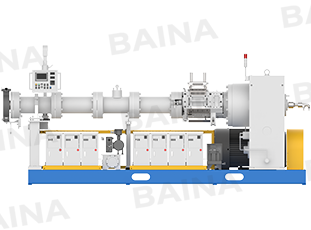
Motor Power: 160 kWMaximum Output: 1000 kg/h
See Details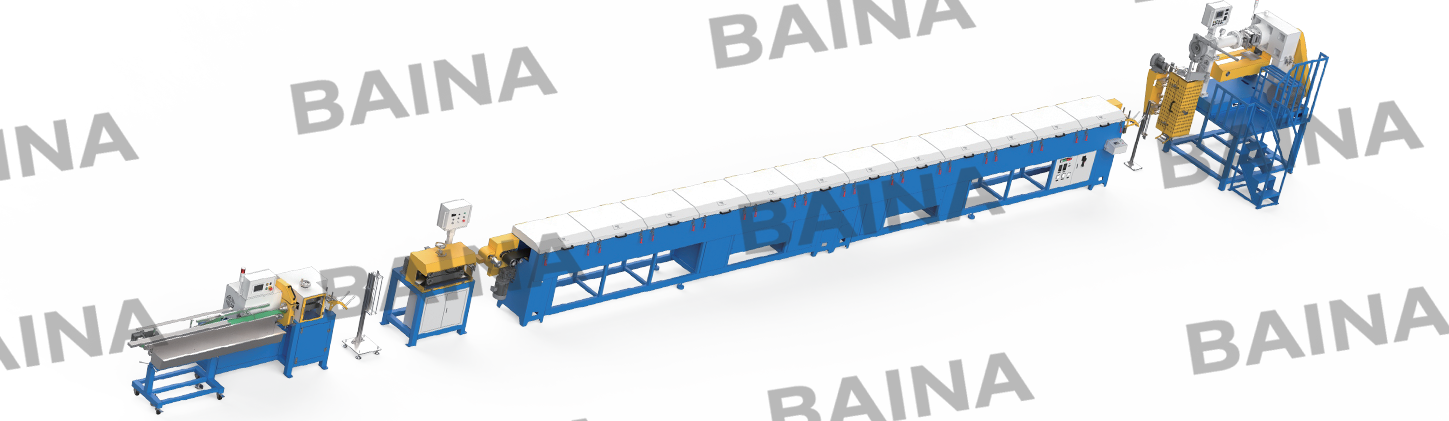
Product advantages1. High Space Utilization, Suitable for Compact Production Environments2. High Mol...
See DetailsRubber hose design is often discussed in terms of inner diameter, outer diameter, and wall thickness......
READ MOREA rubber profile can leave an extrusion die with the correct shape and still change during curing. T......
READ MORECutting a rubber tube to a specified length sounds simple until the material starts to compress, str......
READ MORE

Rubber Extrusion Machine and Equipment