
 English
 中文简体
中文简体 русский



Extruder Series
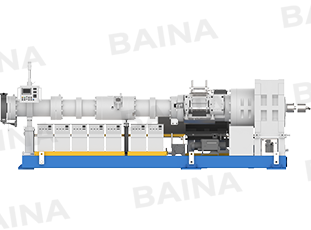
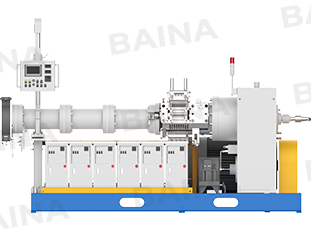
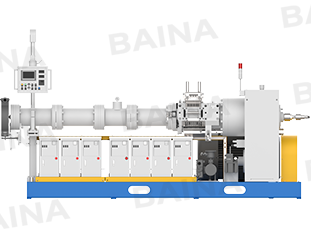
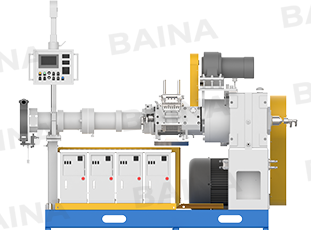
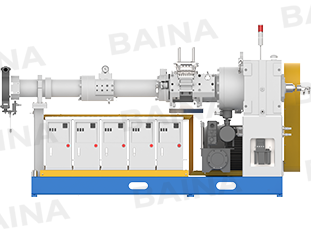
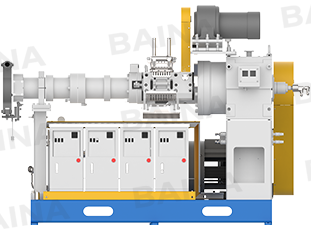
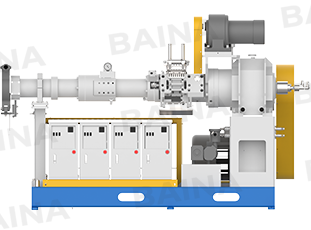
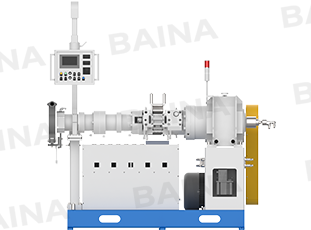
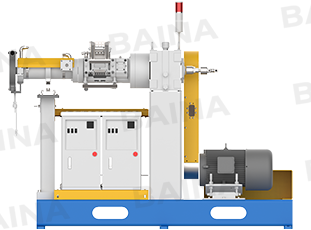
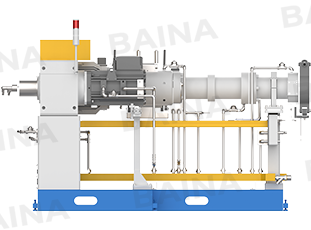
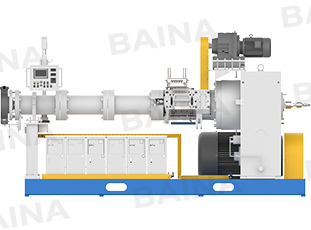
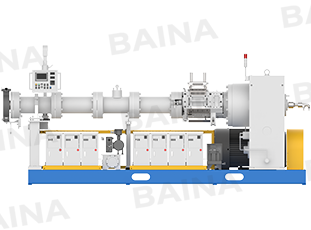
A Plant Guide to EPDM Extruder Benefits, Workflows, and Machine Classes
The Primary Advantages of an EPDM Rubber Extruder Machine
An EPDM rubber extruder machine is a screw-driven continuous processing system designed specifically to handle ethylene propylene diene monomer (EPDM) —a synthetic rubber known for high heat resistance, ozone durability, and flexibility across wide temperature ranges. Unlike general-purpose extruders, EPDM-dedicated units manage the material's higher viscosity and stickiness without scorching.
Cold-Feed Capability Without Preheating
General rubber extruders often require warm-up mills to pre-soften the compound. A properly specced EPDM extruder accepts room-temperature strip directly into the feed hopper. The screw geometry—specifically the compression ratio (typically 1.2:1 to 1.5:1 for EPDM)—generates sufficient shear heat internally. Search signal: cold feed rubber extruder for EPDM profiles indicates buyers wanting to eliminate a separate mill operator.
Reduced Die Swell Through Low-Compression Screws
EPDM naturally expands after exiting the die (die swell). Standard extruders amplify this. EPDM-optimized machines use longer metering sections and lower flight depths to homogenize pressure before the die, resulting in dimensional stability within ±0.2mm. Critical for automotive weatherstripping or glazing seals where tolerance matters.
Water-Cooled Feed Zones Prevent Premature Cure
The barrel's feed zone includes independent water-jacket cooling. Why? EPDM compounds often contain peroxides or sulfur accelerators that begin crosslinking above 100°C. Cooling keeps the feed section below 50°C, stopping the rubber from curing inside the screw. Search query: rubber extruder with water-cooled barrel for heat-sensitive compounds targets this exact requirement.
EPDM-Dedicated vs. General-Purpose Rubber Extruder
|
Feature |
EPDM-Dedicated Extruder |
General-Purpose Rubber Extruder |
|
Feed zone cooling |
Yes (water-jacketed) |
Optional or air-only |
|
Screw L/D ratio |
12:1 to 14:1 (longer metering) |
8:1 to 10:1 |
|
Typical output tolerance |
±0.2mm |
±0.5–0.8mm |
|
Best for |
Automotive seals, hose, weatherstripping |
Tire tread, mats, generic profiles |
The Working Principle of a Rubber Extrusion Machine
A rubber extrusion machine converts solid rubber strip or pellet feedstock into a continuous shaped profile using rotational screw force, thermal conditioning, and die forming—without melting the material (unlike plastics). Rubber remains in a viscous, uncured state until downstream vulcanization.
Step-by-Step Process (Shop-Floor Sequence)
Step 1: Feed Zone – Material Entry and Pinch Prevention
The operator feeds continuous rubber strip (typically 50–75mm wide, 10–15mm thick) onto a powered roller table leading to the hopper. A safety bar shuts down the feed rollers if hands approach. Critical detail: Strip edges must be butterflied (overlapped) to prevent air pockets. Search for rubber extruder feeding techniques for void-free profiles addresses this nuisance.
Step 2: Screw Conveyance – Compression and Shear Heating
- The rotating screw (30–150 RPM, depending on compound) moves rubber forward through three zones:
- Feed zone (deep flights): Simply moves material without compression
- Compression zone (tapered flight depth): Reduces volume by 30–40%, generating shear heat (60–90°C)
- Metering zone (shallow, constant depth): Pressurizes (1,000–3,000 PSI) and homogenizes temperature
Step 3: Die Shaping – The Final Constriction
Pressurized rubber encounters the die plate (hardened tool steel with the negative of the desired profile). As material squeezes through, it expands slightly (die swell). Die land length (the straight section before exit) controls this—longer land reduces swell but increases back pressure.
Step 4: Take-Off Cooling – Preventing Deformation
The hot extrudate (typically 90–120°C) moves onto a water-cooled conveyor or through a spray bath. Without immediate cooling, gravity distorts the profile before it reaches the vulcanization unit.
Step 5: Downstream Processing – Curing or Continuous Vulcanization
Most EPDM profiles enter a hot air tunnel (230–280°C), fluid bed, or microwave unit to crosslink. The extruder itself does not cure the rubber; it only shapes it.
The Specific Types of Rubber Extruder Machines Available
Rubber extruders are classified by screw design, drive configuration, and application niche—not just barrel diameter. Below are the three distinct types you will encounter in a technical procurement discussion.
Type 1: Hot-Feed Extruders
The legacy workhorse
The rubber is pre-warmed on a two-roll mill to 70–90°C before entering the extruder. Screw L/D ratio is short (4:1 to 8:1). These dominate tire tread production because the warm compound flows evenly across very wide (800mm+) die openings. Downside: Requires a separate mill operator and mill power. Search for hot feed rubber extruder for tire tread applications when replacing old equipment.
Type 2: Pin-Type (Vented) Extruders
The moisture manager
A pin barrel extruder has retractable metal pins protruding into the screw channel. Their purpose: mechanically fold and mix the rubber, exposing internal surfaces to vacuum ports. This removes volatile gases and trapped moisture that cause surface blisters on extruded hose or dense profiles. Use case: Continuous vulcanization (CV) lines for silicone or EPDM sponge. Search signal: pin barrel rubber extruder for blister-free extrusions.
Type 3: Gear Pump Extruders (Extruder + Melt Pump)
The precision option
A single screw feeds a heated gear pump (two counter-rotating gears) mounted directly before the die. The gears decouple screw speed from output pressure, delivering near-pulse-free flow. Achieves tolerances of ±0.05mm on small medical or automotive seals. Search query: rubber gear pump extruder for tight tolerance profiles. Trade-off: High cost and requires polymer filtration upstream to prevent gear damage from contaminants.
|
Priority |
Recommended Type |
Why |
|
Lowest capital cost |
Hot-feed (used market) |
Simple screw, no vacuum or gear pump |
|
Best for moisture-prone compounds |
Pin-type (vented) |
Vacuum ports remove volatiles |
|
Tightest dimensional tolerance |
Gear pump system |
Decouples pressure from screw speed |
|
Easiest operation (single operator) |
Cold-feed (standard) |
No pre-milling required |
-

-
No. 18, Chunhui Est. Rd., Yong’An Ind. Area, Xianju, Taizhou, Zhejiang, ChinaRoom 707, Building 1, Baolong Plaza, Hangzhou Sci-Tech City, Yuhang District, Hangzhou, Zhejiang, China+86-576-87685299
+86-571-89059793+86-576-87685311 - Home Machinery&Solutions About Baina Industry Applications Support Info Contact Us
-
Copyright © 2025 by Zhejiang Baina Rubber & Plastic Equipment Co., Ltd. All Rights Reserved.
