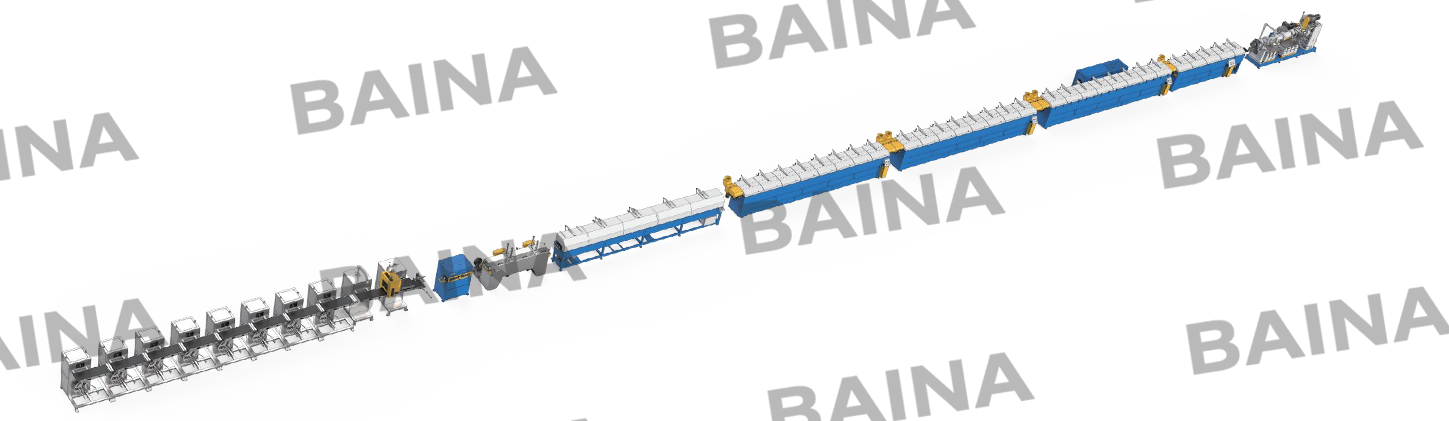
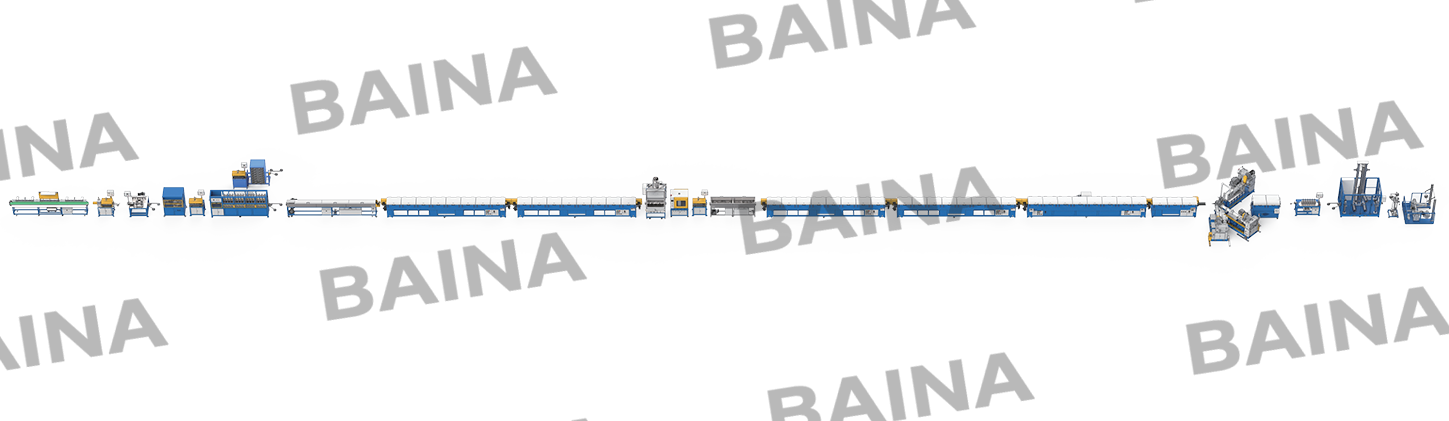
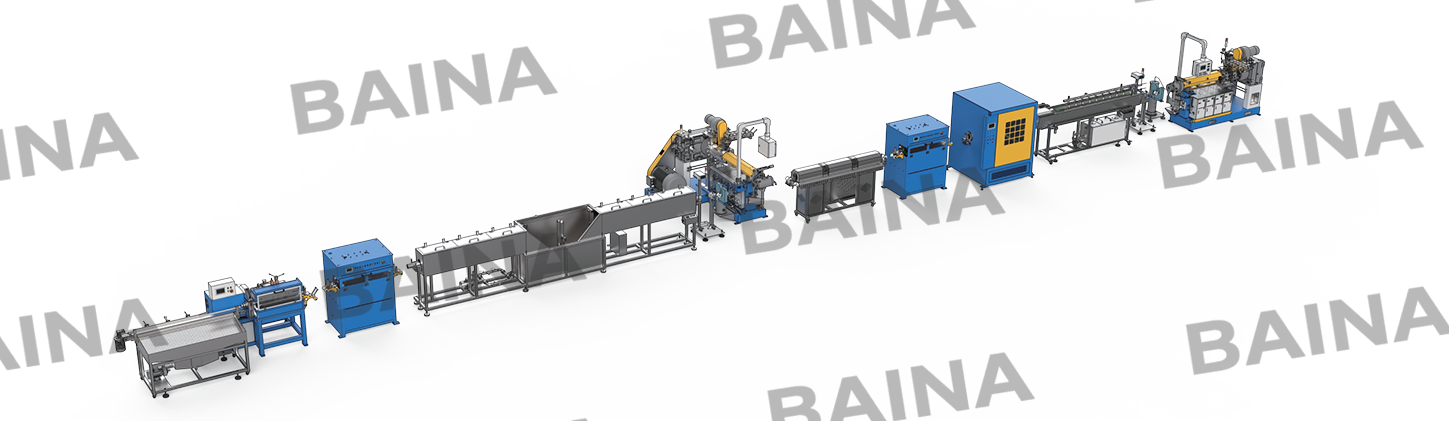
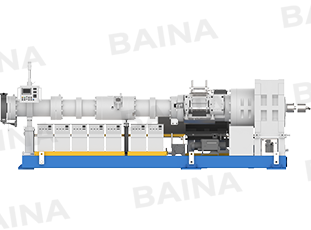
The evolution of the rubber extrusion production line is no longer limited to shaping seals, tubes, or simple industrial profiles. Our company observes a clear shift toward system-level material engineering, where extrusion becomes a controlled design platform rather than a basic forming process. This transformation is reshaping how rubber components are conceived across automotive, energy, and infrastructure sectors.
Modern demand focuses on precision architecture inside rubber structures rather than only external geometry. The extrusion line now integrates multi-layer composition, embedded reinforcement, and adaptive cooling strategies to create functional gradients within a single continuous product. Such capability changes the traditional perception of rubber manufacturing.
Multi-Layer Structural Extrusion Capability
A key direction in current development is composite extrusion, where multiple rubber compounds are formed in a single pass.
- Co-extrusion modules support up to 3–5 independent feed channels
- Die systems allow layer thickness control within ±0.05 mm tolerance
- Interface bonding stability is improved through synchronized temperature zoning
Our company designs rubber extrusion production line systems capable of combining EPDM, NBR, and silicone-based compounds in one continuous profile. This enables functional separation—such as abrasion resistance outside and elasticity inside—without secondary assembly.
Digital Die Control and Shape Intelligence
Instead of relying solely on fixed tooling, modern extrusion heads are increasingly equipped with adjustable geometry systems.
- Servo-driven die lips enable micro-adjustment during operation
- Profile correction response time reduced to under 0.5 seconds
- Integrated laser monitoring systems track dimensional drift in real time
This approach supports what industry engineers often describe as “adaptive shaping,” where the line continuously compensates for compound viscosity variation. Our company integrates closed-loop feedback logic into each rubber extrusion production line to stabilize output during long production cycles.
High-Torque Cold Feed Architecture
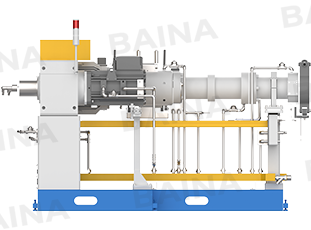
Cold feed technology has become a foundation for high-efficiency extrusion systems. Compared with traditional hot-feed setups, it eliminates pre-heating mills and reduces energy transfer steps.
Typical configuration used in our systems includes:
- Screw diameter range: 65 mm – 200 mm
- Drive power: up to 450 kW
- Maximum operating pressure: up to 500 bar
- Multiple temperature control zones: up to 5 independent TCUs
This structure enables stable processing of high-viscosity compounds such as filled rubber with carbon black or silica, which are widely used in industrial sealing applications.
Continuous Vulcanization Integration
A significant shift in system architecture is the integration of downstream curing directly into the extrusion line.
- Microwave vulcanization tunnels reduce curing time by up to 40–60%
- Hot-air channels maintain surface uniformity across long profiles
- Cooling calibration tanks stabilize dimensional shrinkage within controlled limits
Rather than producing semi-finished extrudates for secondary processing, the rubber extrusion production line can now output near-finished products directly ready for cutting or assembly.
Multi-Material Reinforcement Integration
Recent design strategies emphasize structural reinforcement inside rubber profiles during extrusion rather than external reinforcement afterward.
Applications include:
- Steel wire embedded sealing strips for automotive doors
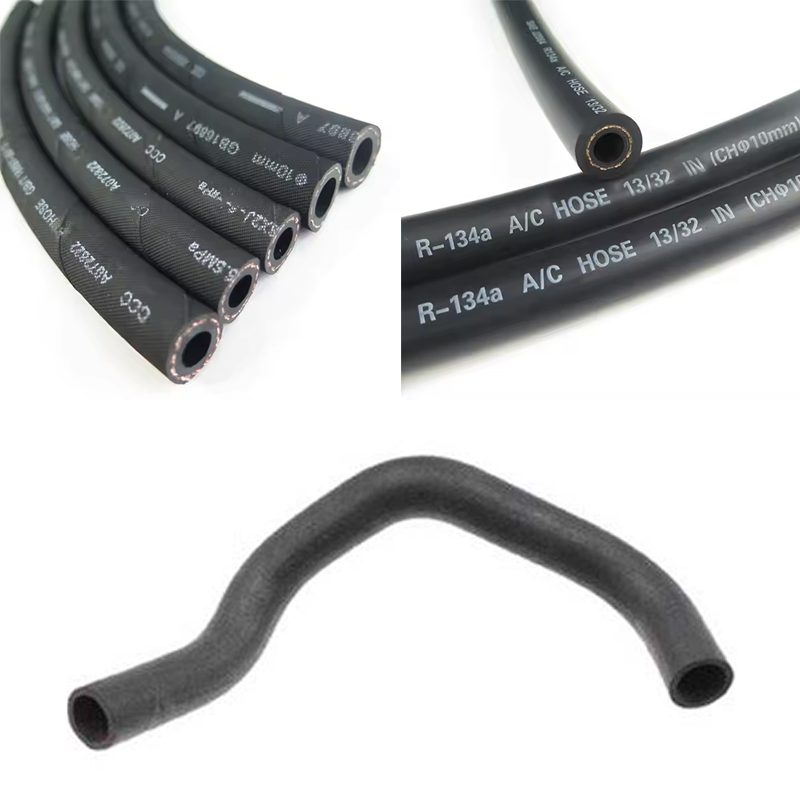
- Textile-reinforced industrial hoses
- Hybrid elastomer layers for vibration control systems
Our company integrates reinforcement feeders synchronized with extrusion speed control, ensuring consistent alignment and tension balance. This eliminates deformation risks during high-speed output.
Smart Manufacturing Interface Layer
Beyond mechanical design, extrusion systems are increasingly defined by their control architecture.
Key control elements include:
- PLC-based central synchronization
- SCADA visualization for real-time production mapping
- Automatic parameter adjustment based on material viscosity feedback
Data-driven operation allows each rubber extrusion production line to maintain stable output quality even when raw material batches vary in composition or elasticity.
Emerging Application Scenarios
The upgraded extrusion platform is expanding into non-traditional industries:
- Electric vehicle battery sealing systems requiring thermal resistance
- Aerospace vibration isolation components with micro-precision geometry
- Renewable energy equipment sealing for wind turbine housings
- Medical-grade tubing requiring contamination-controlled processing
These applications require far stricter tolerances and material stability compared to conventional industrial rubber products.
Modular Expansion Strategy
Modern production systems are no longer fixed configurations. Modular architecture allows incremental expansion:
- Additional extrusion heads can be added without full line replacement
- Cooling and calibration sections are independently scalable
- Digital control units support remote firmware updates
This flexibility reduces capital risk while supporting product diversification strategies.
The role of the rubber extrusion production line is shifting from a mechanical forming system to a programmable material design platform. Our company continues to develop integrated solutions that combine multi-layer extrusion, real-time control, and reinforcement embedding within a unified production architecture.
This evolution is not only changing manufacturing efficiency but also redefining what can be achieved in continuous elastomer processing.