




Rubber Production Line Factory
Rubber Production Line: Industry Knowledge Extension
Rubber Production Line: How to Prevent Downtime and Improve Production Efficiency?
Downtime on a rubber production line costs more than lost hours. It wastes material still in the extruder, throws off curing schedules, and creates overtime headaches when catching up. Preventing stoppages starts with understanding where they happen most.
Curing becomes the bottleneck first
In most rubber production lines, the industrial curing oven or autoclave dictates maximum output. The extruder runs faster than the oven can cure. The braiders run faster than the extruder. The solution is not speeding up the oven—it is batching smarter. Load the oven completely every cycle. Run full carts even if that means holding finished extruded hose for twenty minutes. Partial oven loads kill efficiency more than any single machine breakdown.
Splice failures during extrusion
Extruders stop when the strip of rubber compound breaks. Splices between strips fail because the compound temperature dropped before joining. Keep spliced strips at the same temperature. Use a warmer or a mill to soften the leading edge before pressing the joint. Some rubber production lines install automatic splicers that apply heat and pressure consistently. Manual splices vary. Inconsistent splices mean unpredictable downtime.
Reinforcement tension controls everything
On braided or spiral hose lines, a broken yarn or wire strand stops the braider. High tension causes breakage. Low tension produces loose reinforcement that shifts during curing. The fix: tension monitoring at each carrier. Old machines use mechanical springs that drift. Modern rubber production lines install electronic tension sensors linked to an alarm. The operator corrects the tension before the strand breaks, not after.
Quick-change tooling reduces changeover downtime
Different hose sizes mean different extrusion dies, braider carriers, and curing mandrels. A rubber production line with bolted-on tooling loses hours per changeover. Quick-change die holders, cartridge-style screw assemblies, and pre-wound braider bobbins cut changeover time from hours to minutes. The upfront cost pays back in the first few changeovers.
What Does a Rubber Extrusion Line Typically Contain?
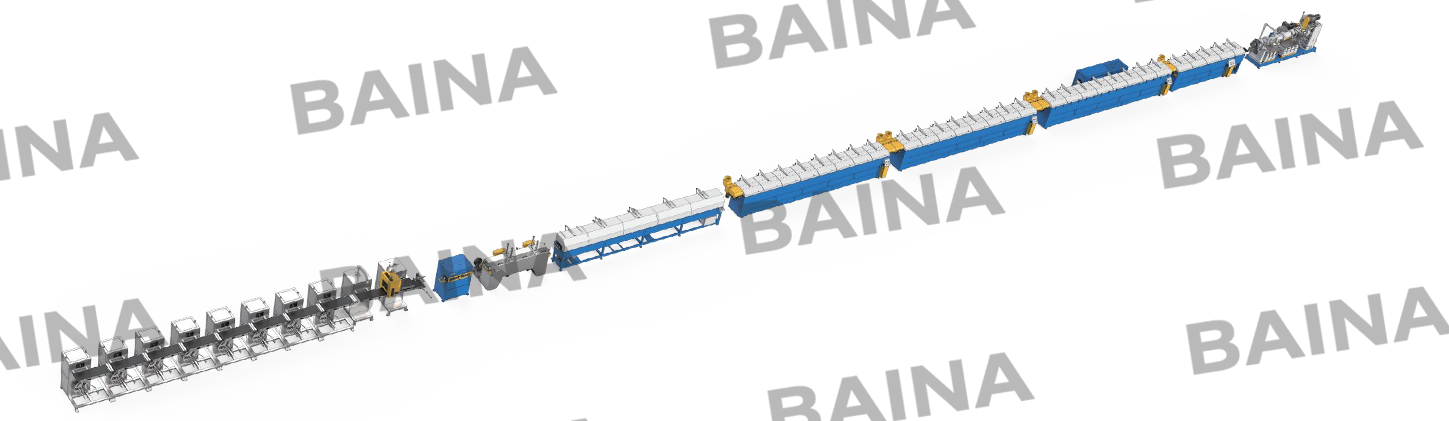
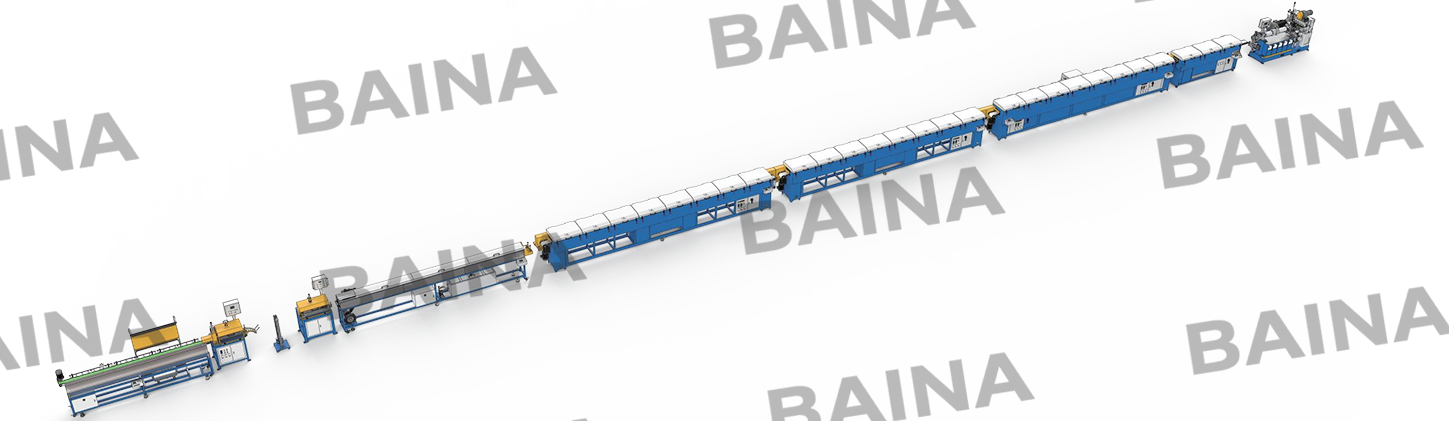
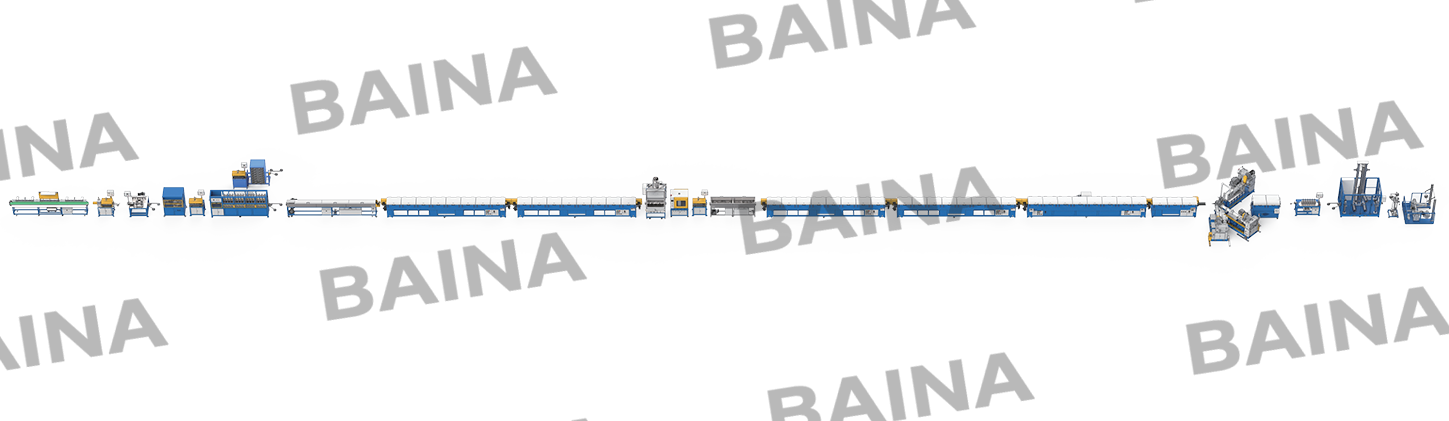
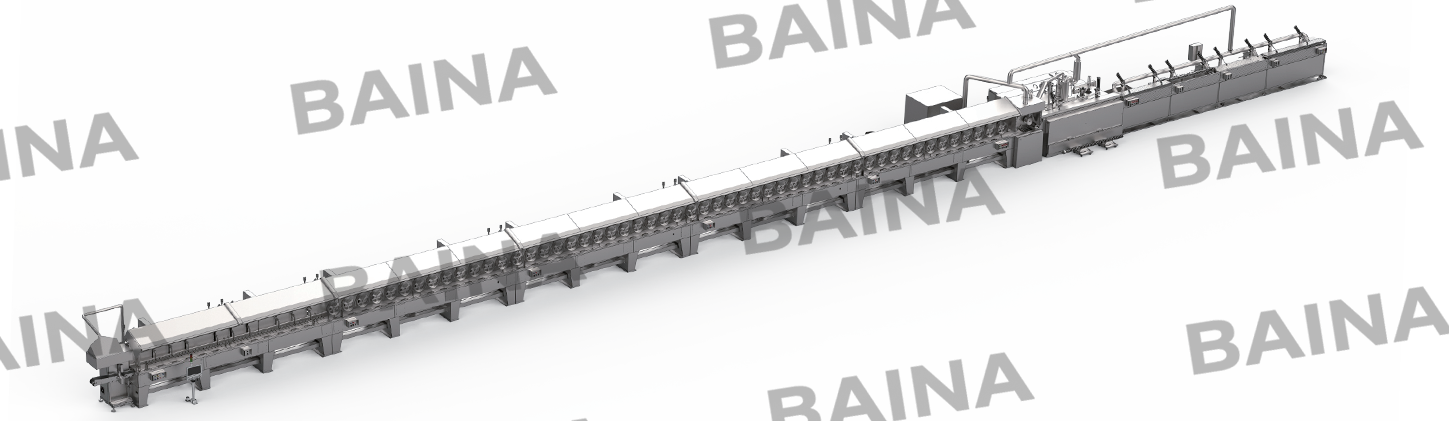
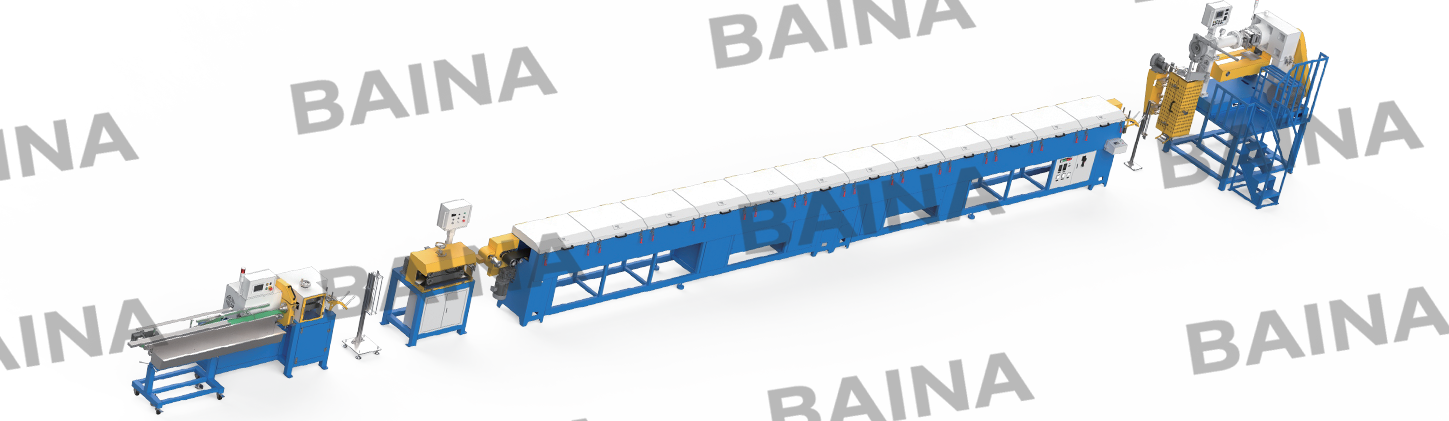
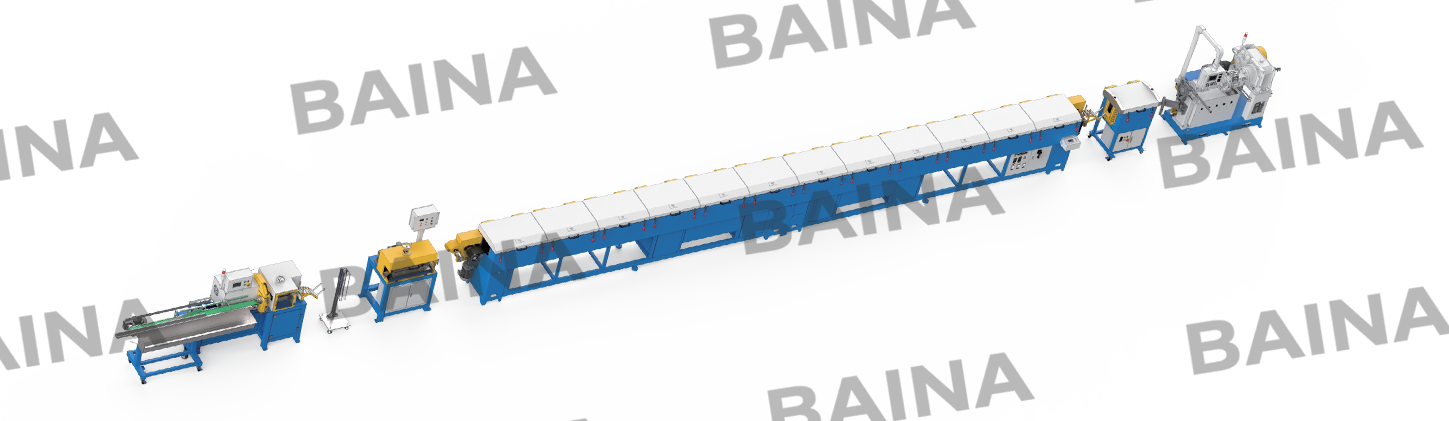
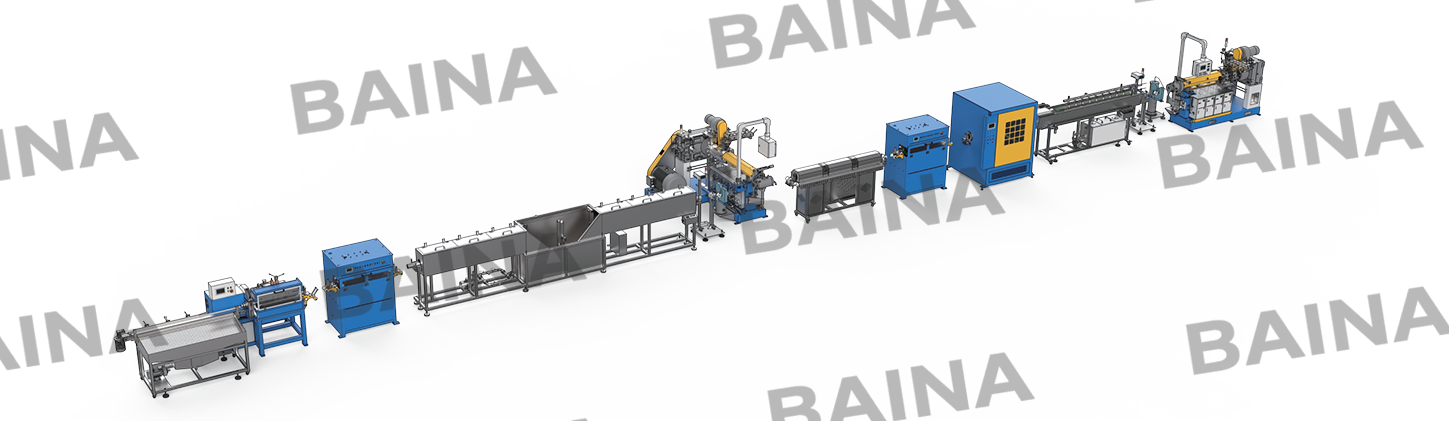
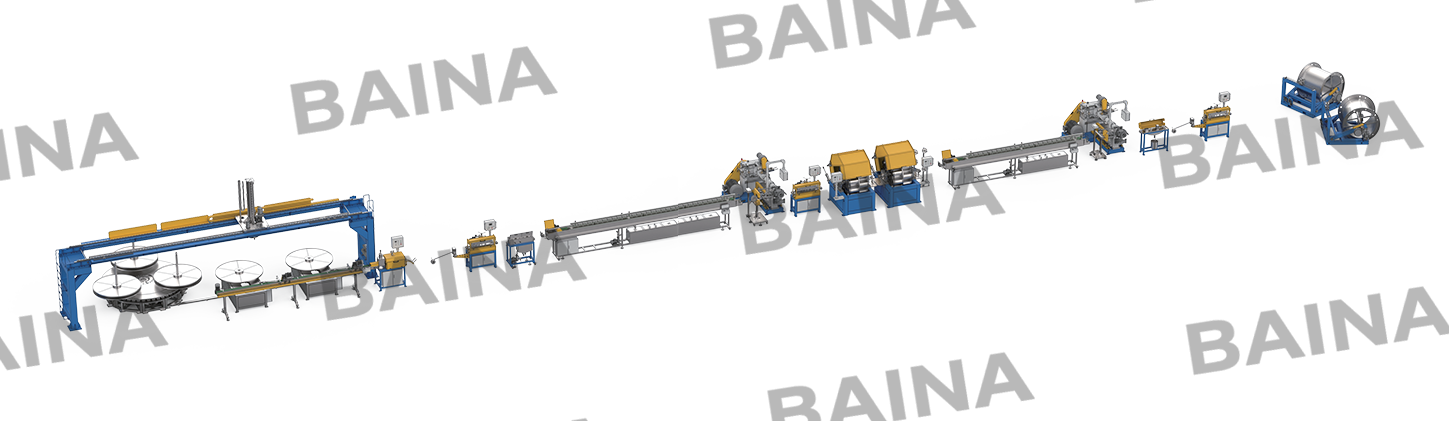
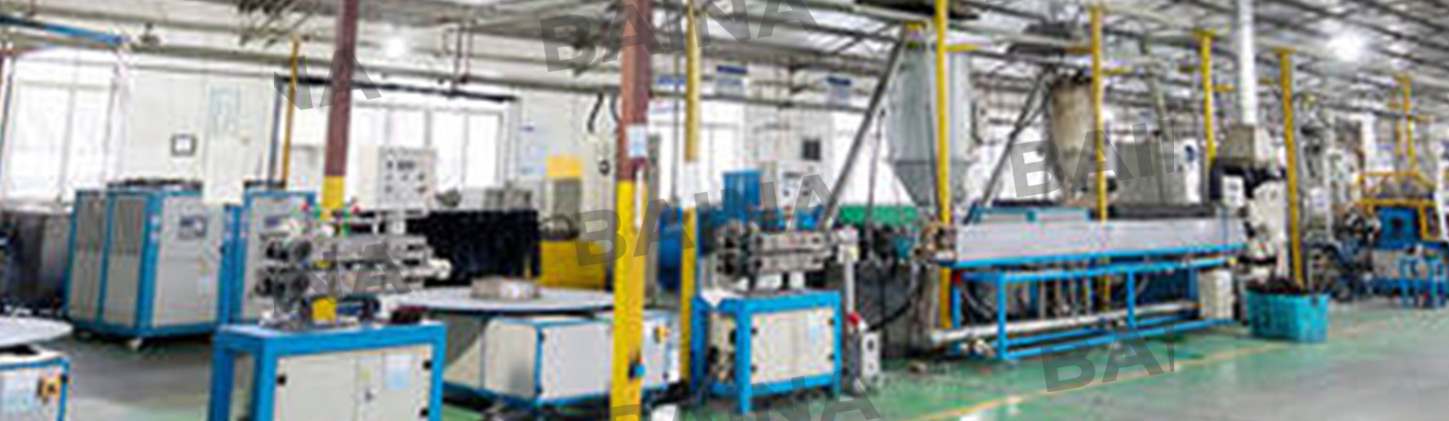
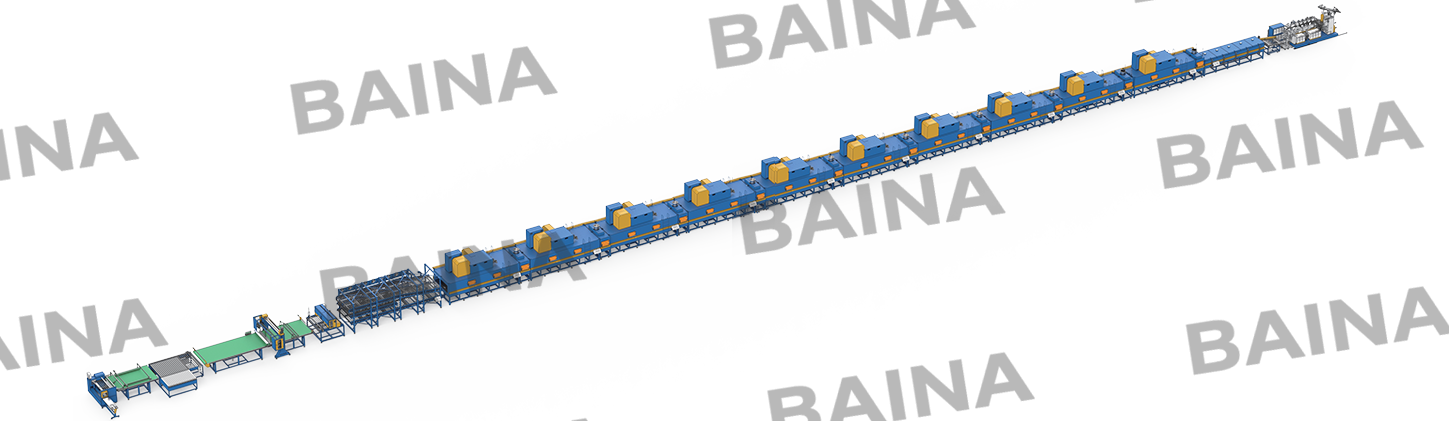
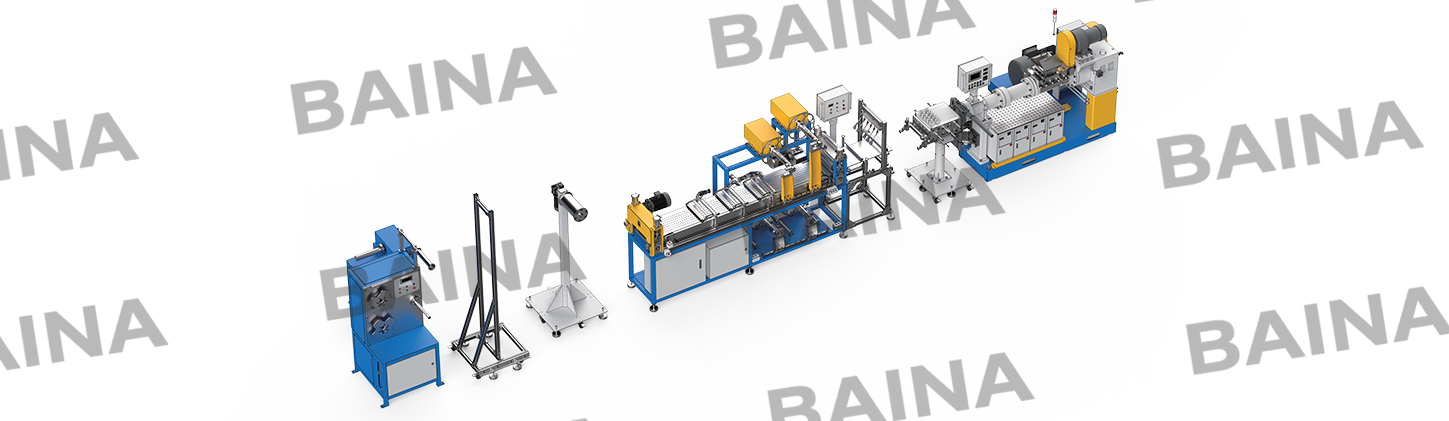
A rubber extrusion line is not a single machine. It is a sequence of equipment stations that work together. Walk from the compound storage area to the take-up reel, and here is what passes you.
- Warm-up mill or roller die feeder: Rubber compound arrives as strips or slabs. A warm-up mill passes the material between heated rolls, softening it and making it pliable. Some lines use a roller die feeder that also gauges the strip to a consistent thickness before entering the extruder.
- Rubber extruder machine (cold feed or hot feed): The heart of the line. A screw inside a heated barrel pushes the rubber forward through a die. The die shape determines the profile of the extruded product—hose tube, weatherstrip, seal profile, or tread strip. Extruder sizes range from 30mm screw diameter for small profiles up to 250mm for large hose tubes.
- Die head and tooling: Attached to the extruder discharge. The die head holds the mandrel (for hollow products like hose) and the bushing that forms the outer shape. Quick-change die heads allow swapping profiles without disassembling the entire extruder.
- Cooling trough or conveyor: Extruded rubber exits hot and soft. A water trough cools it, sets the shape, and prevents distortion. Some rubber extrusion lines use air cooling for profiles that cannot contact water. Others apply talc or silicone spray to prevent sticking before the next stage.
- Laser or ultrasonic measuring system: Mounted after cooling. This device measures the extruded profile continuously. Out-of-tolerance readings trigger an alarm or close a feedback loop to the extruder screw speed. Without measurement, the extrusion line produces scrap for hours before operators notice drift.
- Haul-off unit or caterpillar puller: This machine grips the extruded product and pulls it through the line at a controlled speed. The puller speed must match the extruder output. If the puller runs faster, the extrudate stretches and thins. Slower, and the product bunches up before the curing oven.
A rubber extrusion line missing any of these components either produces scrap or requires manual handling that slows everything down. The extruder gets the attention. The rest of the equipment determines whether the line runs profitably.
What is the Difference Between a Cold Feed Rubber Extruder Machine and a Hot Feed Rubber Extruder?
The names tell the difference: one feeds a room-temperature compound. The other feeds pre-warmed compound. But the implications for a rubber extrusion line go much deeper.
Cold feed rubber extruder machine operation
Compound enters the extruder at ambient temperature (20–25°C). The screw pushes the rubber forward through a feed section, a compression section, and a metering section. Friction and barrel heaters raise the compound temperature gradually along the screw to roughly 80–100°C by the time it reaches the die head. The screw design includes deeper flights in the feed zone to grab the stiff cold rubber.
Advantages of a cold feed rubber extruder machine:
No separate warm-up mill required, saving floor space and capital cost
Less compound degradation because the rubber spends less time hot before extrusion
Consistent feed rate regardless of operator skill in strip preparation
Disadvantages:
Higher initial equipment cost for the longer, more complex screw
Lower maximum output for a given screw size compared to hot feed
Hot feed rubber extruder operation
A two-roll mill or a roller die pre-warms the compound to 60–90°C before it enters the extruder. The extruder screw simply pushes the already soft rubber toward the die. The screw design is shorter and uses shallower flights because the rubber flows easily.
Advantages of a hot feed rubber extruder:
Higher output per screw diameter because the extruder does not warm the compound
Lower screw wear since the rubber is already soft
Better for sticky compounds that hang up in cold feed screw channels
Disadvantages:
Requires separate mill and operator, adding labor cost
Rubber compounds can scorch (pre-vulcanize) if the mill runs too hot or holds material too long
-

-
No. 18, Chunhui Est. Rd., Yong’An Ind. Area, Xianju, Taizhou, Zhejiang, ChinaRoom 707, Building 1, Baolong Plaza, Hangzhou Sci-Tech City, Yuhang District, Hangzhou, Zhejiang, China+86-576-87685299
+86-571-89059793+86-576-87685311 - Home Machinery&Solutions About Baina Industry Applications Support Info Contact Us
-
Copyright © 2025 by Zhejiang Baina Rubber & Plastic Equipment Co., Ltd. All Rights Reserved.

Cold Feed Rubber Extruder Machine